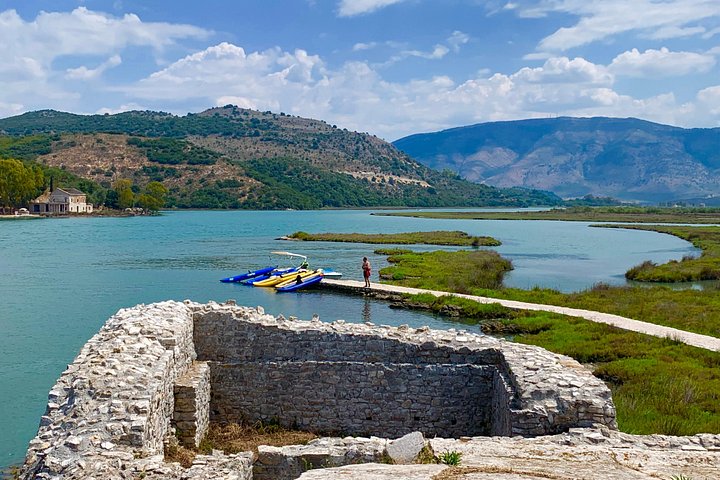
Butrint is the archaeological heart of the Albanian Riviera and the most important ancient site in the country. It lies about 18 kilometres south of Saranda on a wooded peninsula between the Vivari Channel and a calm lagoon, and its ruins climb through layers of Greek, Roman, Byzantine and Venetian history under a canopy of pines, laurels and oaks. The site is inscribed on the UNESCO World Heritage list and sits inside a national park that protects the surrounding wetlands, so a visit combines ancient stones with birdsong, water and shade. It is the single best half day you can spend from Saranda, and the one sight most visitors say they would repeat.
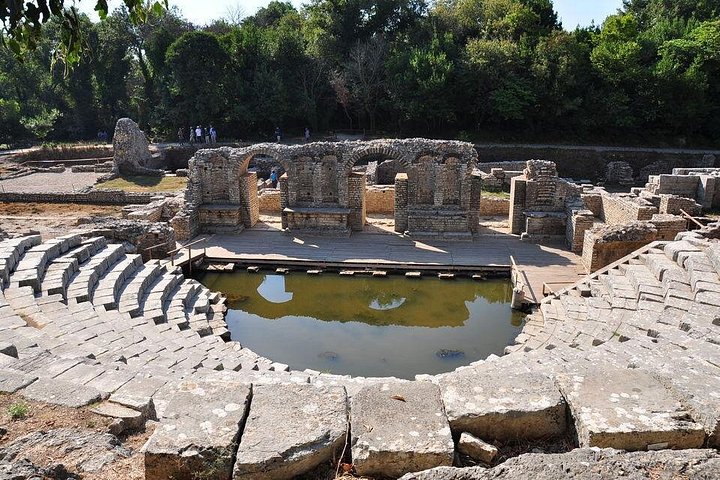
The settlement the Romans called Buthrotum was founded long before Rome, and ancient writers linked it to the Trojan story told in Virgil's Aeneid. The visible remains begin with a theatre cut into the hillside, dating to the Hellenistic period, whose stone seats still face the water. Nearby are the foundations of a sanctuary of Asclepius, the Roman baths and a forum, and a large early Christian baptistery whose mosaic floor is normally covered to protect it.
The Lion Gate, the Gate of the Sea and sections of the Cyclopean-style walls give a sense of how defended the town once was.
Higher up, the acropolis carries a Venetian tower that now houses a small museum of finds from the site, and from its walls you look across the channel to a triangular fortress and the green plains of the Greek border. A path loops back through the forest past a well, chapels and the great basilica, and signs describe each stop in English. The paths are uneven in places, with steps and sloping stone, so comfortable shoes are important. Allow shade and water, because the summer sun is strong even under trees.
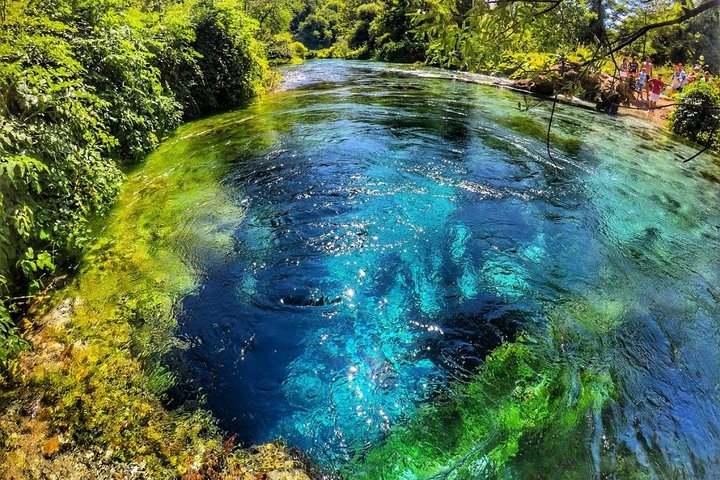
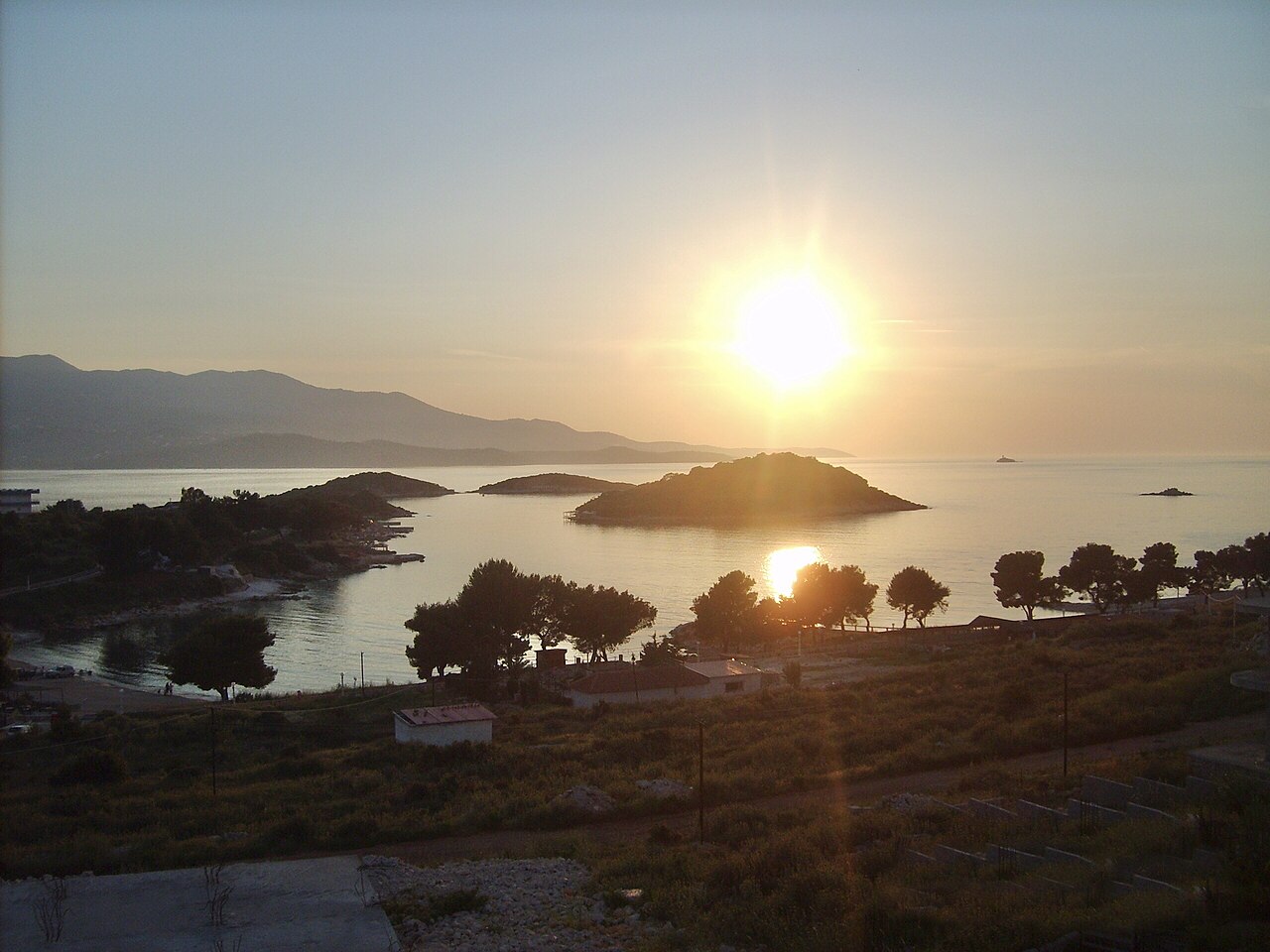
Most visitors arrive on a guided tour from Saranda or Ksamil, and the tour linked here is built around the site. A guide helps a great deal at Butrint, because the ruins are scattered and unlabelled stones can look alike without context. Many tours combine Butrint with Ksamil's beaches or with the Blue Eye spring and Lekuresi Castle, making a full day.
If you prefer to explore at your own pace, a taxi or the local bus from Saranda will drop you at the entrance, and the small cable ferry across the Vivari Channel is a short walk away, pulled across the water on chains.
Go early or late in the day in high summer, when tour groups arrive in waves and the midday heat builds. Spring and autumn are lovely, with wild flowers, green hillsides and softer light for photographs. The site is large enough to absorb crowds, and the quieter corners near the lagoon edge are rarely busy. Plan on two to three hours on foot, longer if you enjoy reading the signs and sitting in the theatre.
Practical details make the visit smoother. The entrance is ticketed and the ticket office is at the gate, and the site opens early and closes around sunset, with the exact hours changing by season. Toilets and a small cafe are near the entrance, but there is little food inside the park, so carry water and a snack. A hat and sunscreen matter in summer, and a light rain jacket is useful in spring.
What to expect
The experience
A guided or self-guided walk through ancient ruins in a forested national park, usually reached by a half-day or full-day tour from Saranda or Ksamil.
Best time
Early morning or late afternoon in summer, and any time of day in spring and autumn when the light is soft and the paths are quiet.
How long
Two to three hours on site, plus about 30 minutes of travel each way from Saranda.
Tips
Wear shoes with grip, bring water and sun protection, and ask for a guide if you want the stories behind the stones. Combine it with Ksamil for a swim afterwards.
Quick picks
- Best for
- History lovers and first-timers who want one unmissable ancient site on the Albanian coast.
- Families
- Good for older children who enjoy ruins and forest paths; the theatre and the chain ferry are favourites.
- Couples
- Quiet lagoon views and shaded paths make it a relaxed, atmospheric half day.
- Pair with
- Ksamil beaches and the Blue Eye spring, both easy to add to the same day.
- Time needed
- Half a day including the drive from Saranda.
Good questions
How far is Butrint from Saranda?+
About 18 kilometres, or roughly 30 to 40 minutes by road. Tours, taxis and local buses all make the trip.
Is Butrint a UNESCO World Heritage site?+
Yes. The ancient city and its surrounding national park are inscribed, which is why the site and its wetlands are carefully protected.
Do I need a guide?+
It is not compulsory, but a guide adds a lot. The ruins are spread through woodland and the story of the Greek, Roman, Byzantine and Venetian layers is easier to follow with explanation.
How long should I allow?+
Two to three hours on site is comfortable. Add travel time and a swim at Ksamil if you want a relaxed half day.
When is the best time to visit?+
Early morning or late afternoon in summer, and spring or autumn for cooler walking. Midday in July and August is hot and busy.