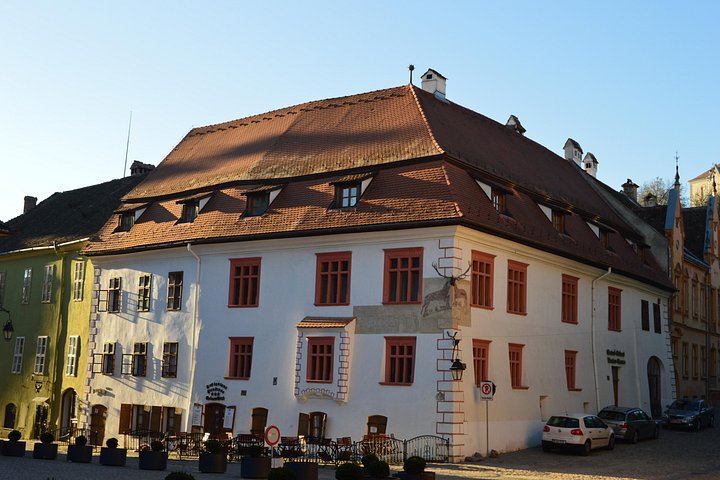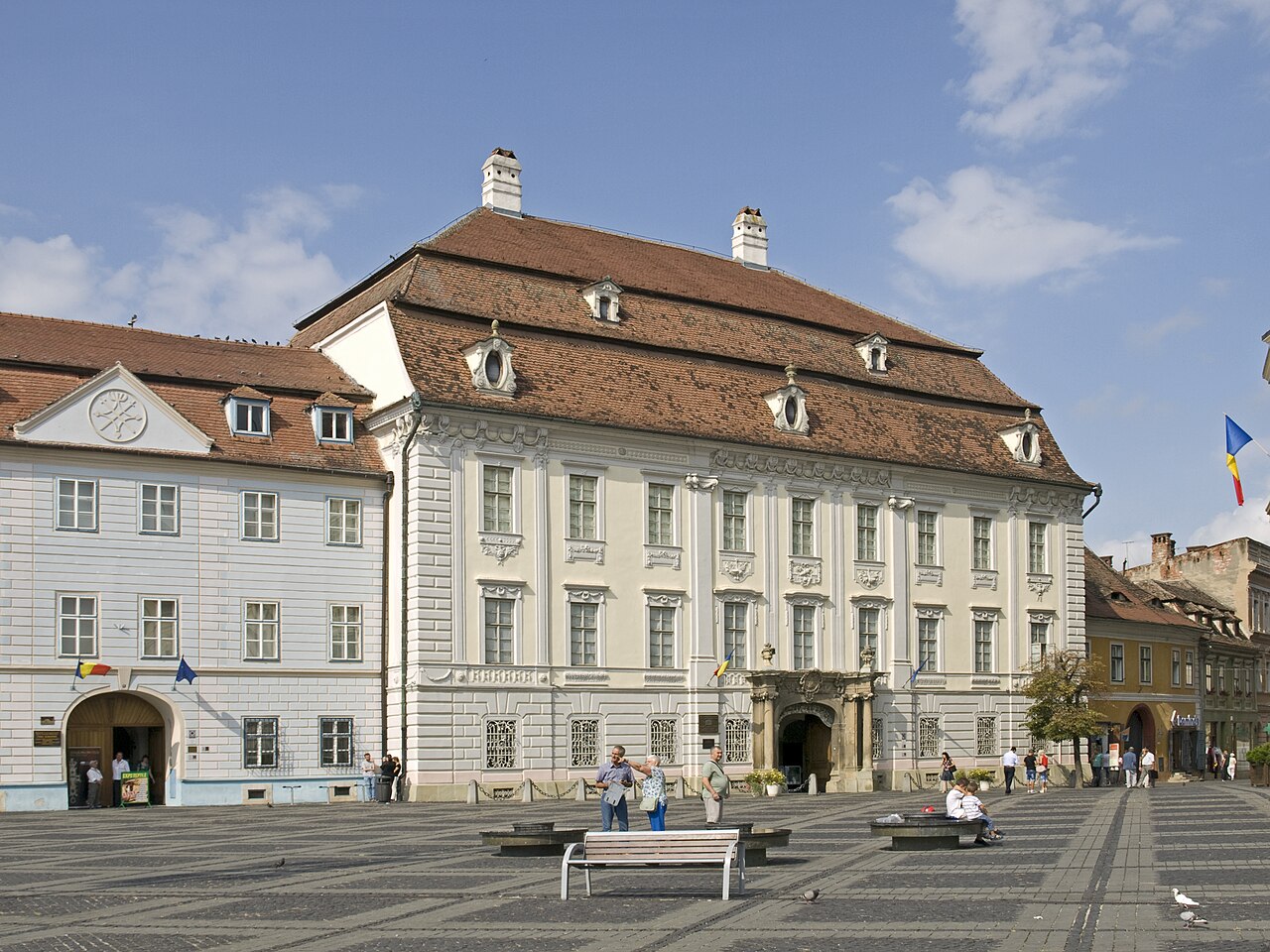
Brukenthal Palace is the grandest building on Sibiu's Large Square and the home of the Brukenthal National Museum, one of the oldest museums in Central and Eastern Europe. The palace was built in the late eighteenth century for Samuel von Brukenthal, the Habsburg governor of Transylvania, who gathered a collection of paintings, books, coins and minerals and opened it to scholars. After his death it became a public museum in the early nineteenth century, and the collection still anchors the building today. The European art gallery holds works from the Flemish, Dutch, Italian and German schools, while the Romanian and Transylvanian galleries show how the region's own painters developed. The state rooms, with their carved doors, stoves and period furniture, give a sense of how a governor lived. The museum is a strong rainy-day choice, and it fits neatly between a morning walk in the squares and a long lunch.
The museum is made up of several buildings, but Brukenthal Palace on the Large Square is the one most visitors come for. Entering through the courtyard you climb to the upper floors, where the European gallery fills the rooms the governor once used for receiving guests. Expect devotional panels, portraits, landscapes and still lifes, arranged in an old-fashioned manner that suits the setting.
There are also galleries devoted to Romanian and Transylvanian art, and decorative arts such as clocks, glass and furniture. The palace library is one of the great book collections of the region, though you will see only parts of it on a standard visit.
The paid link for this page goes to a guided highlights visit of the palace, which suits travellers who would rather have the story of the governor, the collection and the building told by a guide than wander room by room. Check the tour details for the language, the start times and exactly what is included before you buy.
If you prefer to go alone, entry is also sold at the museum, and a plain ticket is inexpensive by Western European standards. The museum usually closes on Mondays and keeps shorter hours in winter, so confirm the day and the closing time before you walk over.
Allow about ninety minutes for the main galleries, a little more if you read the labels carefully. Photography rules vary by room, so ask at the desk. The palace is flat inside once you are on a floor but involves stairs between levels, so visitors who struggle with steps should ask staff about the lift or alternative routes. Pair the visit with a stroll across the Large Square, a coffee in the Small Square and a look at the Evangelical Cathedral, which is only a couple of minutes away on foot.
What to expect
The experience
A guided or self-paced visit through the palace galleries, from European paintings to Transylvanian art and period rooms.
Best time
Mid-morning on a weekday, or any time the weather is wet or cold.
How long
About ninety minutes to two hours.
Tips
Check the closing day and winter hours before you go, and ask at the desk about photography and the lift.
Quick picks
- Best for
- Art and history lovers, and anyone who wants a warm indoor stop on a cold day.
- Families
- Older children who enjoy paintings will cope well, but younger ones may tire quickly.
- Couples
- A calm, atmospheric hour in the governor's rooms before dinner.
- Pair with
- The Large Square, the Evangelical Cathedral and a coffee in the Small Square.
- Time needed
- Ninety minutes to two hours.
Good questions
Where is the Brukenthal Museum?+
The main palace stands on the Large Square in Sibiu's old town, so it is a few minutes on foot from most hotels in the centre.
Who was Samuel von Brukenthal?+
He was the Habsburg governor of Transylvania in the eighteenth century, and his private collection of paintings and books became the core of the museum.
Is it open on Mondays?+
The museum is typically closed on Mondays and keeps shorter hours in winter. Check the day you plan to go before walking over.
How long should I allow?+
Plan on about ninety minutes for the main galleries, and up to two hours if you like to read labels.
Is a guided visit worth it?+
A guide adds the story of the governor and the collection, which labels cover only briefly. If you enjoy context, the highlights visit is a good fit.