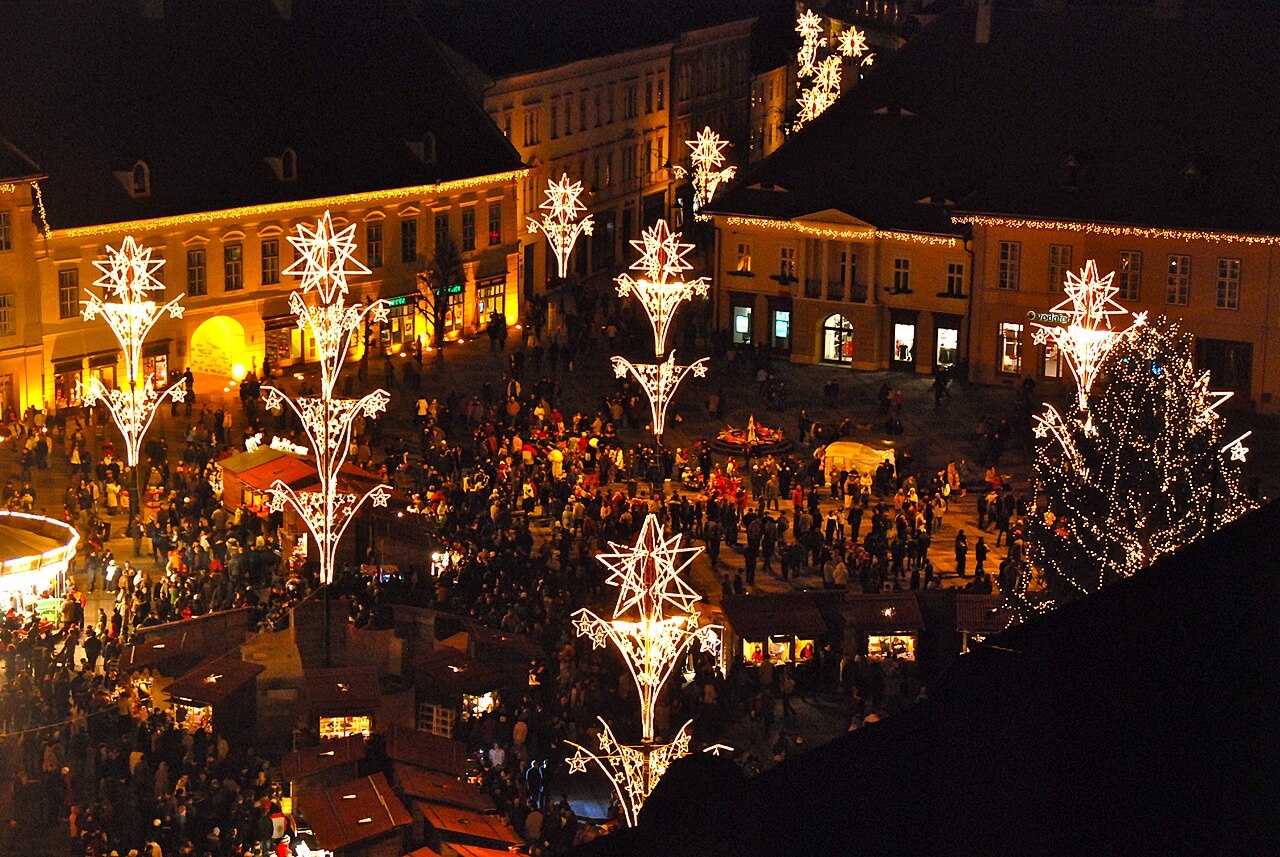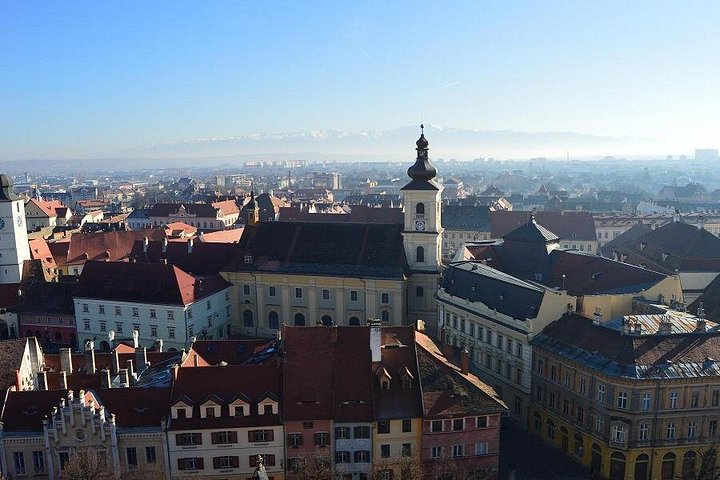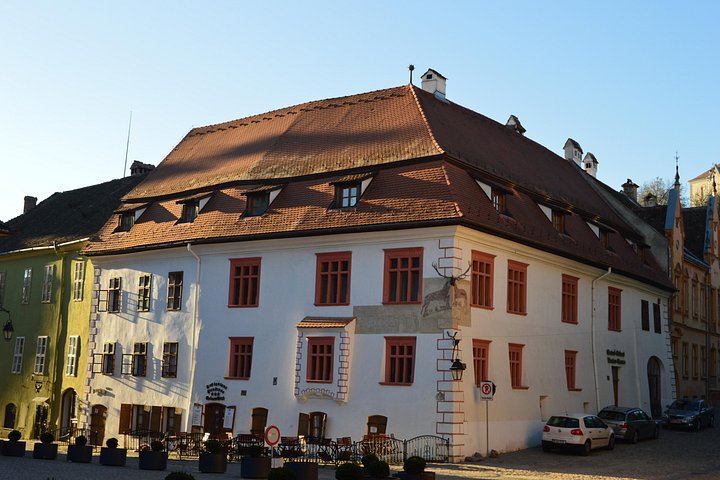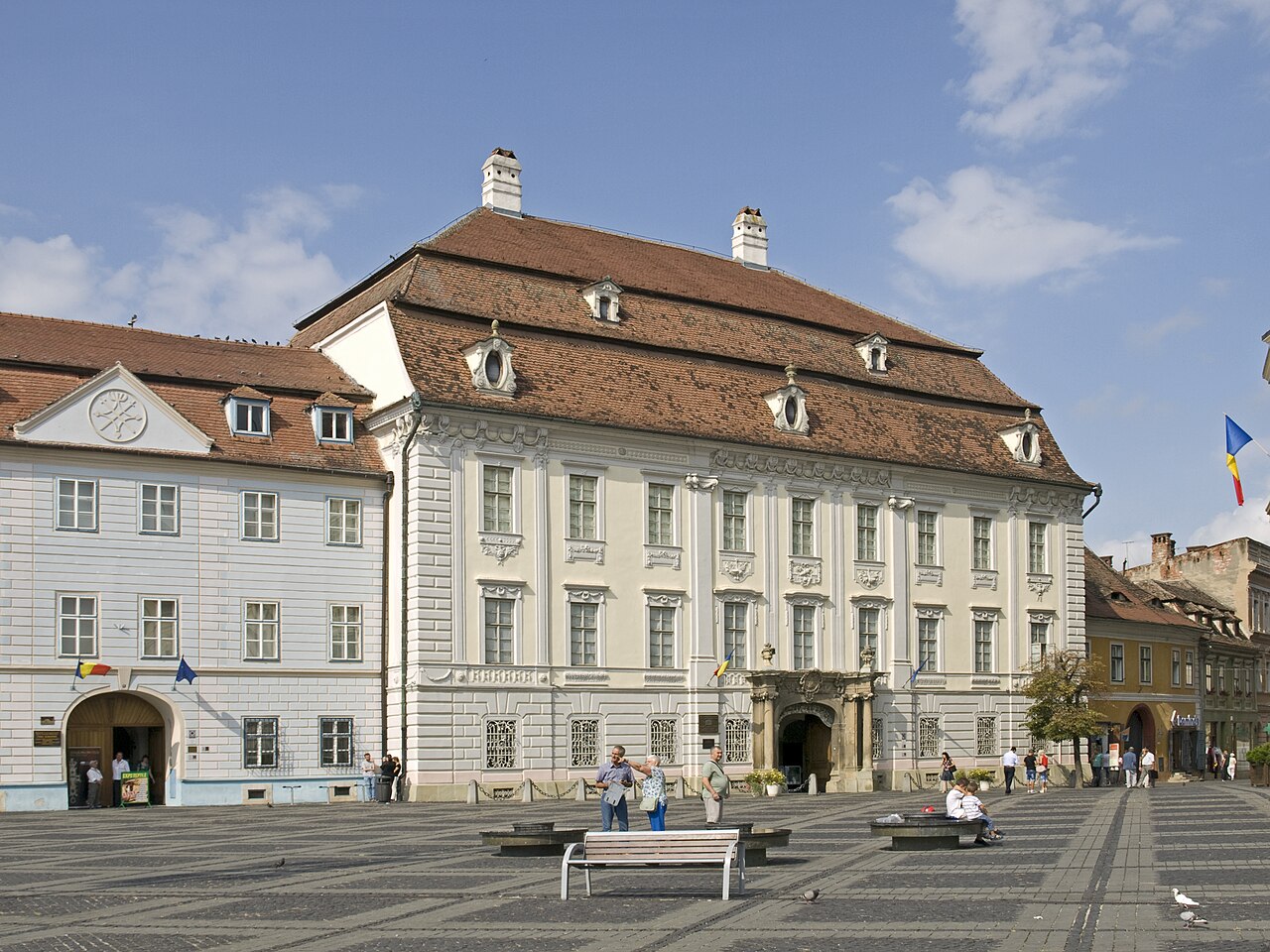
Sibiu's old town is built around two connected squares. Piata Mare, the Large Square, is a wide, cobbled space framed by Baroque townhouses, the pale facade of Brukenthal Palace and the towers of the Roman Catholic and Evangelical churches, and it hosts the city's big events, from summer festivals to the Christmas market. Just downhill, Piata Mica, the Small Square, is quieter and more medieval in feel, a ring of colourful merchants' houses around the old Council Tower. Between the two, the Bridge of Lies crosses a lane known as Ocnei Street. Built in 1859-60 as the first cast-iron bridge in Romania, it is said to collapse if someone tells a lie while standing on it, a tale that has been retold so often that few visitors cross without a smile. Look up at the roofs and you will notice the famous house windows that watch the square like half-open eyes. Sibiu was a European Capital of Culture in 2007, and the restoration that followed is why the squares look so well kept today.
Start in the Large Square and simply turn slowly. On one side is Brukenthal Palace, on another the Council House and the Roman Catholic Holy Trinity church, and above the roofline the green spire of the Evangelical Cathedral. Pastel facades in butter yellow, rose and sage line the edges, with cafe terraces spilling out from spring to autumn. The square is the best place to learn how a Saxon trading town was laid out, with the market in the middle and the important buildings facing it.
A short walk through the archway beside the old Council Tower brings you into the Small Square, which feels like a courtyard of guild houses. The Council Tower itself is the symbol of Sibiu, but it can be closed to visitors during restoration works, so check with the tourism office before you plan a climb and be ready to admire it from the outside.
From here, the Bridge of Lies is a few steps away. Stand on it, make your promise, and look back at the rooftops and the roof windows that give Sibiu its nickname, the city with eyes. The lower town and its old fortification towers are reached by the lanes and stairways just beyond.
The whole circuit costs nothing and takes an hour or two at an easy pace, more if you stop for coffee or the museum on the square. Early morning is quietest for photographs, and the squares glow after dark, when the buildings are lit. Cobbles can be slick when wet or icy, so wear shoes with grip in November.
During the Christmas market the Large Square is crowded in the evenings, so visit earlier in the day if you want to photograph the facades. Tourist information is nearby if you want a map, and a local guide adds depth if you like the stories behind the houses.
What to expect
The experience
A free self-guided walk around Piata Mare and Piata Mica, crossing the Bridge of Lies and looking up at the roof windows.
Best time
Early morning for quiet streets, or after dark when the facades are lit.
How long
One to two hours on foot, longer with a coffee stop or a museum visit.
Tips
Wear shoes with grip for the cobbles, look up for the roof windows, and check at the tourism office whether the Council Tower is open to climb.
Quick picks
- Best for
- Every first-time visitor, since the squares link almost every other sight in the old town.
- Families
- Car-free and easy to roam, though the cobbles are awkward for strollers.
- Couples
- Cross the Bridge of Lies together and linger on a terrace in the Small Square in the evening.
- Pair with
- Brukenthal Palace, the Evangelical Cathedral and a long lunch on the square.
- Time needed
- One to two hours.
Good questions
Is it free to visit the squares?+
Yes, the Large Square, the Small Square and the Bridge of Lies are open public spaces at any hour. You pay only for museums, towers and tours.
Can I climb the Council Tower?+
It is not always open. The tower can be closed to visitors during restoration works, so ask at the tourism office before you plan around it.
What is the story of the Bridge of Lies?+
The most popular legend says the bridge will collapse if someone lies while standing on it. The name may actually come from a German word for a bridge you could lie down on, but the legend is the version everyone tells.
How long do I need?+
An hour is enough for the squares and the bridge, and two hours lets you add a museum or a long coffee. They are compact and flat apart from a short slope down to the lower town.
Are the squares busy?+
They are lively in summer and very busy on Christmas market evenings. Early morning is calm all year.