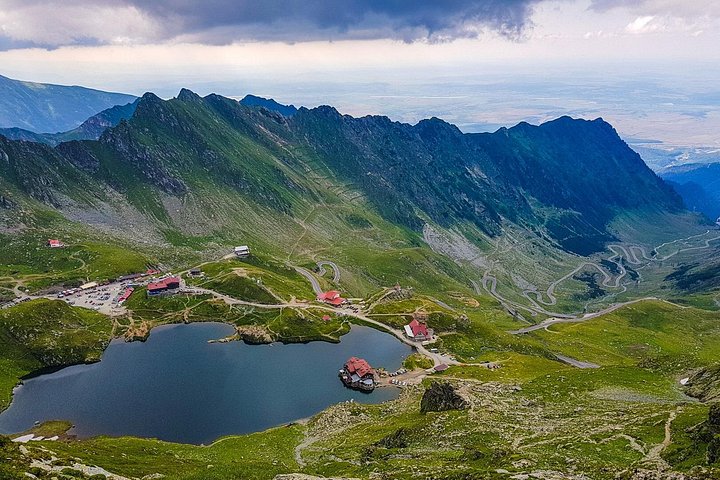
The Transfagarasan, or DN7C, is the spectacular mountain road that crosses the Fagaras range between Transylvania and Wallachia, with tunnels, viaducts and switchbacks that climb to over two thousand metres near Balea Lake. It passes the huge Vidraru dam and lake on the southern side, and the road has become one of the most photographed in Europe. It is also strictly seasonal. Authorities close the high stretch each winter because of snow, ice and avalanche risk, and the stretch between Piscul Negru and Balea Waterfall is usually shut from late autumn because of snow, fog and low temperatures. In recent years the road has reopened around June. So for a winter or early spring visit, treat the road as closed and plan around it. Guided day trips from Sibiu usually run in the open season.
The northern approach from Sibiu runs through Cartisoara and the villages of the Olt valley before climbing to Balea Waterfall, where the cable car to the lake begins. From the saddle the road drops through tunnels and a series of hairpins on the southern flank, with views of the glacial valleys.
The scenery changes within a few kilometres from forest to alpine meadow to bare rock, and the best light is on a clear summer morning. Many visitors turn the drive into a day trip that also includes the Vidraru dam, the Poenari fortress or the lake itself.
Because of the seasonal closure, be clear about timing. The road typically closes from around November and reopens roughly in June, depending on snow and clearing. Even in the open season, fog, wind and sudden storms can close it at short notice, and temperatures at the top are far cooler than in Sibiu. If you visit in autumn or winter, do not set off in a rental car expecting to cross.
The lower sections may stay accessible, and the cable car from Balea Waterfall may run in winter, but confirm conditions locally. The paid link here is a guided day tour that covers the road and the Vidraru dam, and it is best booked for the warm season.
If you are visiting in the open season, start early to beat the coach traffic, bring layers and drive or ride with a guide who knows where the best viewpoints are. A day trip from Sibiu takes most of the day because of the winding roads and the stops. Fuel up in advance, check the road status the morning you travel, and carry water and snacks. For a winter visit, consider Balea Lake by cable car instead, or save the Transfagarasan for a summer return.
What to expect
The experience
A full-day guided drive from Sibiu along the Transfagarasan to the Vidraru dam, in the open season only.
Best time
Late June to September, on a clear morning.
How long
A full day, usually eight to ten hours with stops.
Tips
Check that the high road is open the day you travel, expect it to be closed in November, and bring warm layers.
Quick picks
- Best for
- Drivers, photographers and mountain-road fans visiting in summer.
- Families
- Fine for older children in warm months, but the long winding drive can upset young stomachs.
- Couples
- A dramatic scenic day, best on a clear summer morning.
- Pair with
- Balea Lake, the Vidraru dam and the Poenari fortress.
- Time needed
- A full day.
Good questions
Is the Transfagarasan open now?+
Not in winter. The high section is usually closed from about November to June because of snow and fog, so check conditions before a summer or autumn drive.
When does it usually reopen?+
In recent years the road has reopened in June after snow clearing, but the date depends on the weather. Check local news before booking.
Can I still do a day trip in winter?+
Guided trips usually run in the open season. In winter you can reach Balea Lake by cable car from Balea Waterfall when it operates, so confirm conditions locally.
How long does the drive take from Sibiu?+
Allow most of a day, because the road is winding and slow. The journey to Balea Waterfall alone takes over an hour.
Is it worth it with a guide?+
A guide handles the driving, knows the viewpoints and checks conditions, which helps on a road with fast-changing weather.