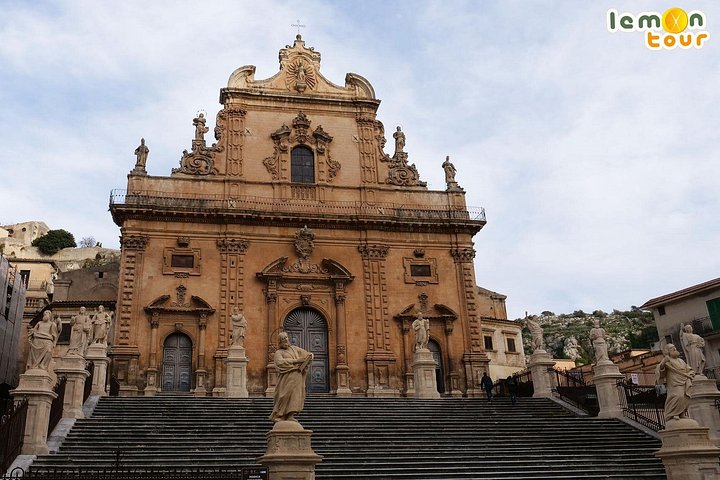
In 1693 a huge earthquake destroyed much of south-eastern Sicily, killing tens of thousands of people and flattening whole towns. What followed was one of the great bursts of rebuilding in European history, as noble families and the Church raised new towns in the flamboyant baroque style, with curving balconies, theatrical staircases and facades crowded with carved stone. Eight of these towns, including Noto, Modica and Ragusa, are now inscribed together as a UNESCO World Heritage site, known as the Late Baroque Towns of the Val di Noto. Together they form some of the most harmonious townscapes in Italy. Noto is the showpiece: a town laid out afresh in glowing golden limestone, with a grand main street, a domed cathedral at the top of a sweeping staircase and palaces whose balconies are supported by carved grotesques and cherubs. Modica is a stacked town of staircases and churches, known as the home of dense, grainy chocolate made to an old Aztec-influenced method. Ragusa Ibla, the old quarter of Ragusa, is a maze of lanes and piazzas on a spur above a ravine. A day tour links them in a loop, and gives a vivid sense of how Sicilian towns can be both exuberant and intimate.
What to look for
In Noto, walk the length of Corso Vittorio Emanuele and climb the steps of the cathedral to admire the facade, then look up at the balconies of Palazzo Nicolaci, supported by fantastical carved figures. In Modica, take time to see the Duomo of San Giorgio at the top of a long staircase and sample the local chocolate, which is sold in many flavours, from cinnamon and chilli to orange.
In Ragusa Ibla, find the Duomo di San Giorgio, wander the little gardens and enjoy the way the town clings to its hillside. Each place has its own personality, and you will notice the shared stone and architecture tie them together.
Planning the trip
The towns are spread across a hilly region about one and a half to two hours south of Catania, so a guided day trip or a hire car is the practical way to see them. Many tours depart from Catania, Taormina or Syracuse, and some include food tastings, a stop at a chocolate workshop or a visit to a farm or winery.
If you drive yourself, parking can be tricky in the steep old centres, so follow signs to the car parks on the edge of town. Roads are winding but scenic, and a slow pace is part of the charm.
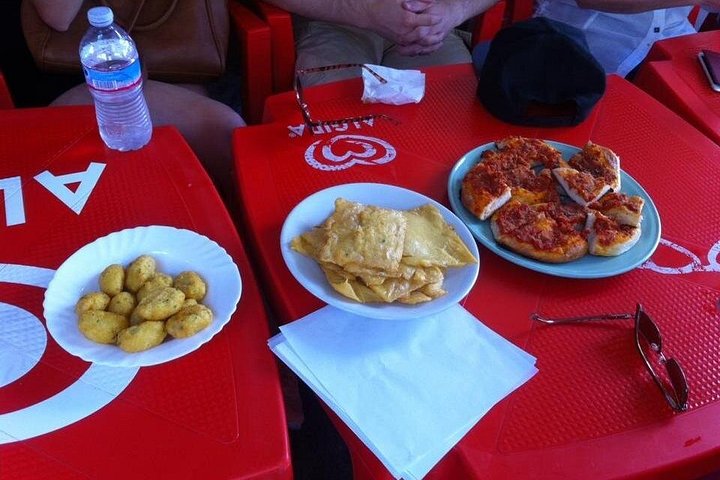
When to go and what to bring: spring and autumn have mild weather and soft light on the stone, while summer afternoons can be fiercely hot with little shade on the staircases. Wear comfortable walking shoes, because streets are steep and cobbled, and bring a hat and water. Food is a highlight: look out for fresh ricotta cannoli, almond pastries, granita and the local pasta dishes.
If you want to give each town its due, stay overnight rather than rushing. Noto in particular looks magnificent at sunset, when the limestone turns the colour of honey, and the evening passeggiata is a delight.
If you are choosing between towns, think about what you enjoy most. Architecture lovers will want to linger in Noto, those who like atmospheric alleys will enjoy Ragusa Ibla, and anyone who loves food should leave plenty of time in Modica. A good tour will strike a balance, but if you travel independently you can tailor the day, perhaps skipping a town to spend longer over lunch. Keep a little cash for small shops and market stalls, since some of the best chocolate and pastry counters are small family businesses.
What to expect
The experience
A full-day guided excursion or self-drive loop through Noto, Modica and Ragusa Ibla, with time to explore each town on foot.
Best time
Spring and autumn for mild weather, or late afternoon in any season for warm light on the stone.
How long
A full day, usually eight to ten hours including the drives.
Tips
Wear comfortable shoes for steep cobbled streets, and leave room for chocolate and cannoli.
Quick picks
- Best for
- Travellers who love architecture, small towns and good food, and who want to see another face of Sicily.
- Families
- Fine for older children, though the long day and many steps can tire younger ones.
- Couples
- Sunset in Noto, ideally with an overnight stay, is memorable.
- Pair with
- Syracuse and Ortigia, or a Mount Etna day from Catania.
- Time needed
- A full day, or an overnight stay to slow the pace.
Good questions
Why are these towns all baroque?+
A major earthquake in 1693 destroyed much of the region, and the towns were rebuilt in the late baroque style of the time.
Which town is the best if I only have time for one?+
Noto is the most complete and photogenic, though Ragusa Ibla is more atmospheric and Modica is best for food.
How far are they from Catania?+
Roughly one and a half to two hours by road, depending on which towns you visit and the route.
What is Modica famous for?+
Its chocolate, made by a traditional cold-grinding method that leaves a grainy texture, and sold in flavours such as cinnamon and chilli.
Is it easy to do without a tour?+
With a car, yes, though parking and steep streets require patience. Trains and buses link the towns less conveniently.