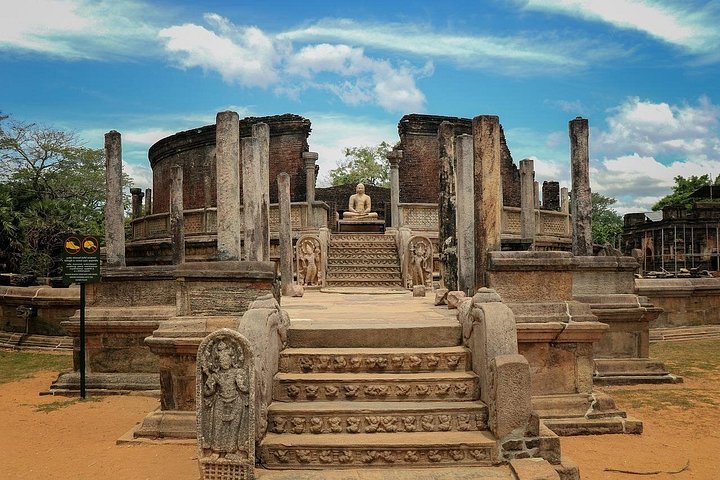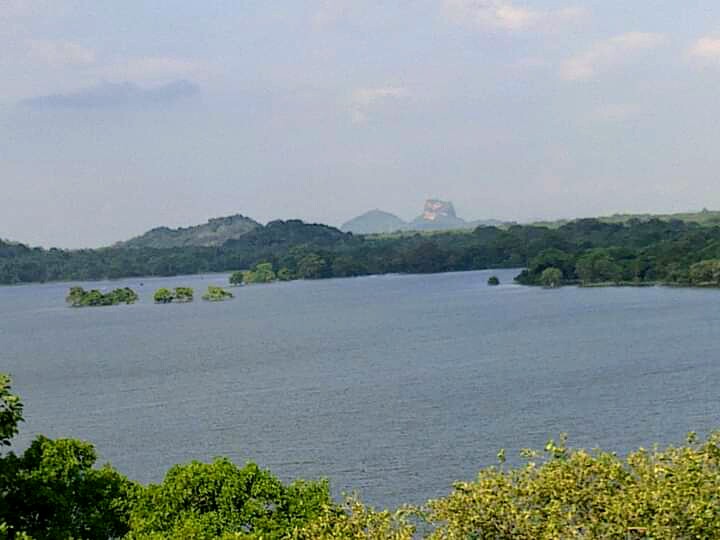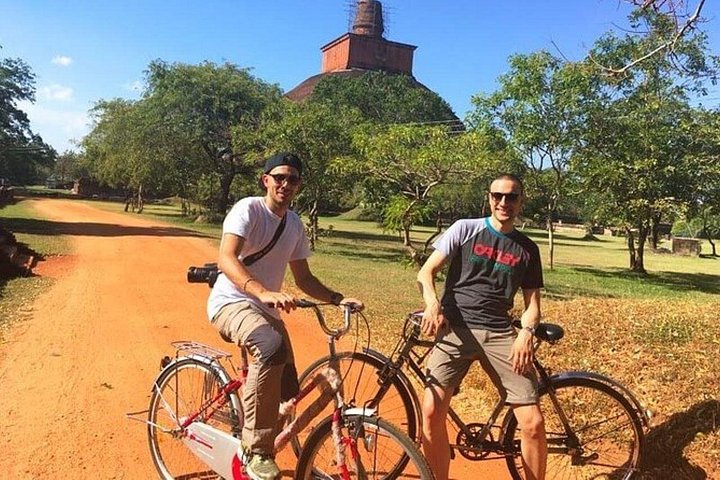
Polonnaruwa is one of the few ancient cities in Asia where a bicycle is the ideal way to see the sights. The archaeological park is spread over several kilometres of flat, shaded tracks among trees and beside the Parakrama Samudra reservoir, and the ruins lie at comfortable distances from one another. Pedalling between the stupas, palaces and temples lets you feel the layout of the medieval city in a way that a drive from car park to car park cannot. A cycling tour typically starts with a transfer from your hotel in the Sigiriya or Habarana area to the park, where bikes are fitted and a guide explains the route. The pace is relaxed, with frequent stops to dismount and explore. Typical highlights include the Quadrangle with its Vatadage, the royal palace ruins, the Lotus Pond and Gal Vihara with its four enormous rock-cut Buddhas. Some operators add a village lane or a ride along the reservoir bund at the end. Cycling also gets you into corners that day-trippers rarely reach. Quiet paths lead to ruined monasteries, brick stupas overgrown with roots and shaded temple foundations where you may find yourself alone. The flat terrain means almost anyone who can ride a bike can enjoy it, and the breeze helps with the heat, though the sun can be strong in the middle of the day.
What is usually included
Bicycles, a helmet in many cases, a guide and transfers to and from your accommodation, as the title says. Entrance fees to the archaeological park are normally separate, so check what is covered when you book. Operators often provide water, and some include a stop for tea or a light meal.
What to expect
The route is mostly flat on paved and gravel tracks, with a few short sandy sections. Several shrines require you to remove shoes, so wear footwear that is easy to take off, and shoulders and knees should be covered. A typical outing lasts three to four hours of riding and walking, and a morning start is best because of the heat. Traffic inside the park is light, although tour vehicles move around the main sites.
Making the most of it
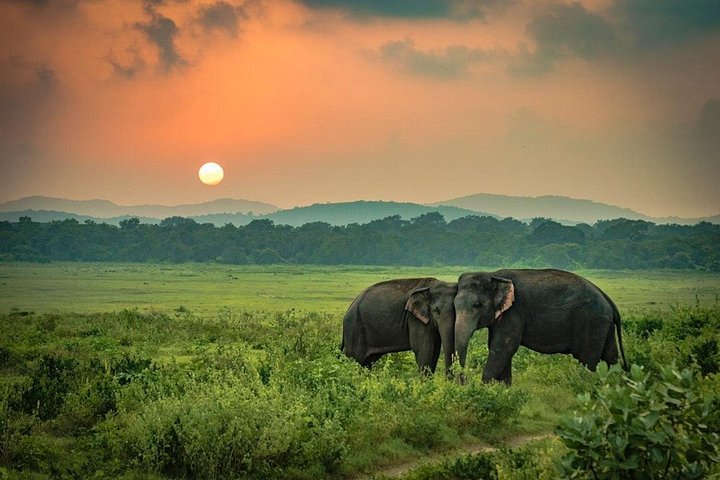
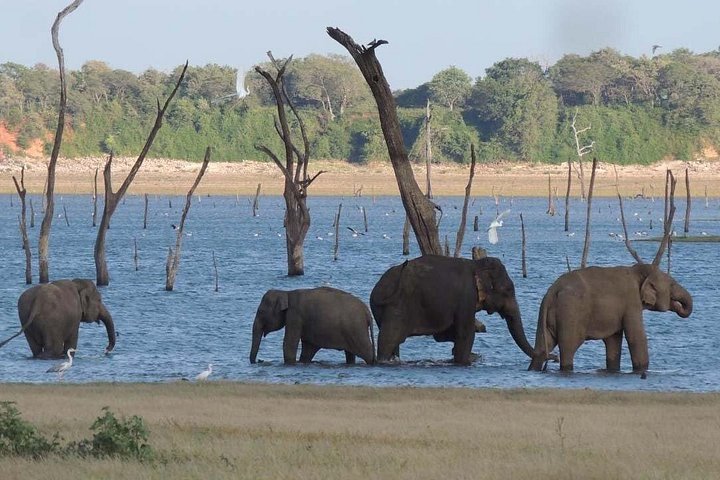
Bring sunscreen, a hat and water, and consider a light long-sleeved shirt to protect from the sun while meeting the dress requirements. Be careful of monkeys near food, and keep an eye on uneven ground at the stops. If you are not confident riding, ask for a steadier bike or a slower route. A good plan is to cycle Polonnaruwa in the morning and finish with a safari at Minneriya or Kaudulla in the afternoon, which makes a rich day of ruins and wildlife.
Who it suits
Active travellers, families with confident young riders and anyone who finds walking in the heat tiring. It is a good alternative to a car tour for people who like to feel the scale of a site, and the breeze while riding makes the hot hours easier. If you have mobility concerns, speak to the operator in advance, as some sites involve steps and the day is longer than a short walk.
What to expect
The experience
A guided bicycle tour of the Polonnaruwa archaeological park on flat tracks, with transfers from your hotel.
Best time
Early morning, before the heat, in the drier months.
How long
Four to six hours including transfers, riding and stops at the ruins.
Tips
Wear shoes that are easy to remove, bring sunscreen, a hat and water, and cover shoulders and knees at the shrines.
Quick picks
- Best for
- Active visitors who want to cover the ruins efficiently and feel the layout of the old city.
- Families
- Good for children who are confident on a bike; the paths are flat and traffic is light.
- Couples
- A shared ride among ruins and trees is a relaxed alternative to a car tour.
- Pair with
- An afternoon safari at Minneriya or Kaudulla.
- Time needed
- Half a day.
Good questions
Do I need to be fit to cycle Polonnaruwa?+
No. The tracks are flat and the pace is gentle, so most people who can ride a bike manage easily, although the heat can tire you.
Are the entrance fees included?+
Usually not. Check the details when you book and carry cash or a card for the park ticket.
Can children join?+
Children who ride confidently can usually join. Ask the operator about bike sizes and child seats before you book.
What should I wear?+
Light clothing that covers shoulders and knees, a hat, sunscreen and shoes that are easy to take off at shrines.
Is there shade?+
There is plenty along the tracks, but the middle of the day is hot, which is why morning starts are best.