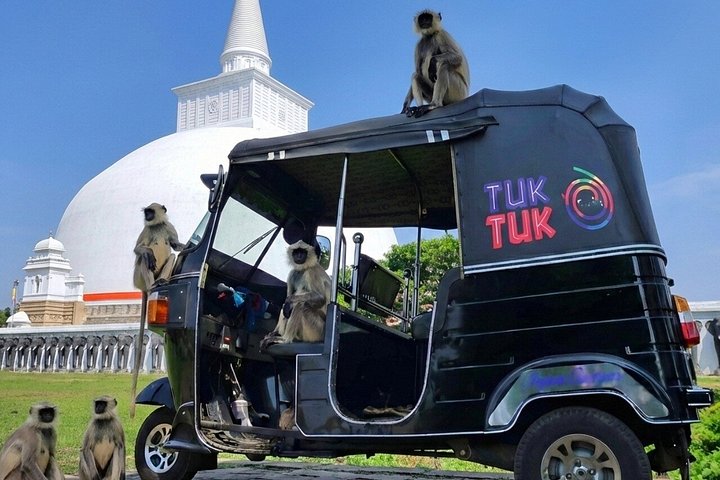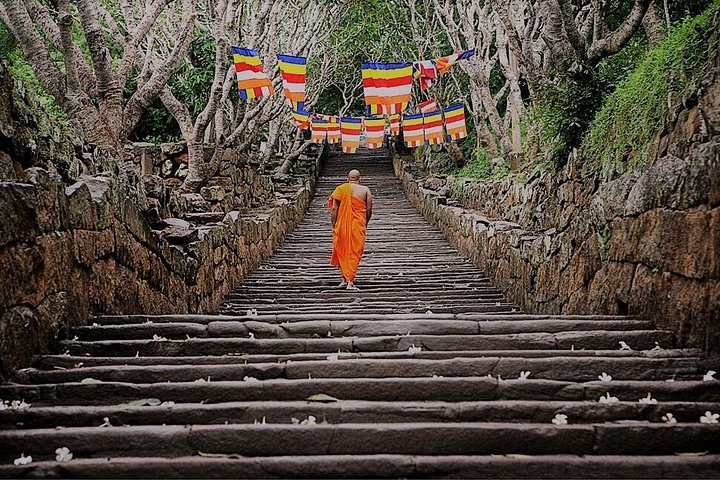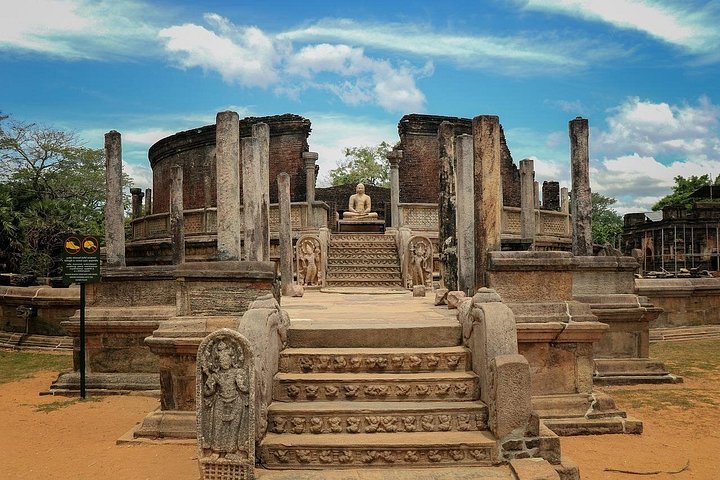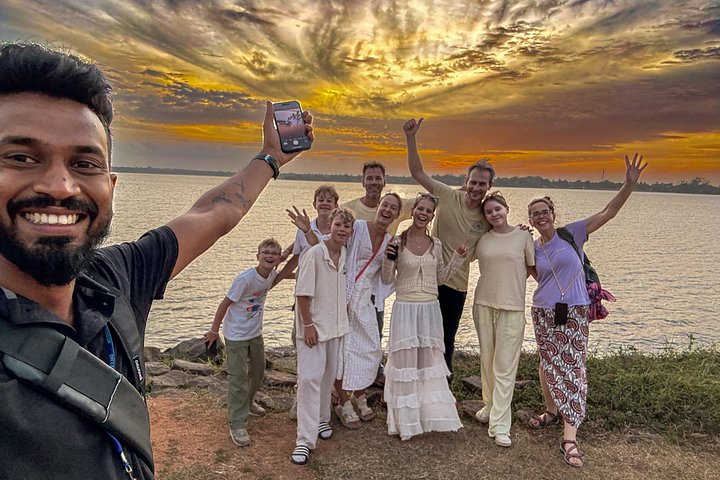
Anuradhapura was the capital of the Sinhalese kingdom for well over a thousand years, from roughly the fourth century BC until the eleventh century AD, and it remains the spiritual heart of Sri Lankan Buddhism. The sacred city is a vast area of ruins, temples, reservoirs and working shrines, and it is a UNESCO World Heritage Site. Unlike many archaeological parks, much of it is still a living place of worship, so you share the grounds with white-clad pilgrims carrying lotus flowers and oil lamps, which gives the visit a rare sense of continuity. The centrepiece is the Sri Maha Bodhi, a sacred fig tree grown from a cutting of the tree under which the Buddha attained enlightenment, brought to the island in the third century BC. It is among the oldest historically documented trees in the world and is tended with great reverence. Around it rise colossal stupas: Ruwanwelisaya, a gleaming white dome of the second century BC, the huge brick mass of Jetavanaramaya and the ancient Abhayagiri monastery complex. Smaller sights include the Twin Ponds, beautifully proportioned bathing pools of the monks, the Moonstone at the Queen's Pavilion and rock carvings at Isurumuniya. A small group tour is a good way to approach such a large site. The guide handles the logistics and the history, which is dense and easily forgotten, explains what is happening at the shrines and times the visit to avoid the heat. A smaller party also means quieter, more respectful visits to the places where people are praying.
What is usually included
A guide and transport between the sites, and sometimes a pickup from central accommodation, depending on the option. Entrance fees for foreign visitors are usually separate and are charged at the ticket office. Check when you book what is covered, whether lunch is included and how long the group stays at each site.
What to expect
The tour covers the principal sights, and you walk on sandy paths and paved terraces under the sun. At the sacred precincts you must remove shoes and hats and wear white or light-coloured clothing that covers shoulders and knees; many visitors choose to dress accordingly all day. There is little shade at the large stupas, so the heat can be intense, and the stone and sand can be very hot underfoot, so socks are useful. Allow around four to six hours to see the highlights.
Making the most of it
Visit in the morning or late afternoon, bring water and sun protection, and ask the guide to explain the customs at the Bodhi tree. The city is busiest on full moon days, known as Poya, when pilgrims arrive in huge numbers, which is an extraordinary sight but makes the site crowded and the roads busy.
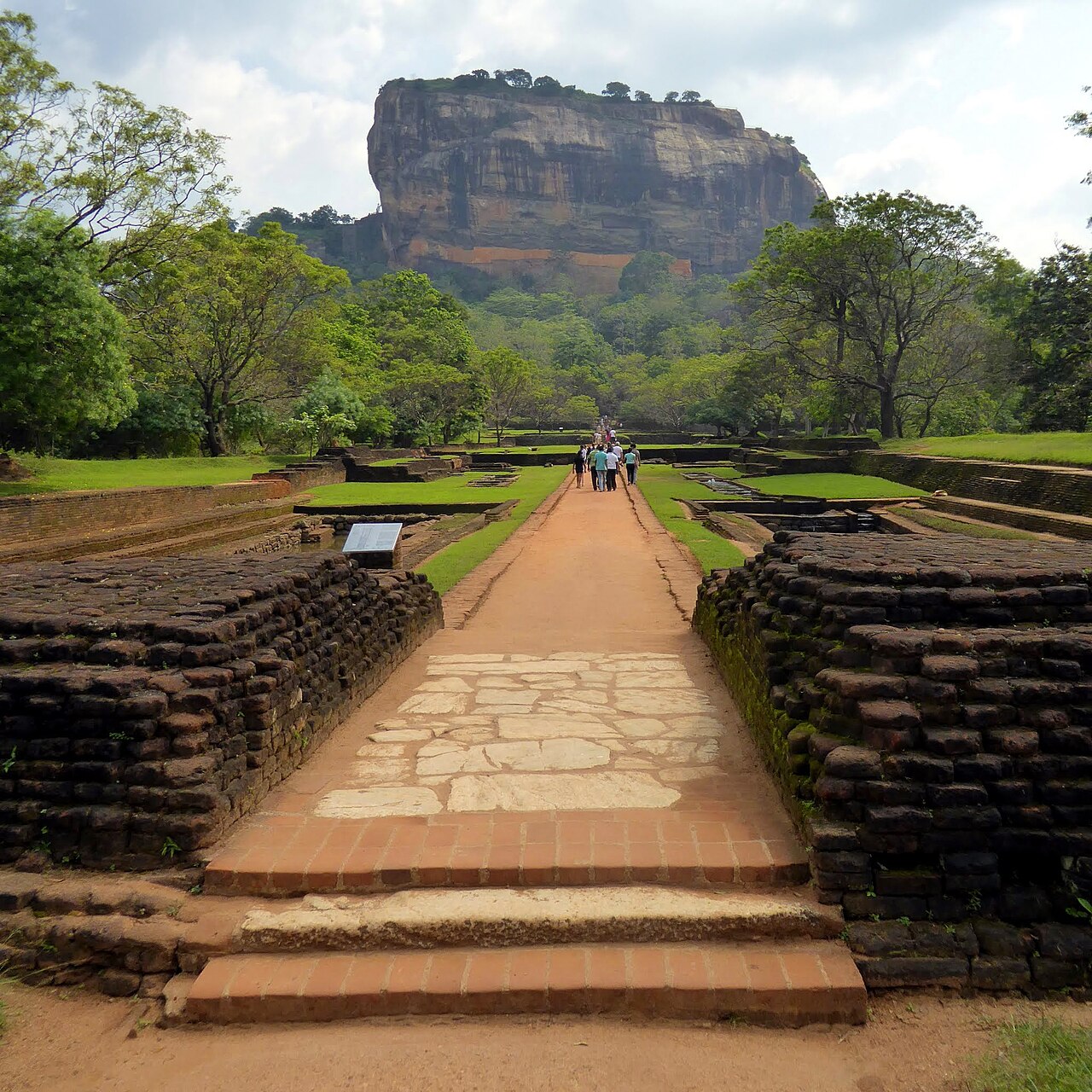
If you want to see the city at a gentler pace, add a tuk-tuk or bicycle tour another day. Anuradhapura is further from Sigiriya than other sights, so consider an early start or an overnight stay.
Who it suits
History lovers, spiritually curious travellers and anyone wanting to understand how Buddhism shaped the island. It is also a good choice for families with older children who like stories of kings, monks and ancient engineering, and for couples who want a thoughtful day. Ask your guide to include the ancient reservoirs, a reminder that the same kingdoms that built temples also built the irrigation works that still feed the dry zone.
What to expect
The experience
A guided small group tour of the principal sights of the ancient sacred city, including the Bodhi tree, the great stupas and monastery ruins.
Best time
Morning or late afternoon, outside the midday heat, and not on a busy full moon day if you prefer quiet.
How long
Five to seven hours including travel between the sites.
Tips
Dress in light clothing covering shoulders and knees, bring socks for hot stone, carry water and be ready to remove shoes and hats.
Quick picks
- Best for
- Visitors who want to understand early Sri Lankan Buddhism and see a living sacred city.
- Families
- Good for older children who enjoy stories; the heat and distances can be hard on very young ones.
- Couples
- A thoughtful, atmospheric day, especially at the Bodhi tree in the late afternoon.
- Pair with
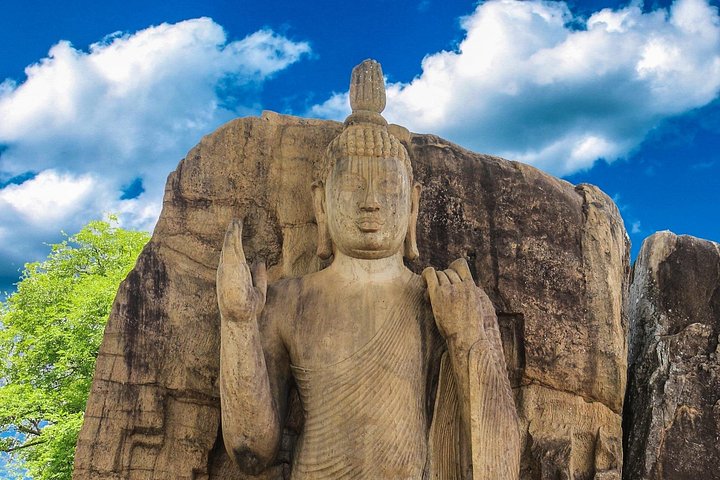
- Mihintale at sunrise or sunset, or Aukana Buddha on a longer day.
- Time needed
- A full day.
Good questions
How far is Anuradhapura from Sigiriya?+
Roughly two hours by road, so it is usually done as a long day trip or as part of an overnight stay.
What should I wear?+
Light clothing that covers shoulders and knees, ideally white or light colours, and shoes you can remove easily. Hats must come off at sacred places.
Is the entrance fee included?+
Usually not. Foreign visitors pay a higher fee than locals at the ticket office, so check the details and carry cash or a card.
What is the Sri Maha Bodhi?+
A sacred fig tree grown from a cutting of the tree under which the Buddha was enlightened, brought to Sri Lanka in the third century BC and venerated by pilgrims.
Is it crowded?+
It can be on full moon days and public holidays, when pilgrims arrive in large numbers. Other days are much quieter.