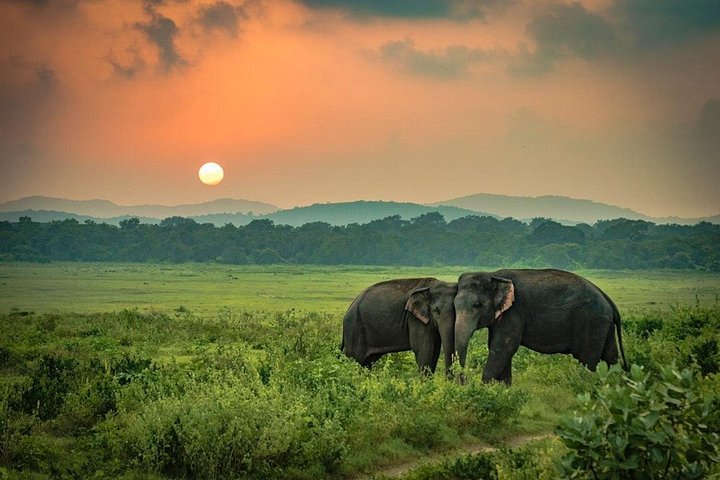
Seeing wild Asian elephants is a highlight of any trip to the Cultural Triangle, and the area offers some of the best opportunities in Asia. Several national parks lie within an hour or so of Sigiriya, and a jeep safari is an easy half-day outing. This guide explains how to choose between the parks, when to go and how to enjoy the experience responsibly.
Minneriya
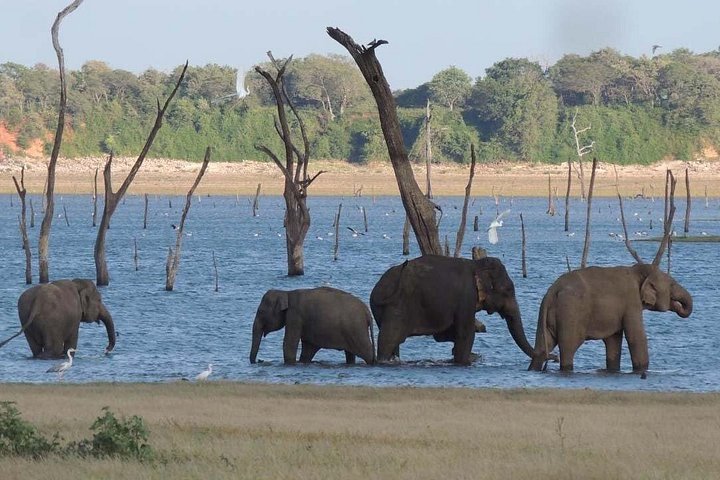
The best-known park, famous for the dry-season Gathering, when large herds feed on the grass around the reservoir. It is the most popular choice, and in busy periods many jeeps converge on the same tracks, but the spectacle can be remarkable. Afternoon safaris are standard, and the light on the reservoir is beautiful. If you have time for only one park in the right season, Minneriya is the classic pick.
Kaudulla
A neighbouring park with its own reservoir and a similar landscape, Kaudulla often sees elephants arrive later in the dry season, as water elsewhere dries up. It tends to be quieter, which gives a more relaxed experience, and it is a good alternative when Minneriya is crowded. Birdlife around the tank is excellent, with storks, pelicans and cormorants. Your driver or hotel can advise which of the two parks is currently better.
Hurulu Eco Park
A smaller park nearby, with forest and a reservoir, Hurulu supports elephants too, and it can be a good option if the other parks are crowded. It is less famous, so it may have fewer vehicles. If you want a shorter safari or a morning option, ask your operator whether Hurulu is available.
Wilpattu
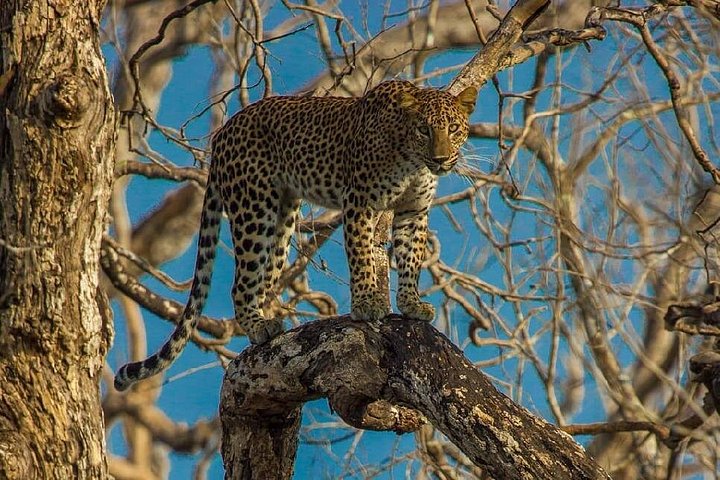
The largest national park in Sri Lanka lies further away, on the north-western side of the island. It is known for leopards, sloth bears and natural lakes, and it has elephants too, though in different habitat. A Wilpattu safari is a full-day commitment, but it offers a wilder, quieter experience for serious wildlife lovers. Consider staying near Anuradhapura to reduce the driving.
Choosing between shared and private jeeps
Shared jeeps are cheaper and sociable, with up to six people, while private jeeps give more space, flexibility and quieter viewing. If you are a photographer or travelling with children, a private jeep is worth the extra cost. Ask how many passengers a shared jeep carries and whether the park fees are included.
When to go
The dry season is the best time for the Minneriya gathering, and the later dry season often favours Kaudulla. Elephants live in the parks all year, but the numbers fluctuate, and during rainy periods the herds disperse across the landscape. Afternoons are the most popular time for viewing, while mornings are cooler and often quieter.
What to bring
Wear neutral clothing, a hat and sunscreen, and carry a scarf for dust. Binoculars and a camera with a zoom lens help you see animals from a respectful distance. Bring water and a small snack, and keep your phone charged. Closed shoes are better than sandals on dusty tracks.
How to behave
Stay seated in the jeep, keep voices low and never feed or approach animals. Respect the rules about distance, and ask your driver to stop if elephants show signs of stress, such as flapping ears or mock charges. Do not throw litter, and avoid using flash photography. Elephants are powerful and can be unpredictable, so give them space.
Ethical choices
Choose operators who follow park rules and avoid crowding the animals. Avoid activities that involve riding elephants or holding captive animals for performance, as these raise welfare concerns. Observing wild elephants in their natural habitat is both more rewarding and more responsible.
Combining with other sights
A safari fits neatly into an afternoon after a morning at Polonnaruwa or Sigiriya, and the parks lie on the road between several sights. Plan a rest at your hotel before heading out, since the jeep ride is bumpy and dusty. If you have more time, consider a second safari in a different park to compare the experiences.
Planning your day
Book the safari for the afternoon, leave your hotel with enough time to reach the gate before the queue, and carry a light snack. Ask the driver how long the park session will last and whether it is possible to stay for the golden hour, since the light on the reservoir is often the most beautiful part of the day. Plan a relaxed evening afterward, because the dust and the bumps make for a tiring outing.