You do not need a car for Sintra and Cascais, and in the hills of Sintra a car is often a handicap. Roads in the historic centre are narrow and restricted, parking near the palaces is limited, and the best views are on routes where traffic is slow. Public transport, a few good walks and the occasional guided ride cover everything in this guide, and they also let you enjoy a glass of wine at lunch without worrying about the road.Reaching the area from Lisbon. Two suburban train lines serve the area. The Sintra line runs from Lisbon's central stations to Sintra and takes a little under an hour, while the Cascais line runs along the coast from Cais do Sodre, stopping at Belem, Estoril and Cascais. Both run frequently through the day, and both are straightforward to use with a rechargeable travel card that works across trains, buses and the metro. Because the lines end in different places, you can arrive at one and leave from the other, which makes a day in Sintra and an evening in Cascais an easy loop. To connect the two without returning to Lisbon, use the bus services described below.Climbing Sintra's hills. Sintra station sits below the village, and the palaces are uphill. Local buses climb from the station and the historic centre to the Moorish Castle and Pena Palace, and a second route serves the National Palace, Regaleira and Monserrate. Services are frequent but crowded in high season, and queues at the stops can be long in the middle of the day. Go early, travel light and consider a one-way bus up and a walk down, which is gentler on the legs and gives you the forest. A taxi or a rideshare is a reasonable alternative for a group of three or four, and a tuk tuk is a fun, guided option for a short loop.Walking in Sintra. The village itself is compact, and the walk between the National Palace, the shops and the station takes minutes. Paths from the village into the park and towards the Moorish Castle are signposted, and many visitors walk down from Pena through the forest. Wear shoes with grip because stones are polished by centuries of footsteps, and keep to the marked paths, particularly after rain.Between Sintra and the coast. A bus connects Sintra with Cascais, passing through the hills and running near the coast, and another route links Sintra with Cabo da Roca, which is the easiest way to reach the cape without a tour. Timetables change with the season, so check the latest schedule at the station, and allow extra time on summer weekends. If you prefer a guided approach, a jeep tour or a small-group day trip covers the same ground with commentary and without the waiting.Getting around Cascais. Cascais is flat and walkable. The old town, the marina, the citadel, the museums and several beaches lie within a few minutes of the station. Free or low-cost bicycles are often available for short rides along the coastal path, which runs past Boca do Inferno and towards Guincho, and the route is a pleasure on a clear day. For Guincho, which is further west, use a bus, a bike or a taxi, as the beach lies beyond the town. Estoril is a pleasant walk along the seafront promenade or a short train hop away.Choosing the right option. If you have only one day, base yourself in Lisbon and take a small-group tour that handles the timing, or take the train to Sintra and the bus to Pena, then return in the evening. If you have two or more days, stay in the hills or on the coast and use public transport for the main sights, adding a guided ride when the weather or the energy turns against you. Active travellers can rent an electric bike in Sintra, which makes the hills manageable and gives you more freedom than the bus.Practical tips. Carry a light layer, because the hills are cooler than the coast. Download an offline map and bus timetable, since signal can be patchy in the forest. Keep small change or a card for tickets and buy tickets for the palaces in advance, as timed entries can sell out. Avoid carrying large luggage on the hill buses, and use station lockers or your hotel if you are moving between towns. Finally, build slack into your plan. The hills reward unhurried travellers, and a missed bus is often the start of a better afternoon, with a coffee in a quiet square and a detour you had not planned.
Sintra & Cascais guide
Getting Around Without a Car
How to see Sintra and Cascais without renting a car: the train lines from Lisbon, the hill buses, the coastal link between Cascais and Cabo da Roca, walking routes and when a guided ride is worth it.
Mentioned in this guide
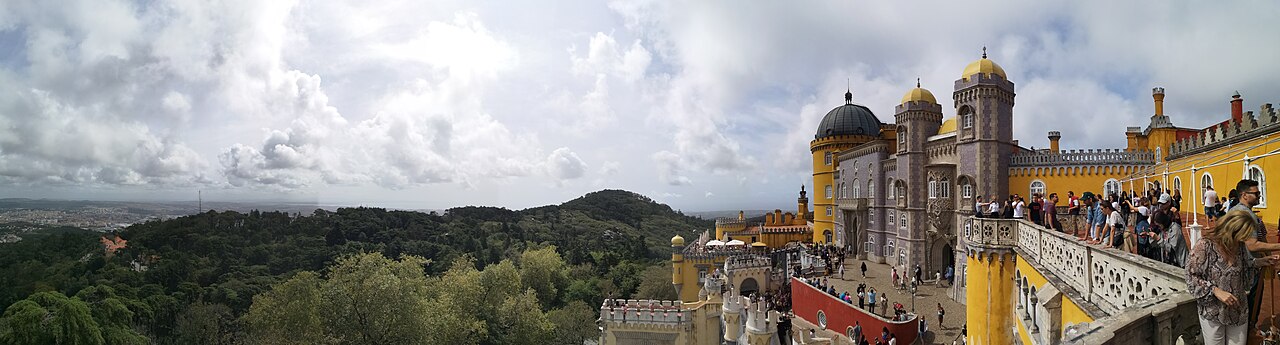
DoPena Palace and Park
The yellow-and-red hilltop fantasy that defines Sintra. Pena is the one stop nobody skips, and it is also the one that punishes unplanned visits: palace entry is by timed slot, so book your date and time before you travel and arrive early.
Sintra Tuk Tuk Tour: Palaces, Legends and Landscapes
A guided ride through the Sintra hills in an electric tuk tuk, with the climb, the hairpins and the viewpoints handled for you. A relaxed way to see the village, the palace gates and the forest roads without a steep walk.
Sintra Self-Guided E-Bike Ride
An electric bike turns the Sintra hills from a slog into a pleasure. Ride at your own pace between the village, the forest roads and the palace gates, with the battery doing the climbing.
 Do
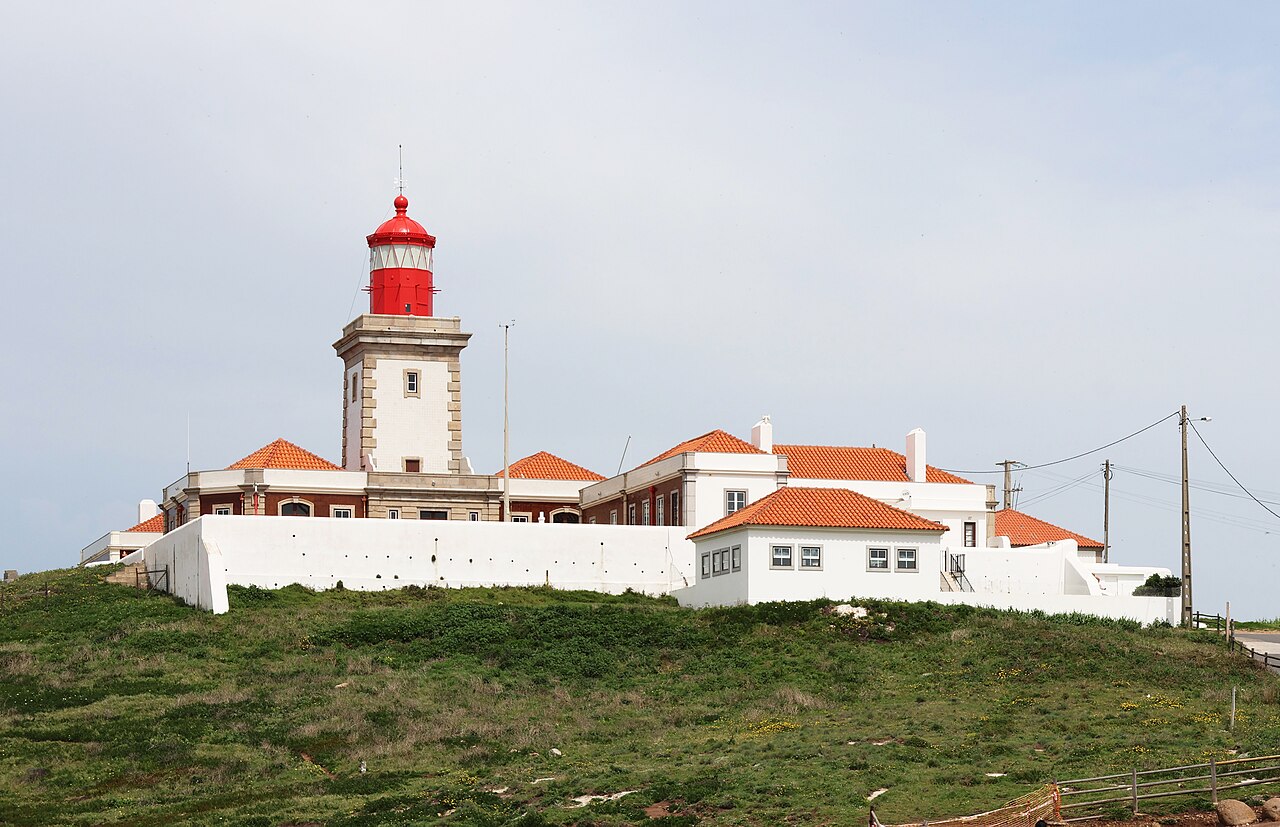
Cabo da Roca
The westernmost point of mainland Europe, a windswept cliff-top cape with a lighthouse, a lighthouse visitor centre, and Atlantic views. Free to walk, with optional paid lighthouse visits.
Cascais Town and Waterfront
A former fishing village turned elegant seaside resort, with a marina, pedestrian lanes, a Citadel, small museums, beaches and the best seafood on this coast. The natural base or day-trip finale to a Sintra visit.
Guincho Beach and the Wild Atlantic Coast
A long, wind-swept Atlantic beach backed by dunes and the hills of the Sintra-Cascais Natural Park. Famous for kitesurfing and windsurfing, spectacular at sunset and free to visit.
 Stay
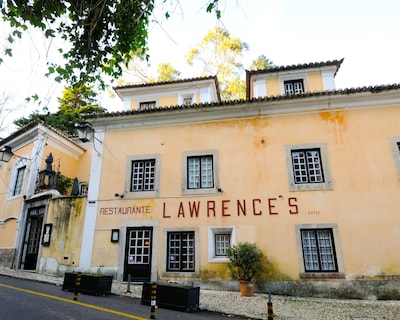
Lawrence’s Hotel
A small boutique hotel with sixteen rooms, founded in 1764 and described as the oldest hotel on the Iberian Peninsula, in a wooded valley a few steps from Sintra's village centre. Literary history, fireplaces and a well-regarded restaurant.
Farol Hotel
A five-star seaside retreat on the Cascais waterfront, with an oceanfront saltwater pool on the cliffs, a spa and several restaurants and bars. Steps from the Santa Marta Lighthouse Museum and a short walk to the marina.
Palacio Estoril Hotel Golf and Wellness
A grand historic hotel in Estoril with a long guest history, a spa, a pool and gardens, a short walk from the casino and the beach. A classic coastal base between Lisbon and Cascais.