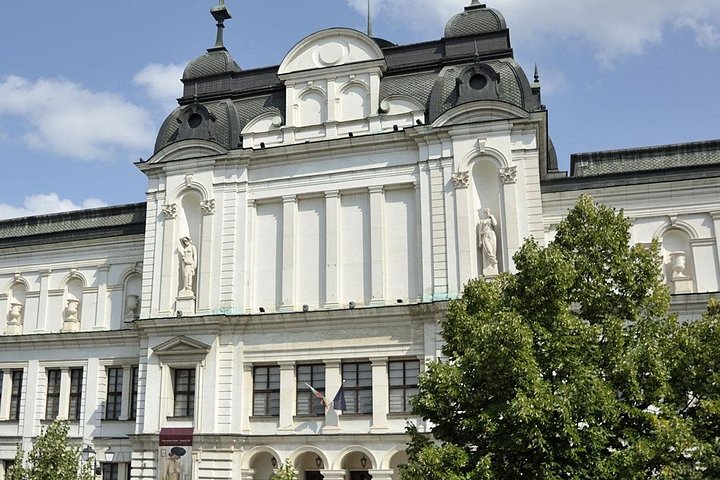
Sofia became the capital of a free Bulgaria only in 1879, and in the decades that followed it grew with the energy of a city that wanted to prove itself. Architects trained in Vienna, Prague and Munich designed civic buildings, banks, theatres and apartment houses in the fashionable styles of the day, from neoclassical to Secession and Art Nouveau. A Belle Époque walking tour focuses on this period and lets you read the centre as an open-air gallery of ironwork, mosaics, sculpted faces and tilework that most visitors walk past without noticing. The route typically takes in the Central Mineral Baths with their Secession-style façade, the elegant townhouses around the quieter side streets, the National Theatre in its neoclassical grandeur and a series of smaller buildings with carved balconies and painted ceilings. The guide points out details you would miss alone: how a doorway frame copies a Viennese pattern, why a pediment carries a particular emblem, and how Bulgarian craftsmen added folk motifs to imported styles. Stories of the architects, the banking families and the officials who built the capital bring the streets to life. The tour also shows how much of the early twentieth-century city survived wars, bombing, communist redevelopment and neglect, and how much was lost. You may stop at courtyards that are open to the public, at a café with a restored interior or at the edge of a modern building that replaced an older one, which gives the walk a useful sense of how the city changed. It is an excellent complement to the layers of Roman, medieval and Ottoman Sofia, and a good choice for those interested in photography or design.
What to expect
The walk is slow and detail-oriented, with frequent stops to look up at façades. It covers a compact area of the centre and involves little climbing, though you will be on your feet for a couple of hours. Groups are usually small. Guides are often architects, historians or art lovers, and the best ones bring photographs of how a street looked a century ago.
When to go
Soft morning or late-afternoon light is the best for photographing decorative details, and spring and autumn are the most pleasant seasons for a long stroll. In summer, start early to avoid the heat; in winter, dress warmly and enjoy the quiet streets. The tour does not depend on museum opening hours, so it works on Mondays when several museums are closed.
Where it fits
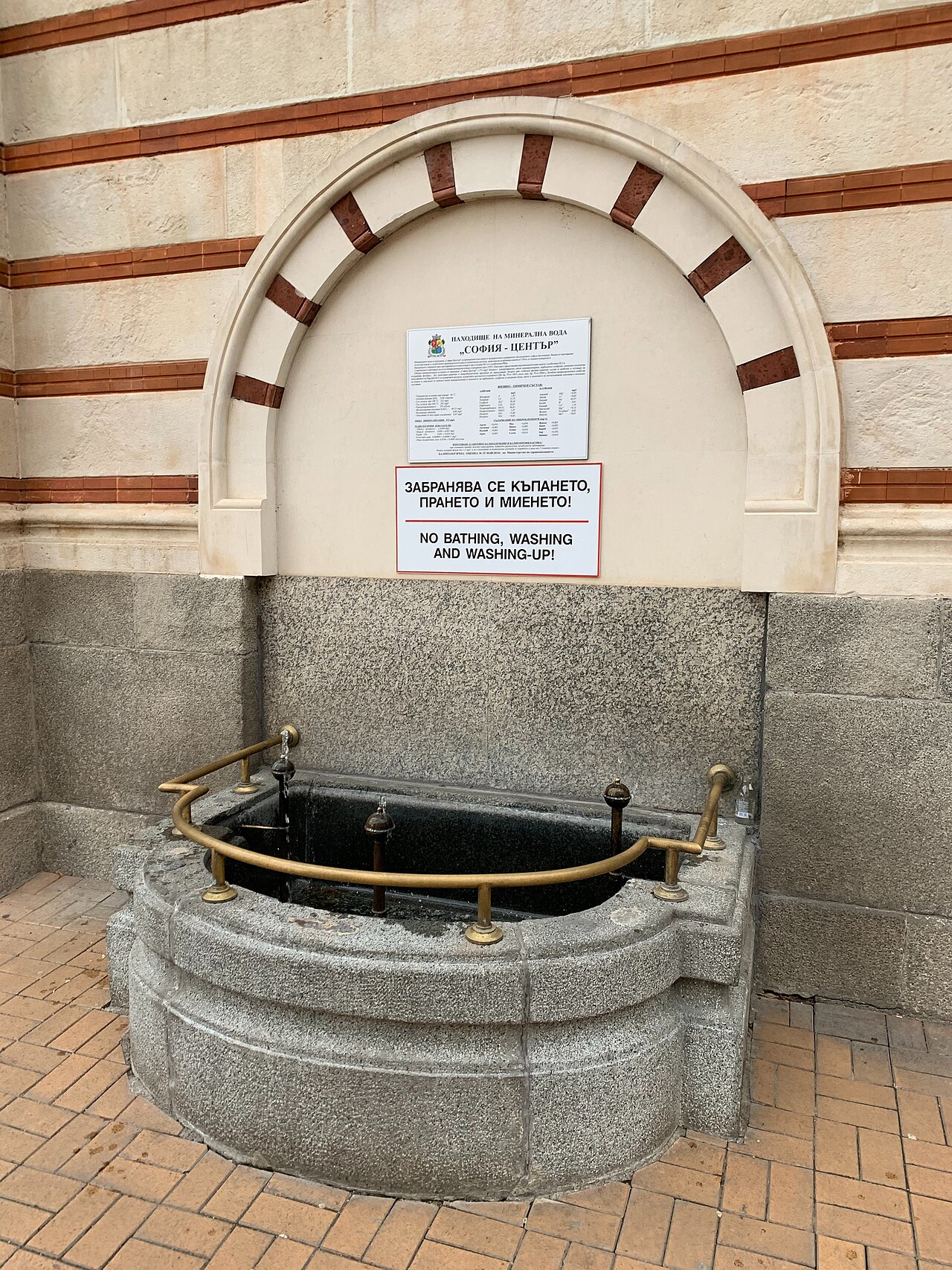
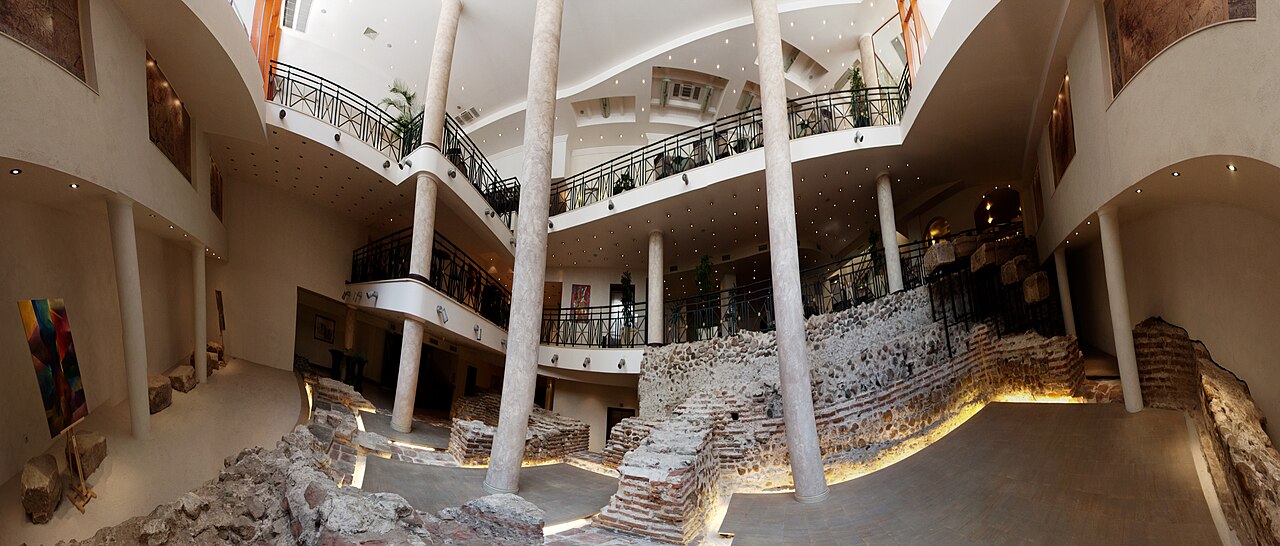
It makes a good first-day introduction to the centre before you visit the museums, since it gives you a framework for the styles you will see later. It also pairs naturally with the retro tram ride, which covers the same area from a different angle, and with a visit to the Central Mineral Baths, whose building now houses the Sofia History Museum and rewards a closer look inside.
Good to know
Some of the most interesting buildings are private or government offices, so you will see them from the street rather than inside. Bring a camera, a bottle of water and an interest in details. Visitors with limited mobility should ask about pavement conditions, as some of the older streets have uneven stones. Cafés on the route make easy rest stops, and Bulgarian pastries and coffee are usually inexpensive.
What to expect
The experience
A guided walk through the central streets focused on façades, decorative details and the stories of the architects.
Best time
Morning or late afternoon, in spring or autumn for comfort.
How long
About two hours with frequent short stops.
Tips
Look up, bring a camera and ask your guide to point out the folk motifs mixed into imported styles.
Quick picks
- Best for
- Design lovers and anyone who enjoys noticing the details of a city.
- Families
- Suits older children who like looking at buildings; younger ones may tire.
- Couples
- A gentle, photogenic stroll with plenty to talk about.
- Pair with
- The Central Mineral Baths and the retro tram ride.
- Time needed
- Two hours.
Good questions
What styles will I see on the tour?+
Secession and Art Nouveau, neoclassical and Vienna-influenced civic architecture from the decades after Bulgaria’s liberation.
Does the tour go inside buildings?+
Mostly it is a street walk, with occasional courtyards or lobbies that are open to visitors.
Is it suitable on Mondays?+
Yes, because it is an outdoor tour that does not depend on museum opening hours.
Do I need to know about architecture?+
No, guides explain the styles and what to look for from the start.
How long does the walk take?+
About two hours at an easy pace.