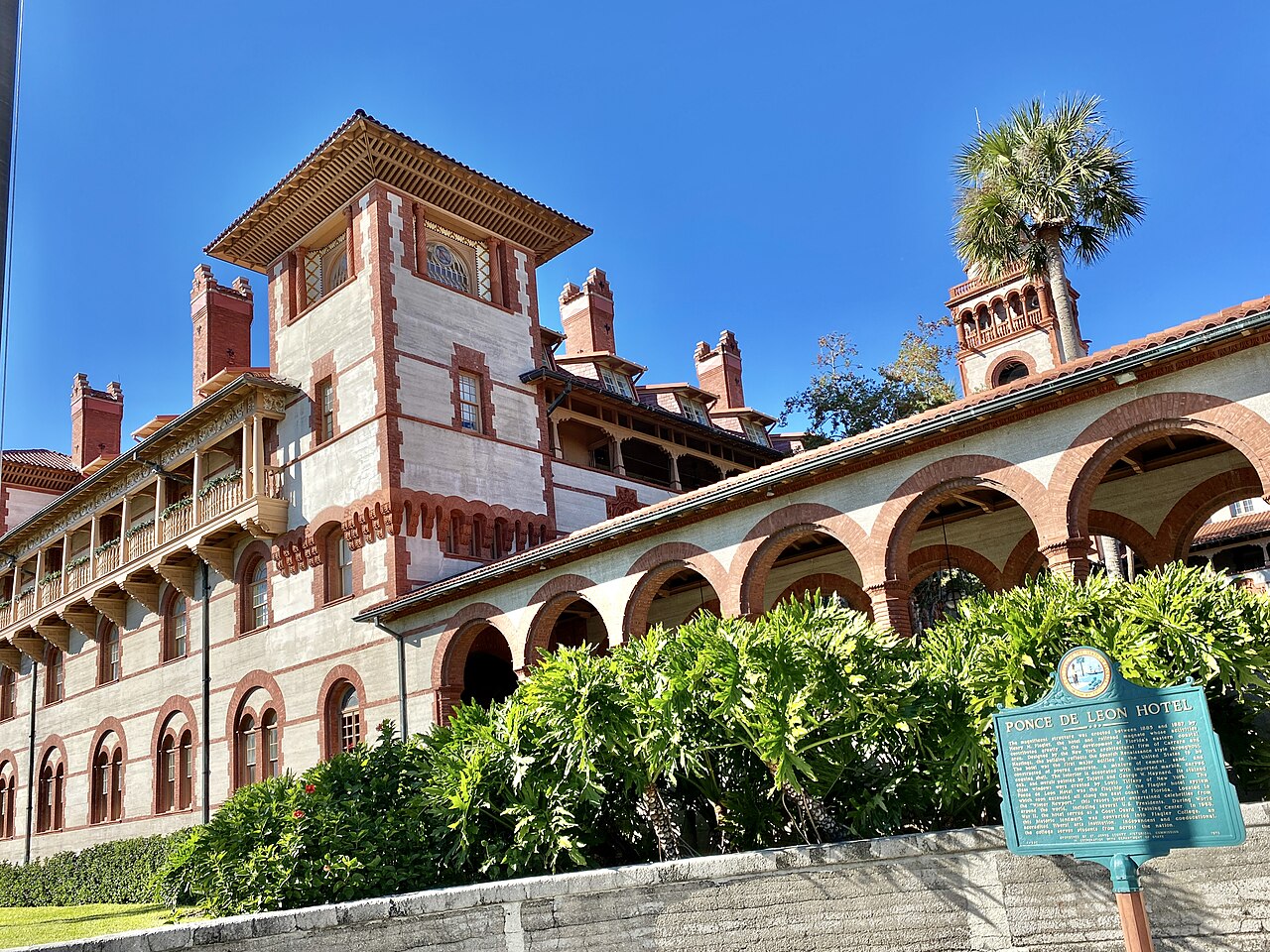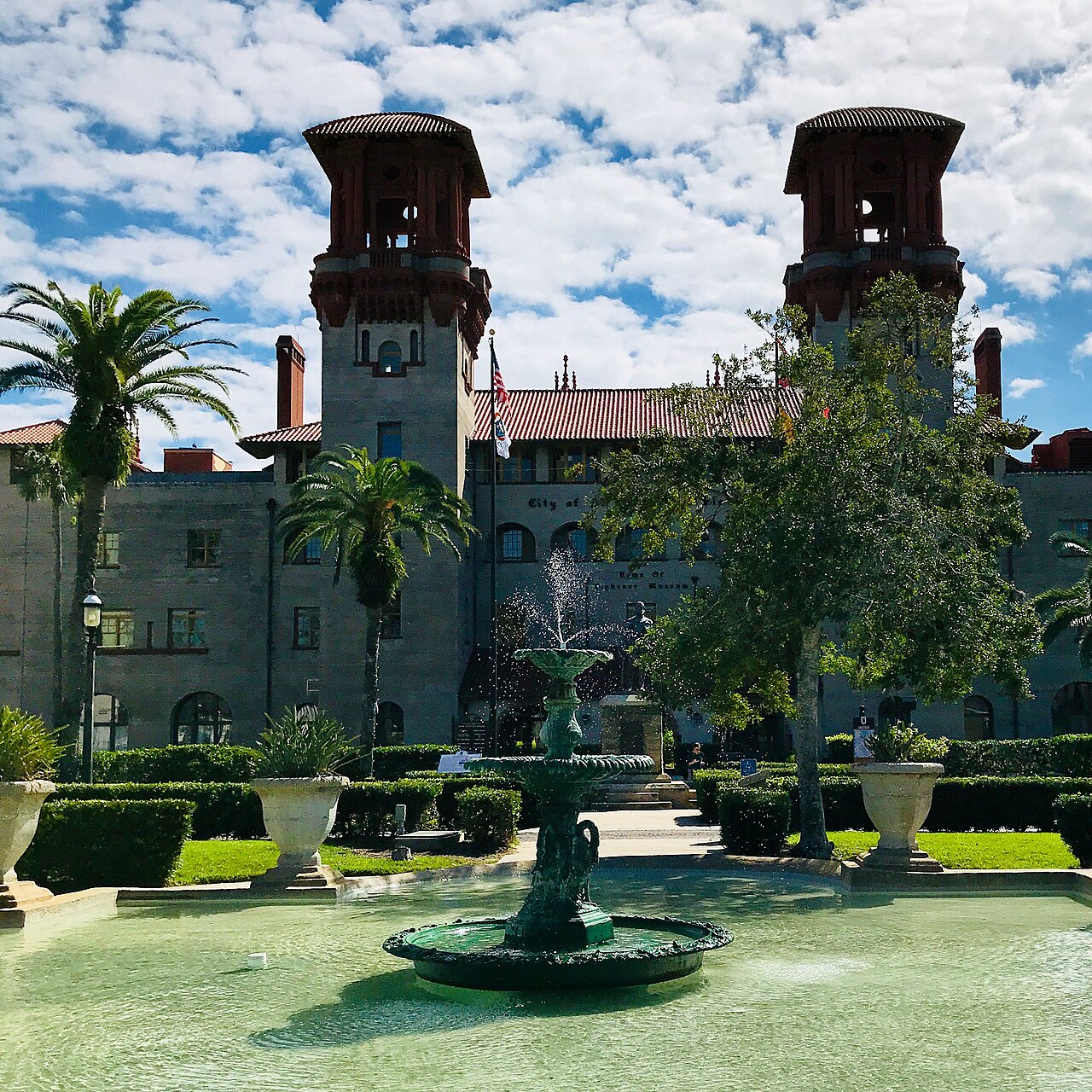
The Lightner is the building that completes the Flagler story you start across the street at the college. Henry Flagler opened the Hotel Alcazar in 1888 as the sporting, slightly less formal companion to his Hotel Ponce de Leon, and the New York architects Carrère and Hastings gave it the same Spanish Renaissance revival skin of poured coquina concrete, terracotta trim and red-tile roofs. Where the Ponce de Leon was about grand dining rooms, the Alcazar was about health and play: a casino with a vast indoor swimming pool, Russian and Turkish steam baths, a gymnasium, a bowling alley and a ballroom for winter guests who came south by Flagler’s own railroad. The Depression emptied it, and in 1946 the Chicago publisher Otto C. Lightner, a man who made his name encouraging Americans to collect, bought the shuttered building to hold his own enormous collection, opening it as a museum in 1948. That pairing is the magic of the place. You walk through Victorian parlors of cut and art glass, Tiffany work, porcelain, furniture and paintings, then up into the old steam rooms and the gallery ringing the former pool, where mechanical musical instruments are demonstrated and natural-history cabinets, shrunken curiosities and Gilded Age oddities fill the corners. The building itself is as much an exhibit as anything in the cases, and the long courtyard garden with its fountain and stone bridge is one of the prettiest free views in the historic district. The former deep end of the pool now holds Café Alcazar, where you eat lunch at tables set three stories below a skylight on what used to be the bottom of the water.
Practicalities: the museum is at 75 King Street, directly across from Flagler College and the Casa Monica, and it shares the old hotel with St. Augustine City Hall, which occupies the front of the building. It opens daily, with last admission an hour before closing, and closes on a handful of holidays including Thanksgiving, Christmas and New Year’s Day. Admission is a moderate adult ticket with discounts for seniors, students, military and youth, and children 11 and under enter free; Flagler College students get in free, and the museum takes part in the Museums for All program. Allow ninety minutes to two hours, and check the schedule for the mechanical music demonstrations, which bring the orchestrions and music boxes to life and are the highlight for many visitors.
How to do it well: start on the ground floor with the decorative arts so the scale of Lightner’s collecting sinks in, then climb through the steam-bath rooms, where the original tile and the small vaulted chambers survive, to the upper galleries around the pool. Rotating exhibitions fill the ballroom level, so check what is on before you go. Café Alcazar runs its own hours and fills at lunch on weekends; reserve or arrive early if eating in the pool is part of the plan. Steps and long corridors are part of a historic building of this size, but elevators serve the main floors, and the courtyard garden out front is free to enter and worth five quiet minutes even if you skip the museum.
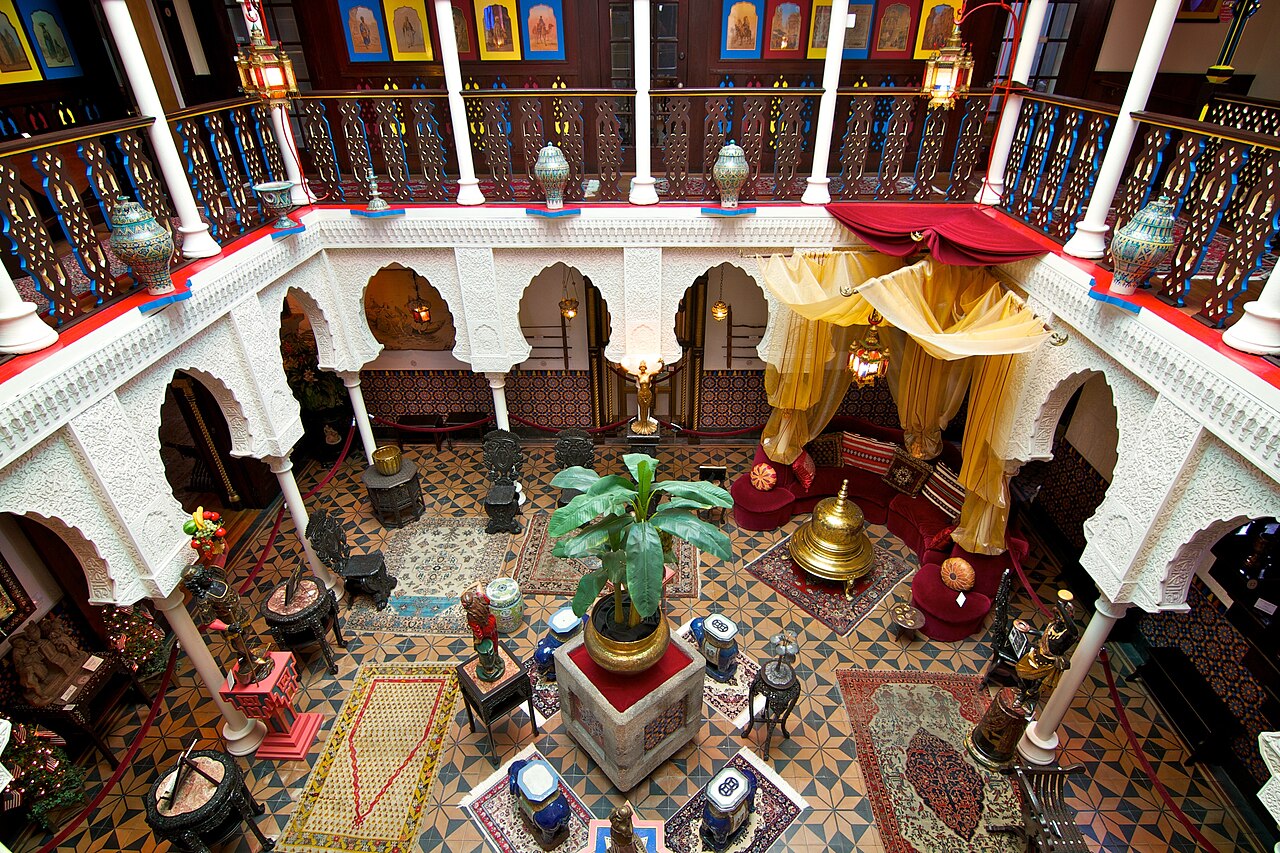
Where it fits: the Lightner is the best rainy-afternoon and hot-afternoon stop in town, and the natural partner for a Flagler College tour, which tells the story of the Ponce de Leon and its Tiffany glass across the road. Together they explain why St. Augustine looks the way it does beyond the colonial lanes — a Spanish town that a railroad millionaire reimagined as a winter resort for America’s Gilded Age elite. Pair it with Villa Zorayda a block away for the full Moorish-revival triangle, and come back after dark during Nights of Lights, from the weekend before Thanksgiving into mid-January, when the towers of the Alcazar, the college and the Casa Monica make King Street the brightest block in the city.
What to expect
The experience
A self-guided museum across three floors of Flagler’s 1888 Hotel Alcazar — decorative arts, Tiffany and cut glass, mechanical music, Victorian curiosities and rotating exhibitions — with a cafe in the former indoor pool.
Best time
Mid-afternoon, when the streets are hottest or the summer storms roll in; check the mechanical music demonstration schedule and plan around it.
How long
Ninety minutes to two hours, plus lunch at Café Alcazar if you want it.
Tips
Kids 11 and under are free. Pair it with the Flagler College tour across the street. The courtyard garden is free to enter. Last admission is an hour before closing.
Quick picks
- Best for
- Travelers who want the Gilded Age half of St. Augustine’s story, told inside the building that lived it.
- Families
- Good with curious kids — the music machines, odd natural-history cases and the pool-turned-cafe win over most ages; under-12s are free.
- Couples
- An unhurried afternoon of galleries, then lunch at the bottom of the old pool.
- Pair with
- The Flagler College tour and Villa Zorayda, both within a block on King Street.
- Time needed
- Half an afternoon.
Good questions
What was the Lightner Museum originally?+
Henry Flagler’s Hotel Alcazar, opened in 1888 and designed by Carrère and Hastings. It closed in the Depression, and Chicago publisher Otto C. Lightner bought it in 1946 to house his collection, opening the museum in 1948.
Can you eat inside the old swimming pool?+
Yes. Café Alcazar occupies the deep end of the former indoor pool, which was among the largest of its era. It keeps its own hours and is busiest at weekend lunch.
How much time do I need?+
About ninety minutes to two hours for the three floors, longer if you catch a mechanical music demonstration or a special exhibition.
Is it good for children?+
Generally yes, and children 11 and under enter free. The musical machines and curiosity cabinets tend to hold attention better than the glass galleries.
When is it closed?+
It opens daily but closes on a few holidays, including Easter Sunday, Thanksgiving, Christmas and New Year’s Day. Last admission is an hour before closing.