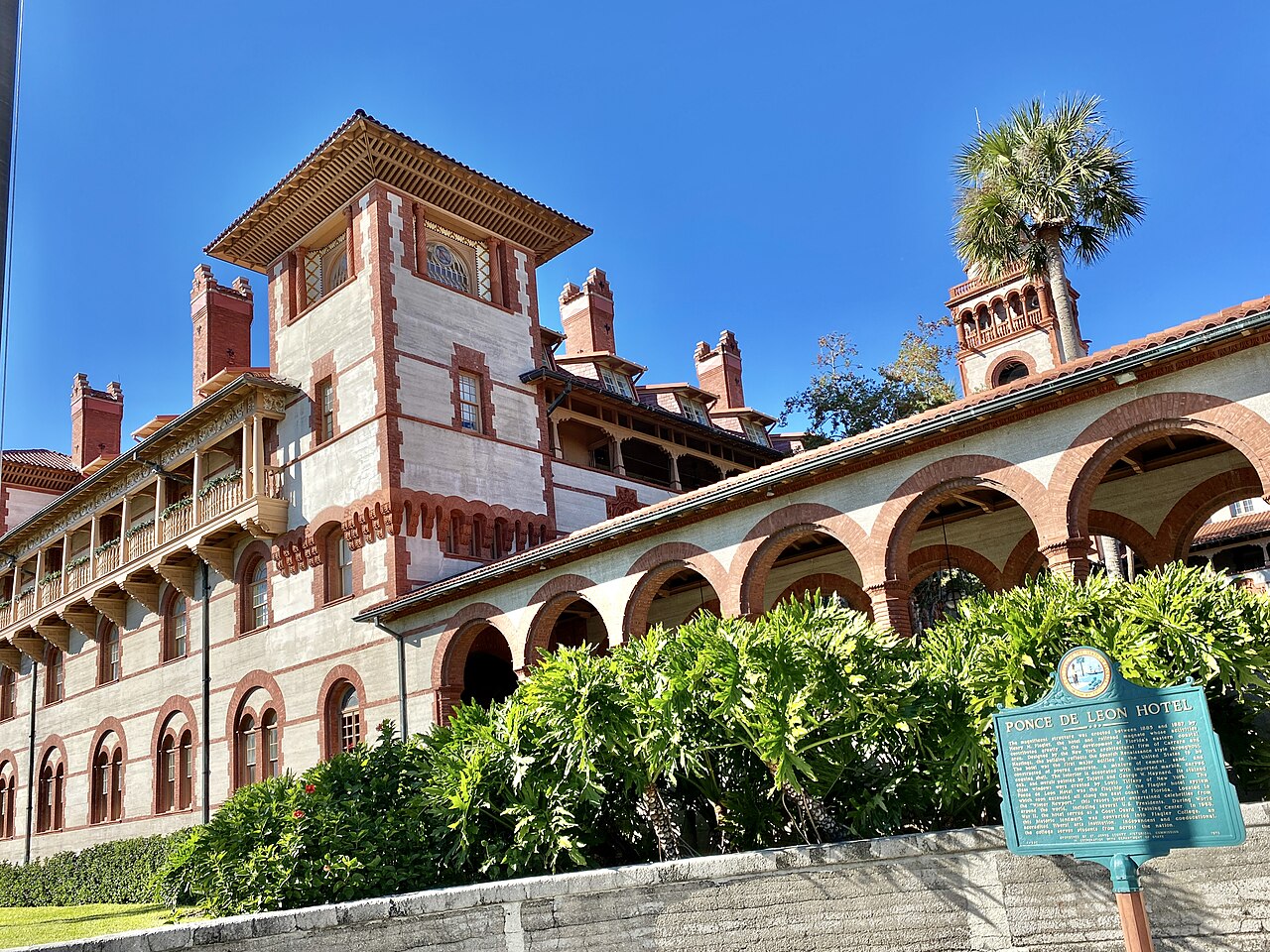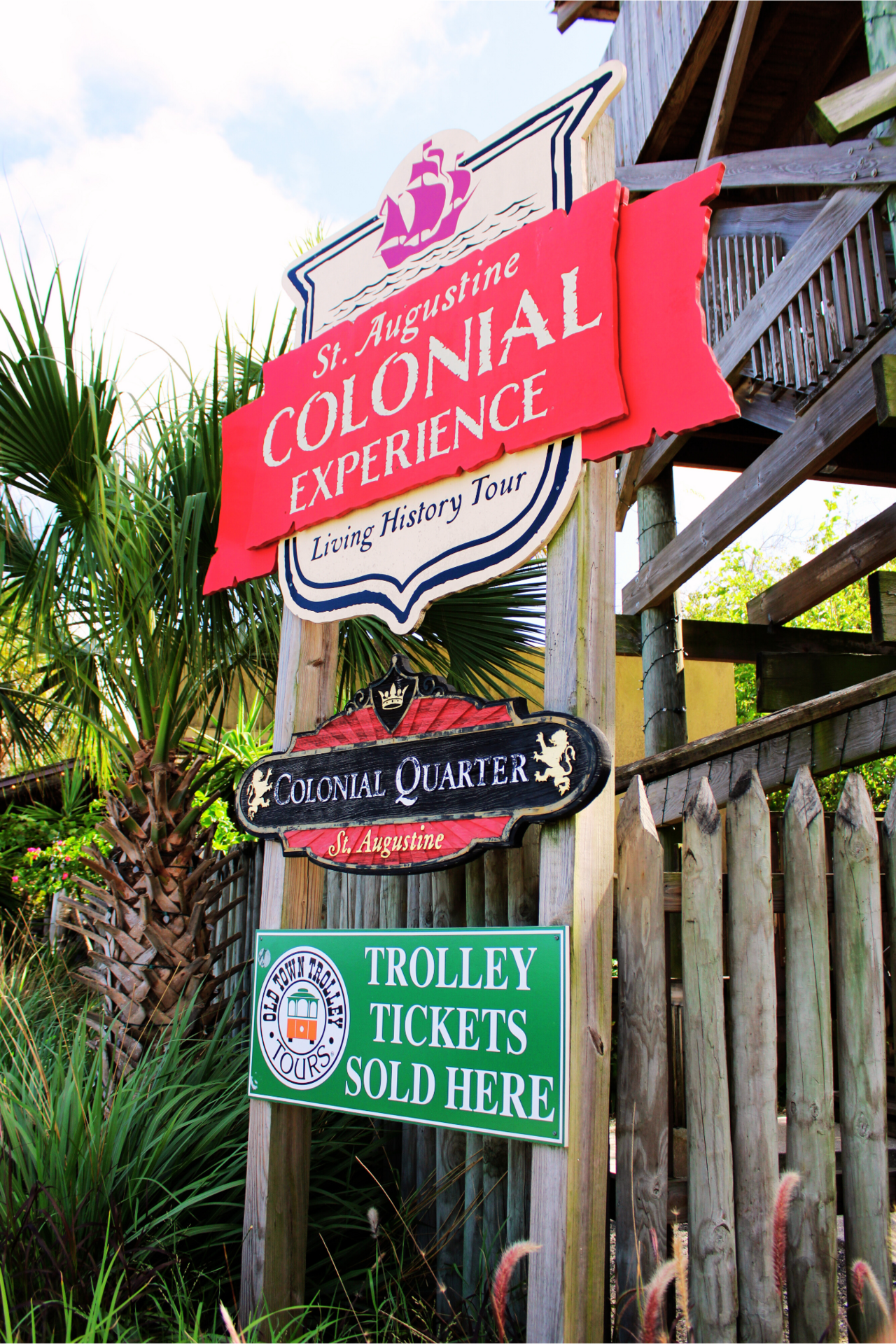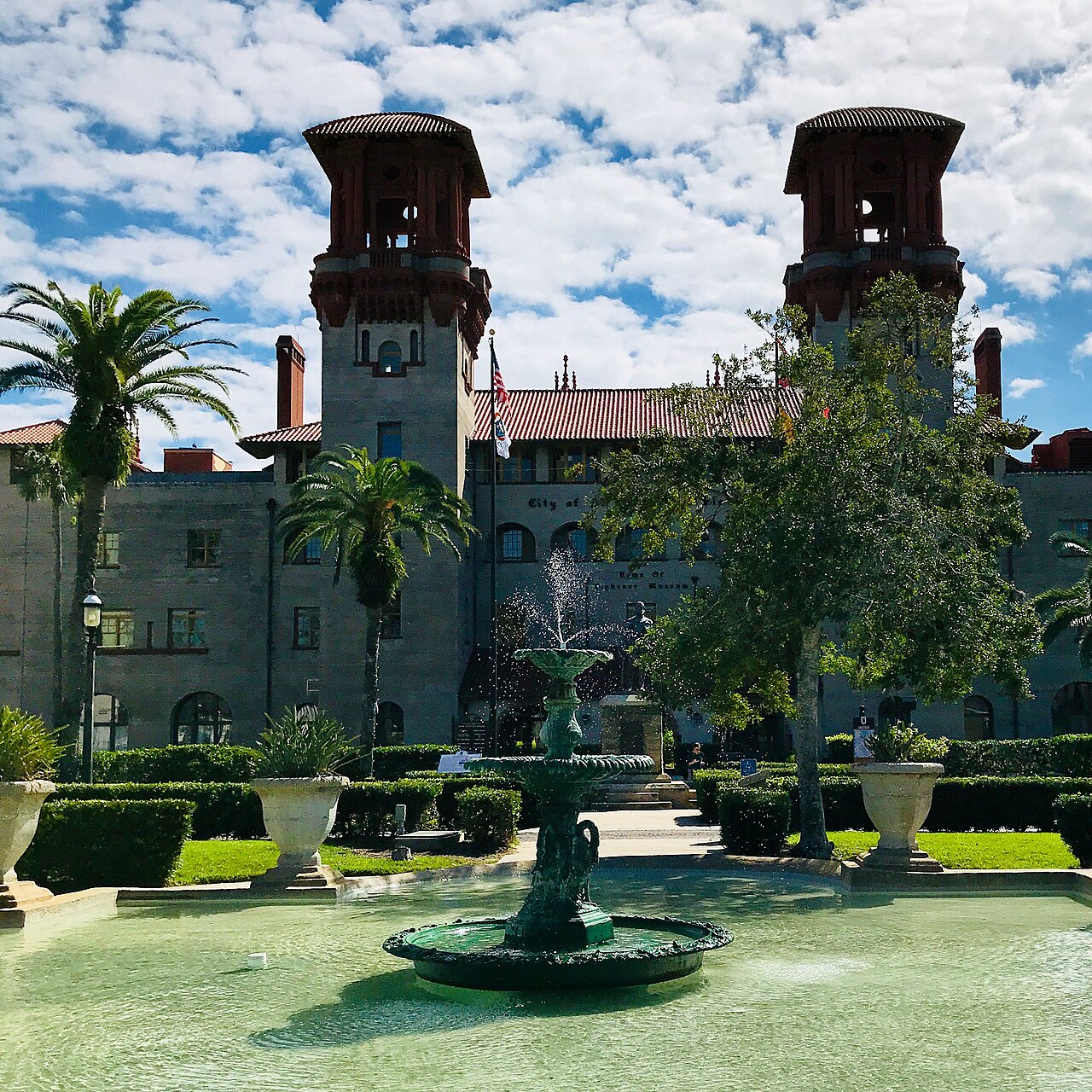
St. George Street was the main street of colonial St. Augustine, and it still is: a narrow, pedestrian-only lane running south from the City Gates — two coquina pillars from the town’s eighteenth-century defensive line — through about a dozen blocks of the historic district to the Plaza de la Constitución and the Cathedral Basilica. Many of the buildings date to the 1700s or were rebuilt on their original foundations, and the street keeps the Spanish colonial habit of houses set right on the lane with balconies overhanging it and walled gardens behind. What fills them now is a mix you should approach with clear eyes: genuine landmarks like the Oldest Wooden School House and the Colonial Quarter’s living-history village; small museums and tours; and a long run of gift shops, fudge counters, and t-shirt stores that make the northern blocks feel like a boardwalk on a busy Saturday. The trick is to treat St. George as the spine, not the destination. Duck into the side streets — Cuna, Hypolita, Treasury, and above all Aviles Street, the old lane south of the plaza lined with galleries and cafes — and the town quiets into courtyards, bougainvillea, and coquina walls. The south end is the grander civic St. Augustine: the plaza laid out under Spanish town-planning law, the Government House, the Cathedral Basilica facing the square, and the Lightner Museum and Flagler College a block west.
Working the street: weekday mornings are the least crowded, and the street is paved and generally wheelchair accessible, with accessible restrooms near the Visitor Information Center and mid-street. Enter through the City Gates so the street unfolds in historical order, and give the northern blocks a quick pass — the Colonial Quarter is the stop there worth paying for — before slowing down south of Cuna Street. Food along the way is mostly casual: the tiny Spanish Bakery on St. George is a long-running stop for empanadas and datil-pepper sauce, and the Columbia restaurant, a Florida-Spanish institution, anchors the middle blocks for a sit-down lunch. Hot Stuff on Treasury Street, one of the narrowest streets in the country, runs free tastings of local datil-pepper hot sauces.
Nights of Lights is the street at its best. The city’s holiday festival switches on with Light-Up! Night in the Plaza de la Constitución the weekend before Thanksgiving — November 21, 2026 this season — and runs through Martin Luther King Jr. weekend, January 18, 2027. More than three million white lights outline rooftops, balconies, the plaza’s live oaks, and the Bridge of Lions, and admission is free; the catch is traffic and parking, so the city runs a free park-and-ride shuttle and publishes routes and schedules in the Nights of Lights app. Walk it on a weeknight if you can, and stay until late evening when the day-trippers have gone.
Beyond the holidays, the historic district is a walking city in every season, with one caveat for summer: the heat and the afternoon thunderstorms are real, so plan the street for mornings and evenings and keep the middle of the day for museums. Ghost tours gather here after dark, and the street lamps, coquina walls, and quiet courtyards are why the format works. The best single free experience in St. Augustine is still the simplest one: an unhurried walk from the City Gates to the plaza and on down Aviles Street, with a stop on the bayfront seawall to watch the bridge. Keep an eye out for the small plaques and historical markers along the way; they turn an ordinary stroll into a self-guided history lesson.
What to expect
The experience
A self-guided walk down a car-free colonial lane from the City Gates to the Plaza de la Constitución, with side streets, museums, courtyards, cafes, and shops along the way.
Best time
Weekday mornings for space; evenings for the lamplit lanes. Nights of Lights (from the weekend before Thanksgiving through mid-January) for the full spectacle.
How long
Two to three hours at a stroll, longer with museum stops.
Tips
Enter at the City Gates and walk south. Do the northern blocks briskly and slow down past Cuna Street. Aviles Street and Treasury Street are the side lanes not to miss. During Nights of Lights, use the free park-and-ride shuttle.
Quick picks
- Best for
- First-timers — this is the walk that explains the city in an afternoon.
- Families
- Easy and free; the Oldest Wooden School House and the Colonial Quarter keep kids interested, and ice cream is never far.
- Couples
- Aviles Street at dusk, then the plaza under the oaks — and the whole thing again during Nights of Lights.
- Pair with
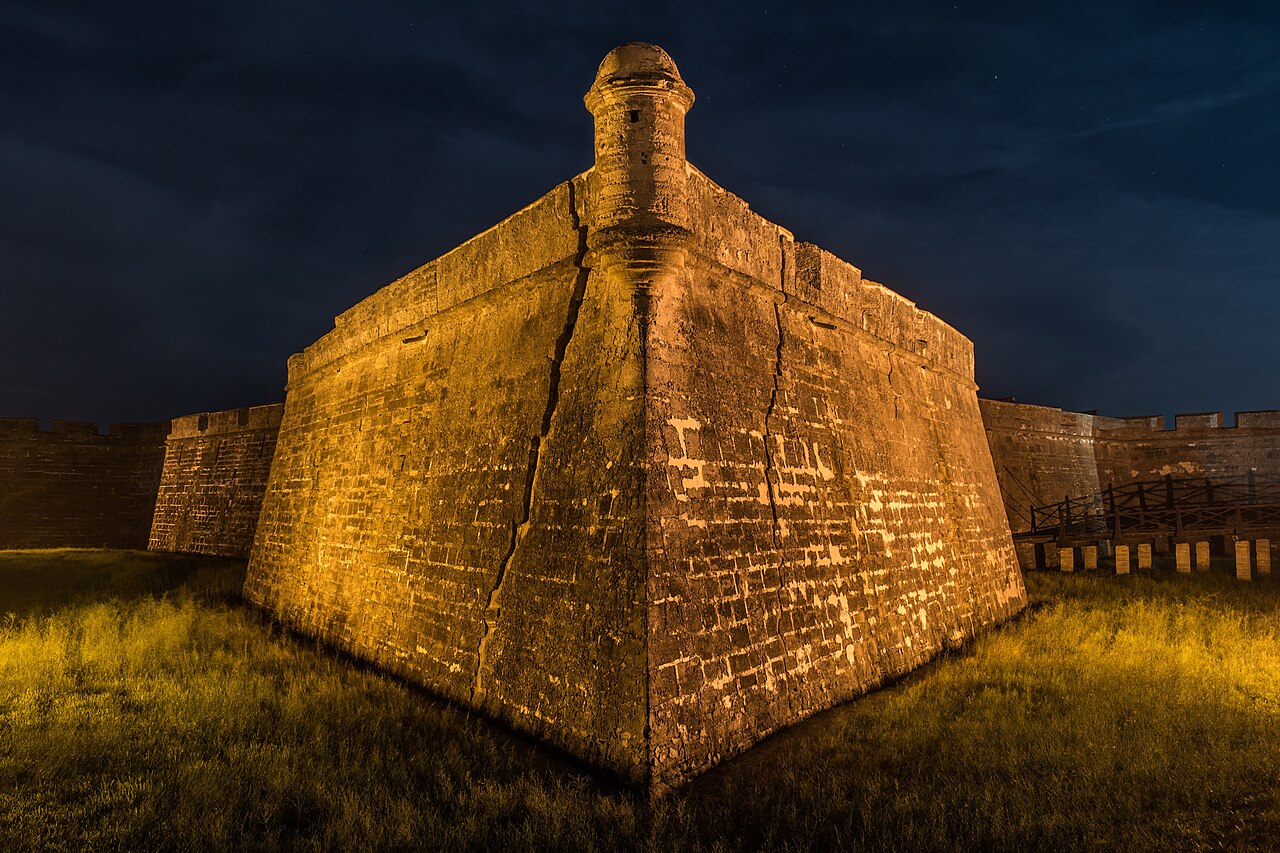
- The Castillo at the north end and Flagler College a block west of the plaza.
- Time needed
- Half a day, plus a second evening walk during the holiday lights.
Good questions
Is St. George Street free?+
Yes. It is a public, pedestrian-only street. Individual attractions along it, such as the Colonial Quarter, charge admission.
When do the Nights of Lights start?+
The weekend before Thanksgiving. For the 2026-2027 season the lights run from November 21, 2026, through January 18, 2027, opening with Light-Up! Night in the Plaza de la Constitución.
Where should I park?+
The Historic Downtown Parking Facility near the Visitor Information Center is the standard choice, a short walk from the City Gates. During Nights of Lights the city also runs a free park-and-ride shuttle.
Is the street accessible?+
Generally yes — it is paved and flat, with accessible restrooms in the area. Some older buildings along it have steps.
What are the best side streets?+
Aviles Street south of the plaza for galleries and cafes, Treasury Street for its narrowness and the hot-sauce shop, and Cuna and Hypolita for quieter courtyards.