Marineland is where the modern marine park was invented. It opened in 1938 as Marine Studios, a set of large seawater tanks with underwater viewing portholes built beside the ocean on A1A so filmmakers could shoot underwater scenes — the world’s first oceanarium. Crowds came to watch through the glass, the first successful dolphin birth in human care happened here in 1947, and trainers developed some of the earliest dolphin performances, which shaped every marine park that followed. Hurricanes, competition from Orlando, and changing tastes brought decades of decline and reinvention; Georgia Aquarium bought it in 2011 and renamed it Marineland Dolphin Adventure, and a Mexico-based dolphin company bought it in 2019. In 2025 that company’s bankruptcy put the oceanfront property up for auction, and a local couple, Barbara and Jon Rubel, won it with a $7.1 million bid, outbidding developers to keep it a marine-mammal facility. It now operates as a not-for-profit, and its leadership says the focus is shifting away from entertainment toward education, research, and ocean stewardship. For visitors, the core is the dolphin programs: shallow-water and deeper encounters where you stand or swim with the dolphins with a trainer, and poolside meet-and-greets that need no swimming. General admission covers the park itself, with dolphin training sessions, a sand tiger shark feeding, sea turtle feedings, and a small historical museum on the site’s remarkable past.
Because the park is in transition, check the current program lineup, schedules, and prices before you go — the new management has been introducing programs such as a dolphin immersion experience and has talked about adding ray encounters, and older listings online may describe offerings that have changed. In-water programs have age and height requirements and sell out on weekends and holidays, so book ahead. Florida residents have often been offered discounts online.
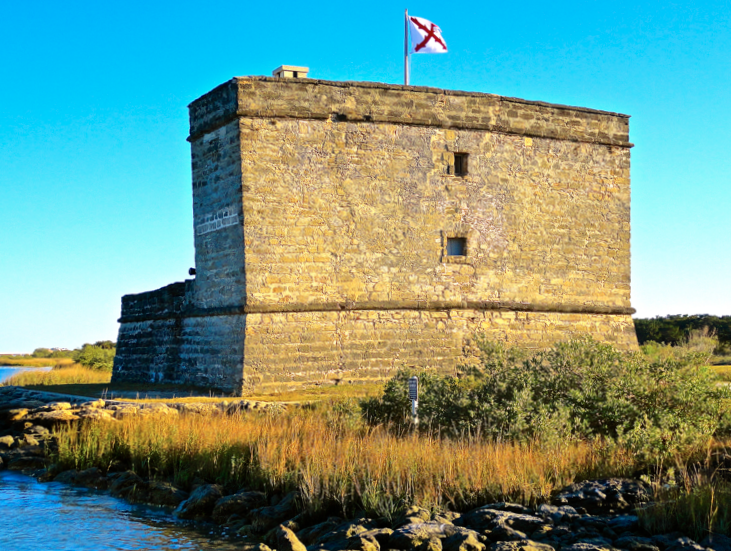
Getting there is part of the appeal. Marineland sits about thirty minutes south of the historic district on A1A, at 9600 Oceanshore Boulevard, on a narrow stretch of barrier island between the Atlantic and the Matanzas River, and the drive passes Fort Matanzas and miles of undeveloped dunes. Across the highway, the small town of Marineland is surrounded by conservation land, with riverfront trails good for birding, and a short drive south brings you to Washington Oaks Gardens State Park’s formal gardens and coquina-boulder beach near Palm Coast.
Who it suits: families with children who love dolphins, and anyone interested in the history of marine parks. Travelers with concerns about captive dolphin programs should know that its new nonprofit leadership has publicly committed to moving away from show-style entertainment; decide for yourself whether the in-water encounters are for you. Combine it with Fort Matanzas for a half-day, or make it the southern end of a beach drive down A1A. A small gift shop and snack options are on site, but the surrounding area is quiet, so plan meals around the drive, and bring sun protection for the outdoor viewing areas. Programs can be rescheduled in severe weather, so keep an eye on the forecast and your confirmation. Allow extra time to stop at the beach access points along A1A on the way back north; the stretch between Marineland and Matanzas Inlet has some of the emptiest sand in northeast Florida, and the historic oceanarium site itself, with its long, low buildings facing the Atlantic, is a striking piece of old-Florida architecture. For travelers interested in the history of marine science, the small museum is a reason to visit on its own, independent of the dolphin programs. Ask about combination options when booking. It is a piece of Florida history worth seeing.
What to expect
The experience
A small oceanfront marine park with bookable dolphin encounters (in the water and poolside) and general admission covering training sessions, shark and turtle feedings, and a history museum.
Best time
Mornings for programs; weekdays for availability. Combine with Fort Matanzas, which runs its ferry Thursday through Monday.
How long
Two to three hours, longer with an in-water program.
Tips
Confirm the current program list and prices before you go — the park changed ownership in 2025. Book in-water encounters ahead. It is about 30 minutes south on A1A.
Quick picks
- Best for
- Dolphin-loving families and marine-park history buffs.
- Families
- A strong half-day with kids, especially paired with the free ferry to Fort Matanzas.
- Couples
- Best as part of a scenic A1A drive with Fort Matanzas and Washington Oaks.
- Pair with
- Fort Matanzas ten minutes north and Washington Oaks Gardens State Park to the south.
- Time needed
- Half a day with the drive.
Good questions
Is Marineland still open?+
Yes. After the previous operator’s bankruptcy, local buyers purchased it in late 2025, and it continues to operate as a not-for-profit marine park.
What dolphin programs are offered?+
In-water and poolside dolphin encounters with trainers. Program names and details are evolving under the new management, so check the current lineup before booking.
How far is it from St. Augustine?+
About thirty minutes south of the historic district on A1A, past Fort Matanzas.
Why is it historically important?+
It opened in 1938 as Marine Studios, the world’s first oceanarium, and recorded the first successful dolphin birth in human care in 1947.
Is general admission worth it without a dolphin program?+
For a short visit, yes — it covers dolphin training sessions, shark and sea-turtle feedings, and the history museum. The in-water encounters are the main draw, though.