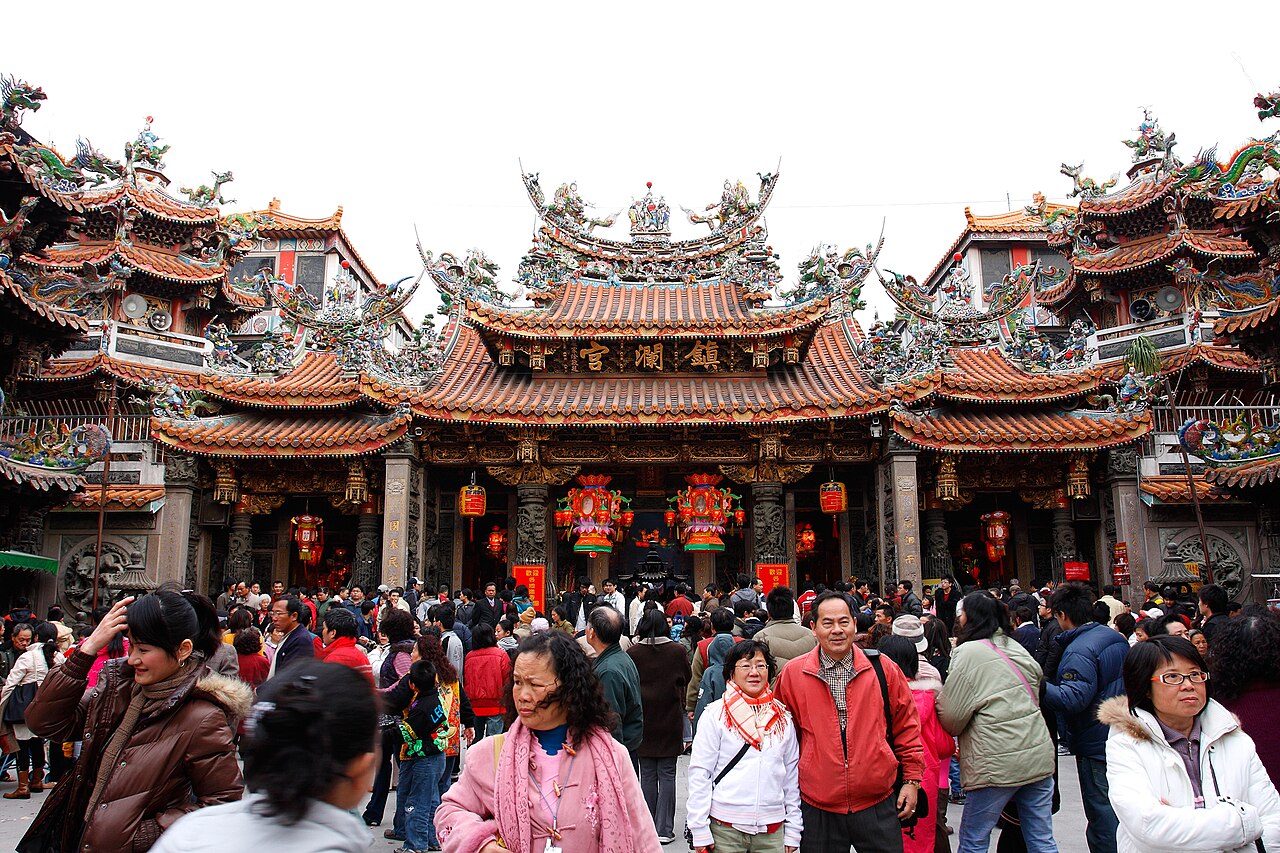
Dajia Jenn Lann Temple is a major temple to Mazu, the sea goddess and protector of fishermen and sailors, in Dajia District on the coast north-west of central Taichung. The Taichung tourism board describes it as a famous Mazu temple filled with pilgrims all year, with a history of more than 200 years. Inside are a violet jade Mazu statue and, in the basement of the Mazu cultural museum, a Golden Mazu, and Mazu is counted as one of Taichung's three treasures. The temple leads the Dajia Mazu Pilgrimage, an annual procession that begins in March and follows a route of over 340 kilometres through Taichung, Changhua, Yunlin and Chiayi, drawing hundreds of thousands of followers and ranking among the largest religious events in the world. Even outside the pilgrimage, the temple is lively, colourful and a good way to see living tradition.
What to see
Look at the carved eaves, painted gates, incense-filled halls and the main shrines to Mazu, as well as shrines to other deities such as Guanyin and Wenchang. The temple also has a cultural museum and arts centre, and quiet moments are possible at the edges of the courtyard. Visit with respect: dress modestly, keep voices low, do not point cameras at worshippers' faces and follow signs about where photographs are allowed. The tourism board lists the temple as open daily from about 03:30 to 22:30, which reflects how early devotees arrive.
Planning the visit
Entry is free, and no booking is needed. Mornings tend to be calmer, and the temple becomes much busier around the pilgrimage in spring, when crowds and road closures are heavy, so avoid it if you want a quiet visit and book accommodation well ahead if you want to see the departure. You can easily see the main halls in an hour, with extra time for the museum and for local snacks, since Dajia is known for food such as taro pastries and for a night market nearby.
Getting there and combining it
The temple is within walking distance west of Dajia Station on the Taiwan Railway, so it is reachable by train from Taichung, and taxis are an easy alternative. It combines well with Gaomei Wetlands, which are along the same coast, and a day tour that includes both is a convenient way to see them without handling transport. Culture-minded travellers, photographers and anyone curious about Taiwanese folk religion will enjoy it, and it is a good choice for a weekday morning when the city feels too busy.
What to expect
The experience
A free, self-guided visit to a working temple with shrines, museum spaces and a lively atmosphere, open from early morning until evening.
Best time
Weekday mornings are calm; the spring pilgrimage season is spectacular but very crowded.
How long
Allow one to two hours including the museum and local snacks.
Tips
Dress modestly, keep voices down, ask before photographing worshippers and avoid the pilgrimage period if you want quiet.
Quick picks
- Best for
- Culture lovers and photographers who want to see living tradition.
- Families
- Fine for children who can stay respectful; smoke from incense can be strong.
- Couples
- Atmospheric architecture and food stops along the coast.
- Pair with
- Gaomei Wetlands at sunset on the same coast.
- Time needed
- One to two hours.
Good questions
Is Dajia Jenn Lann Temple free?+
Yes, there is no entry fee listed. Donations and incense are optional.
What are the opening hours?+
The Taichung tourism board lists it as open daily from about 03:30 to 22:30.
What is the Dajia Mazu Pilgrimage?+
An annual procession led from the temple that begins in March and covers a route of more than 340 kilometres through four counties.
How do I get there from Taichung?+
By Taiwan Railway to Dajia Station and a short walk west, or by taxi or a coastal day tour.
How should I behave?+
Dress modestly, speak quietly, follow photography signs and avoid blocking worshippers.