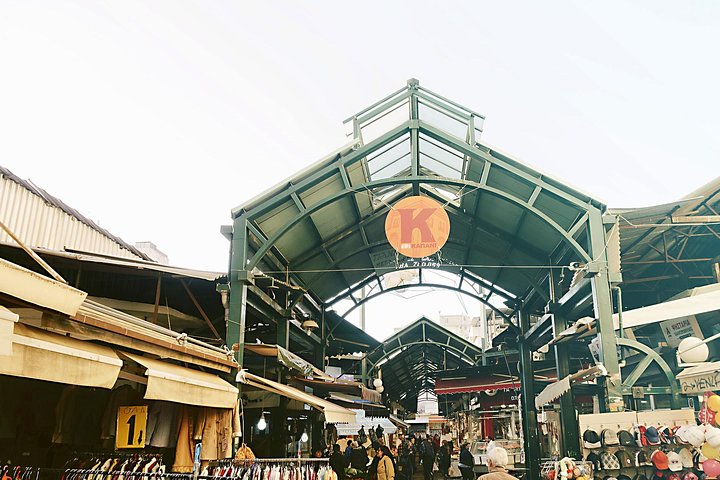
Thessaloniki has a reputation as the food capital of Greece, and the reputation is earned in everyday places: bakeries, covered markets, small tavernas and cafes by the sea. You do not need a reservation at a famous restaurant to eat well here. You need an appetite, a loose schedule and a willingness to eat at the pace of the city, which is late and slow. This guide explains what to try, where the food culture lives and how to build a day around it.
Breakfast: bougatsa and koulouri
The signature breakfast is bougatsa, a pastry of thin dough filled with custard or cheese, served warm and often dusted with sugar and cinnamon. Bakeries and specialist bougatsa shops sell it by the portion, and locals eat it standing or sitting with coffee. For something lighter, koulouri is a ring of bread covered in sesame seeds, sold from street carts and bakeries across the centre. Thessaloniki is also known for trigona, cone-shaped pastries filled with cream, which are a good afternoon sweet.
Coffee is a way of life
Mornings often start with coffee by the sea, and the common orders are a freddo espresso, a cold, frothy drink that is a Greek staple, or a Greek coffee, called ellinikos kafes, served in a small cup. People sit for a long time, so do not expect a quick turnover, and do not feel rushed. The seafront promenade and Aristotelous Square are lined with cafes, and the Nea Paralia path is a favourite morning walk with a coffee in hand.
The covered markets
The Modiano and Kapani markets are the heart of the city food scene, with produce, cheeses, cured meats, olives, spices and snacks. They are good for browsing, for picking up picnic food and for seeing what is in season. A guided food tour is the easiest way to understand what you are looking at, because a guide can explain the cheeses and the cured meats and lead you to the stalls that locals prefer, and tastings are part of the tour. Visit in the morning for the best selection, and carry some cash for small purchases.
Lunch and meze
A typical long lunch takes place at an ouzeri or a simple taverna, with a series of small plates to share and a glass of ouzo or tsipouro. Order a few dishes at a time and let them arrive slowly. Greek meze usually includes dips such as tzatziki, salads, grilled meats, fried cheese, pulses and seafood, and many tavernas have a seasonal vegetable dish worth ordering. The old Ladadika quarter near the port is a lively area for meze, with many tavernas in restored warehouses, and the streets around the markets are full of small places with local clientele.
Dinner, late
Locals eat late. A dinner at nine in the evening is normal, and the evening builds slowly, often past midnight. If you are hungry earlier, have a snack in the late afternoon and plan dinner for later. Classic dishes to try include moussaka, souvlaki, grilled fish and slow-cooked meat dishes, and many places serve simple house wine from the barrel. Vegetarians are well served, since Greek cooking has many dishes based on vegetables, beans and cheese, but tell the staff about any dietary needs.
Sweets and late snacks
Loukoumades, small fried dough balls served with syrup, honey or cinnamon, are a typical sweet finish. Many cafes also serve spoon sweets, preserved fruit eaten from a spoon with a glass of water, and pastry shops sell trays of syrup-soaked cakes. Ice cream and yoghurt with honey are popular on warm evenings along the waterfront.
Learn to cook it
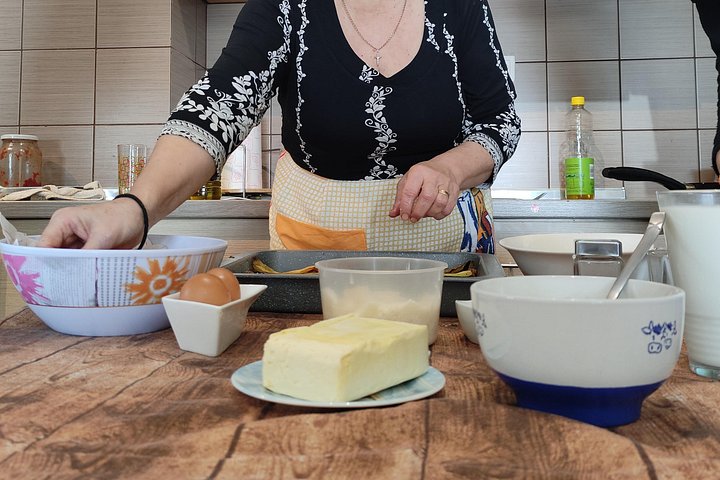
A hands-on session in a local family home is a good way to understand Greek home cooking, and it ends with a shared meal. It pairs well with a market tour earlier in your stay, because you will recognise the ingredients you use. Tell your hosts about dietary needs when you book.
Practical notes
Cards are widely accepted in town, but carry some cash for markets, bakeries and small tavernas. Opening hours vary, and many small places close in the afternoon or on Sundays, so check before you set out. If your hotel does not include breakfast, treat that as an invitation to eat at a bakery.