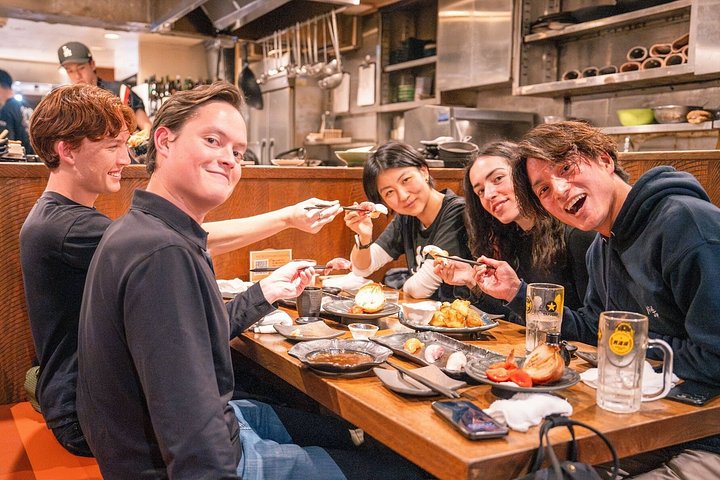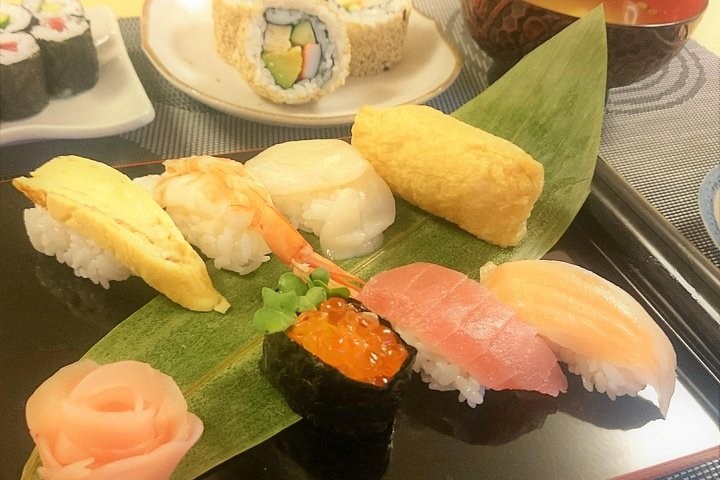
You can eat excellent sushi in Tokyo for the price of lunch, but making it teaches you why the best of it is so good. This small-group class takes place in a teaching kitchen in Shinanomachi, Shinjuku City, where an English-speaking instructor walks up to nine guests through the fundamentals of sushi: seasoning rice, handling fish with a sharp knife, shaping nigiri with the right pressure and rolling maki. According to the operator, you will make California rolls, nigiri sushi and tekka rolls, and reviewers also mention tamagoyaki, miso soup and dashi, so the class doubles as a lesson in the building blocks of a Japanese meal. Ingredients, recipes, apron and towel are included, and the booking page mentions hotel pickup and drop-off. Start time is early afternoon, which makes it a good midday activity between sightseeing mornings and evening plans. With a perfect 5.0 from 174 reviews, it is among the most consistently loved food activities in the city.
What makes a class like this worthwhile is the instruction rather than the recipes. Expect to learn how rice is washed, cooked and seasoned, why temperature matters, how much rice goes under the fish and how to hold it so the piece holds together without being squeezed. The class is rated 5.0 from 174 reviews, and every guest ends with a plate of food they made themselves.
The group cap of nine keeps it personal, so you get feedback on your technique rather than a demonstration from the back of a crowd. If you plan to cook at home afterward, take photos of the steps and ask about substitutions for ingredients you cannot find.
Plan the logistics. The kitchen is on the second floor of a residential building in Shinanomachi, and the operator advises phoning by intercom if you cannot find the entrance; allow extra time for the walk from the station and arrive a few minutes early, since classes start on time. The start time on the booking page is early afternoon, so eat a light breakfast and plan to have your sushi as lunch.
Tell the operator about dietary needs when booking: a vegetarian option is available on request, but severe allergies, especially to shellfish or fish, should be discussed in advance. Classes are conducted in English and the pace is relaxed.
Is it for you? It suits first-time visitors who want a cultural activity that ends in food, couples, small groups of friends and adventurous families with older children. If you prefer to simply eat the best sushi in Tokyo, a counter meal or a visit to the Toyosu or Tsukiji markets is a better use of the time; if you want to understand it, take the class and then eat at a counter afterward, when you will notice the details the chef is performing.
Pair it with a walk in nearby Shinjuku Gyoen, or stay in the neighborhood for a casual evening in Shinjuku.
What to expect
The experience
A hands-on class in a Shinjuku teaching kitchen led by an English-speaking instructor, with groups of up to nine. You make California rolls, nigiri and tekka rolls.
Best time
The class starts in the early afternoon, so it works as a lunch activity. Book ahead for weekends and holidays.
How long
About three hours including eating what you make.
Tips
Tell the operator about dietary needs when booking; a vegetarian option is available on request. Allow time to find the building and call by intercom if needed.
Quick picks
- Best for
- Food-loving travelers who want to learn sushi technique and eat their own results.
- Families
- Good for older children and teens who like cooking; check the minimum age and allergies with the operator.
- Couples
- A fun shared activity ending in a meal.
- Pair with
- A Tsukiji or Toyosu food morning, a counter sushi dinner or a stroll in Shinjuku Gyoen.
- Time needed
- Half a day.
Good questions
What will I make in the class?+
The operator lists California rolls, nigiri sushi and tekka rolls. Reviewers also mention tamagoyaki, miso soup and dashi.
How big are the classes?+
Groups are capped at nine travelers, with an English-speaking instructor, so everyone gets individual feedback.
Where does the class take place?+
In Shinanomachi, Shinjuku City, on the second floor of a residential building. If you cannot find the entrance, the operator advises calling by intercom.
Can the class accommodate vegetarians?+
A vegetarian option is available if you request it at booking. Other dietary restrictions and allergies should be raised with the operator in advance.
What is included?+
The operator lists the instructor, recipes and ingredients, apron and towel rental, and hotel pickup and drop-off. Confirm pickup details after booking.