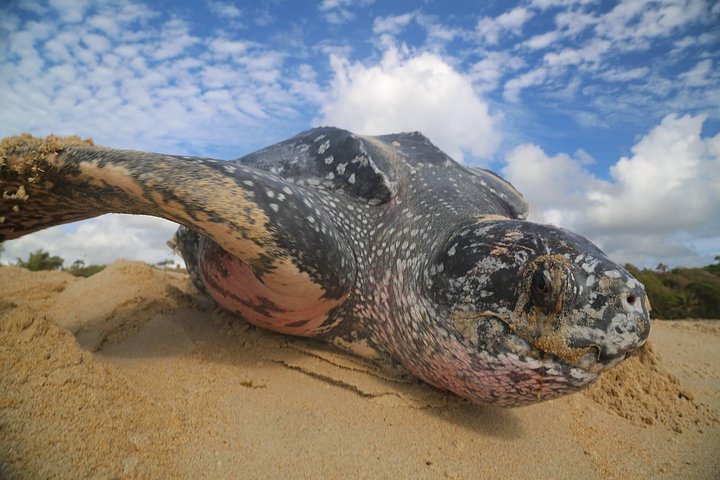
Trinidad is one of the top three nesting sites in the world for the leatherback turtle, an endangered species and one of the largest living reptiles, with adults that can weigh several hundred kilograms. The national tourism site gives the nesting season as March to August, on the north and northeast coasts, and names Matura, Grande Riviere and Fishing Pond as three of the more accessible beaches. Visitors who come in season can watch females come ashore at night, dig a nest, lay their eggs and return to the sea, a process that takes a long time and feels almost ancient. Under the rules for watching, night visits must be accompanied by a licensed tour guide, which protects the turtles and gives you someone who knows the beach, the tides and the etiquette. The Matura eco-experience we link is a guided trip built around this. Sightings depend on nature rather than a timetable, so go with realistic expectations and a patient mind.
Seeing a leatherback nest is not like a wildlife show. The turtles arrive when they choose, usually after dark, and your guide will lead you quietly along the beach, keeping lights low and distance from the animal until she has settled. Follow every instruction about torches, cameras and noise; flash photography and bright lights disturb nesting turtles, and responsible guides will stop you. The reward is a long, quiet encounter with an animal that has been coming to the same coastlines for millions of years.
Timing is the main practical question. The season runs from March to August, and not every night produces a turtle, so a visit of one evening is a chance rather than a guarantee. Staying near the beach for more than one night improves your odds, and a Port of Spain base makes the trip a long evening drive over winding roads.
Ask the operator about the pick-up time, the length of the outing and what happens if no turtle comes ashore. Check that the guide is licensed, since the tourism site is clear that night watching requires one.
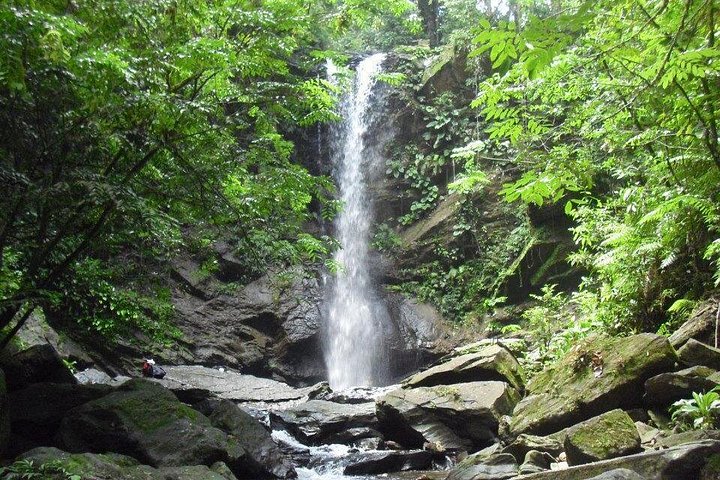
Prepare for a night on a beach: wear dark, quiet clothing, bring insect repellent, a light layer and water, and wear shoes you do not mind getting sandy. The sand can be uneven in the dark, and you may be standing or walking for a while. Because this is wildlife in a sensitive moment, children should be old enough to stay quiet. Pair the turtle trip with a daytime visit to the Northern Range waterfalls or the Caroni swamp, and consider staying overnight on the north coast rather than driving back late.
Ethics are part of the experience. Responsible turtle watching supports local communities and conservation, and it works only when visitors behave. Stay behind your guide, keep your voice low, never touch a turtle or her eggs and never block her path to the sea. If a turtle abandons a nesting attempt because of crowding or light, that harms the species, so be ready to step back and let the animal decide.
Done well, the visit leaves the beach as quiet as you found it. Finally, remember that your fee supports licensed guides and local communities who depend on turtles being protected, which is why the rules are strict and why they are worth following.
What to expect
The experience
A guided night visit to a nesting beach on Trinidad's north or east coast, led by a licensed guide.
Best time
March to August, the leatherback nesting season; sightings are never guaranteed.
How long
An evening that runs into the night, plus a long drive from Port of Spain.
Tips
Follow your guide on lights and cameras, wear dark clothing, bring repellent and water and be patient.
Quick picks
- Best for
- Wildlife lovers who want one of the Caribbean's great natural events.
- Families
- Best for children old enough to stay quiet and awake late.
- Couples
- A memorable, quiet shared experience for couples who like nature.
- Pair with
- A Northern Range waterfall day or the Caroni swamp on another day.
- Time needed
- An evening and night, plus travel time.
Good questions
When is the leatherback season?+
The national tourism site gives March to August, on Trinidad's north and northeast coasts.
Do I need a guide?+
Yes. The tourism site states that night visitors must be accompanied by a licensed tour guide.
Will I definitely see a turtle?+
No. Turtles come ashore on their own schedule, so treat a sighting as a chance rather than a guarantee.
Can I use flash photography?+
No. Lights and flash disturb nesting turtles, and your guide will tell you what is allowed.
Which beaches are used?+
Matura, Grande Riviere and Fishing Pond are named by the tourism site as more accessible nesting beaches.