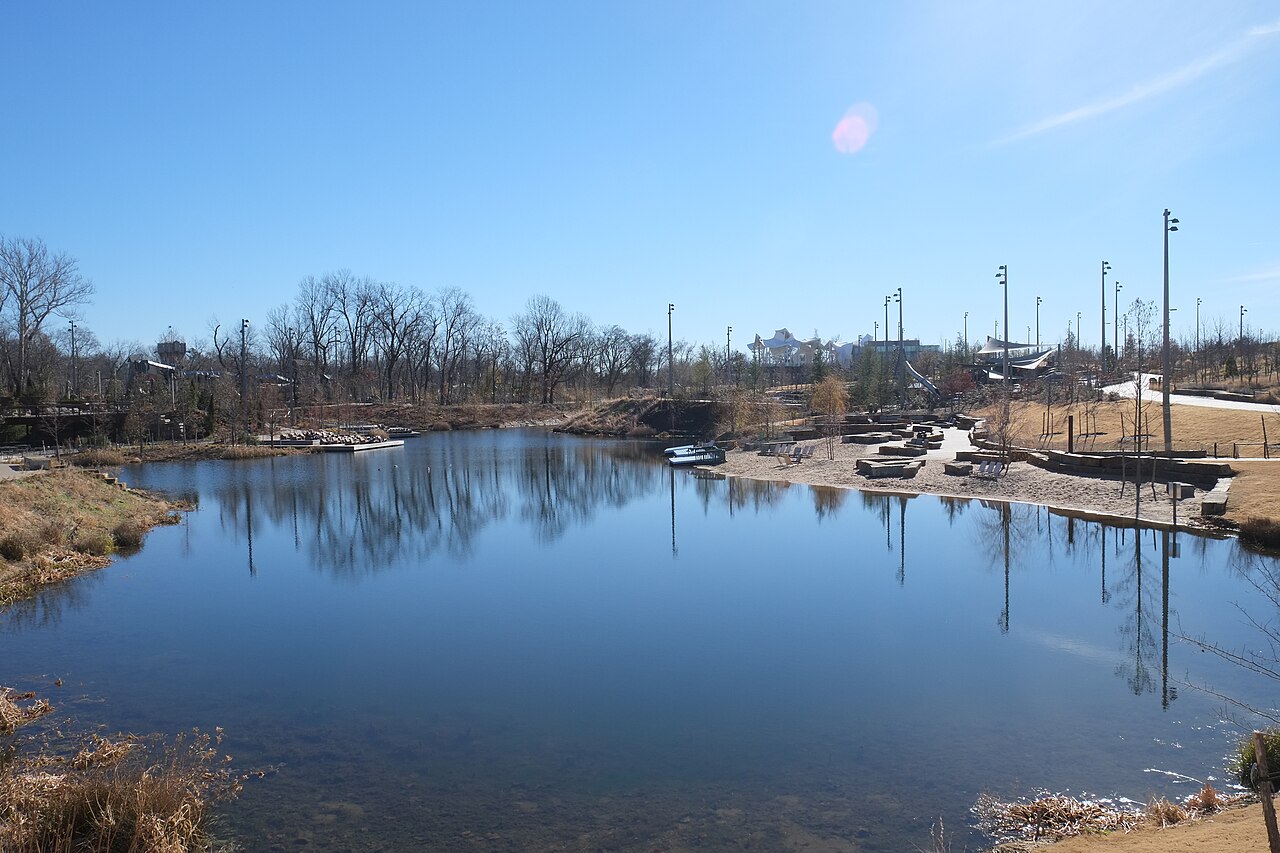
The Blue Whale of Catoosa is one of the most photographed pieces of roadside Americana on Route 66. It sits beside a small pond on the edge of Catoosa, a short drive east of Tulsa, and it began as a gift from Hugh Davis to his wife Zelta, who collected whale figurines. Davis built the whale in the early 1970s, and for years the surrounding pond was a popular swimming and picnic spot for locals and travelers on the old highway. The whale has a wide, smiling mouth, a pair of cheerful eyes and a platform on the tail that once served as a diving spot. After a period of decline the site was restored by community volunteers, and it is now maintained as a free roadside attraction. Visitors can walk around the pond, look inside the whale's mouth, take photographs and enjoy the old stone picnic tables. A small gift shop and nearby cafes cater to the Route 66 crowd. The charm lies in the sincerity: this was a private gift that became a public landmark, and the pond-side atmosphere still feels like a postcard from another era.
Plan about thirty minutes to an hour. The site is small, there is no formal admission, and the most you need is a camera and some patience for photographs when tour buses arrive. Morning light is best for the whale, while evening light softens the pond. Facilities are modest, so bring water and sun protection in summer. Swimming is not permitted at the pond, and visitors are asked to respect the site and any posted signs.
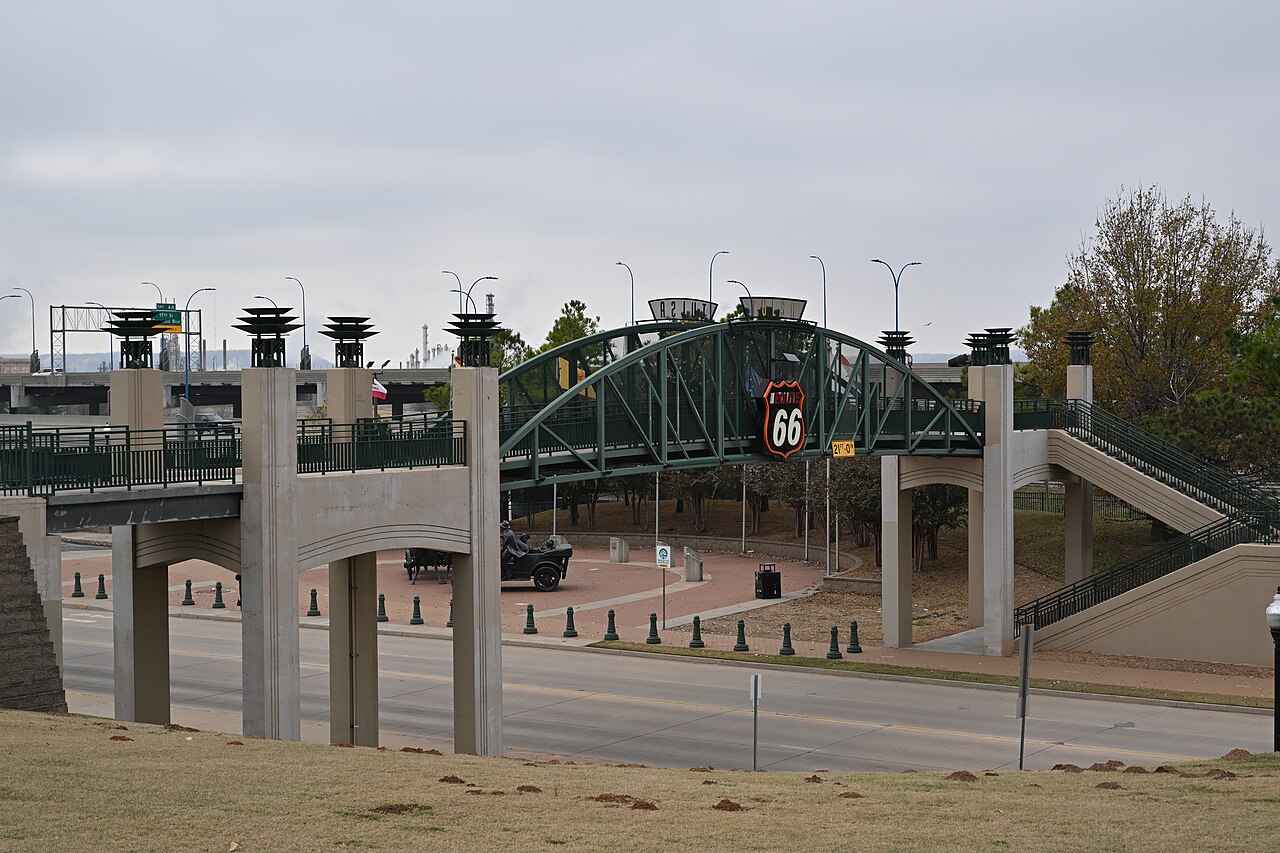
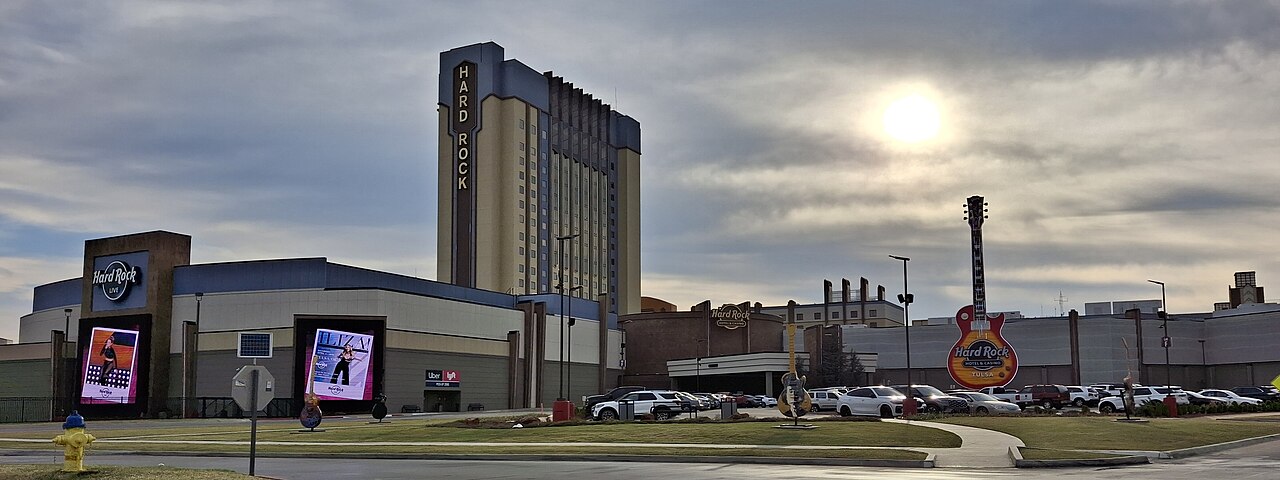
The whale makes a natural end to a Route 66 day. After the Tulsa drive past the Meadow Gold sign and the Cyrus Avery plaza, continue east along the old highway to Catoosa, snap the whale, and then decide whether to extend the trip. Nearby you will find a casino resort, restaurants and other roadside stops, and the road continues toward Claremore and beyond for travelers who want to keep going.
The Blue Whale appeals to children, photographers and anyone who enjoys offbeat landmarks. It is not a major destination on its own, and visitors who expect a full attraction may be underwhelmed, so treat it as a fun stop on a larger Route 66 outing. Check the Tulsa tourism site for any changes to the area before you go, and combine the trip with a stay at a Catoosa hotel if you want to explore the east side of the corridor.
The pond area is shaded by trees in places, which helps on warm days, and picnic tables near the water make it easy to eat a packed lunch. Accessibility is reasonable, but ground can be uneven near the water, so take care with young children and strollers. Visitors sometimes find small seasonal events and craft sellers nearby, and the town of Catoosa has gas stations, restaurants and shops if you need supplies before you move on.
What to expect
The experience
A free roadside landmark: a large concrete whale beside a pond, with picnic spots and a small gift shop nearby.
Best time
Morning for light and fewer crowds; evenings for soft photographs.
How long
Thirty to sixty minutes.
Tips
Treat it as a stop on a Route 66 day, bring a camera, and note that swimming is not allowed.
Quick picks
- Best for
- Families, photographers and Route 66 fans.
- Families
- Children love it; it is quick and free.
- Couples
- A fun photo stop on a road trip.
- Pair with
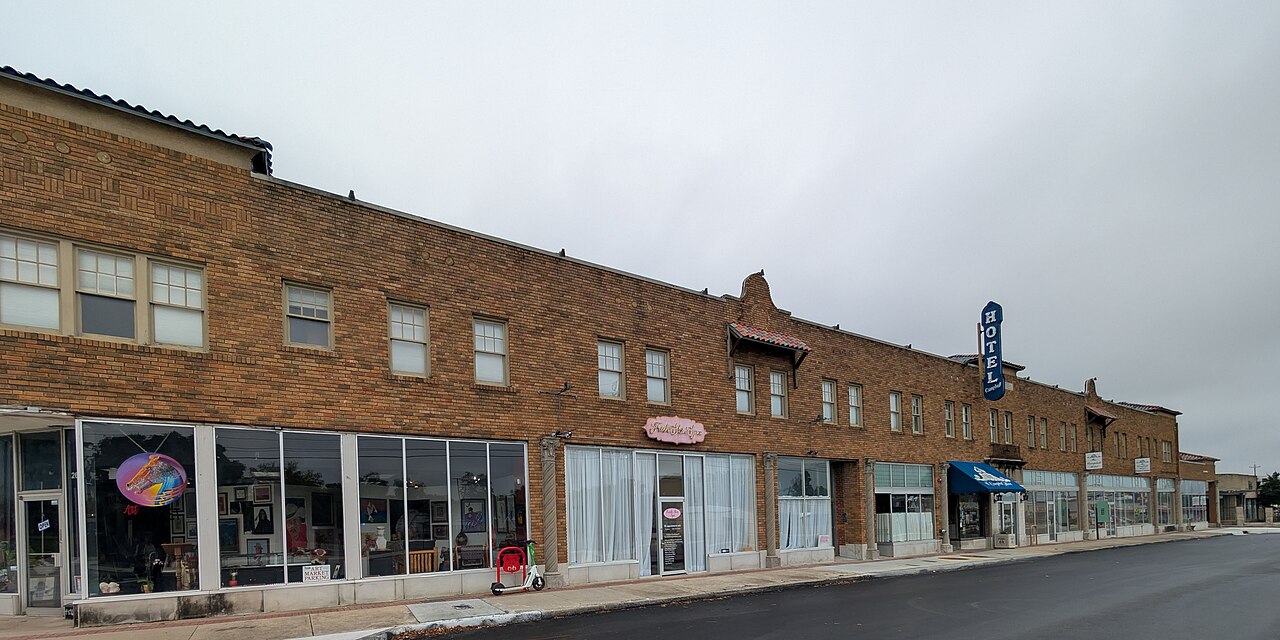
- Route 66 in Tulsa and the Campbell Hotel.
- Time needed
- Thirty to sixty minutes.
Good questions
Who built the Blue Whale?+
Hugh Davis built it in the early 1970s as an anniversary gift for his wife Zelta.
Is it free?+
Yes. It is a free roadside attraction.
Can I swim in the pond?+
No. Swimming is not permitted.
How far is it from Tulsa?+
A short drive east of downtown, roughly twenty to thirty minutes depending on traffic.
How long should I stay?+
Thirty to sixty minutes is plenty.