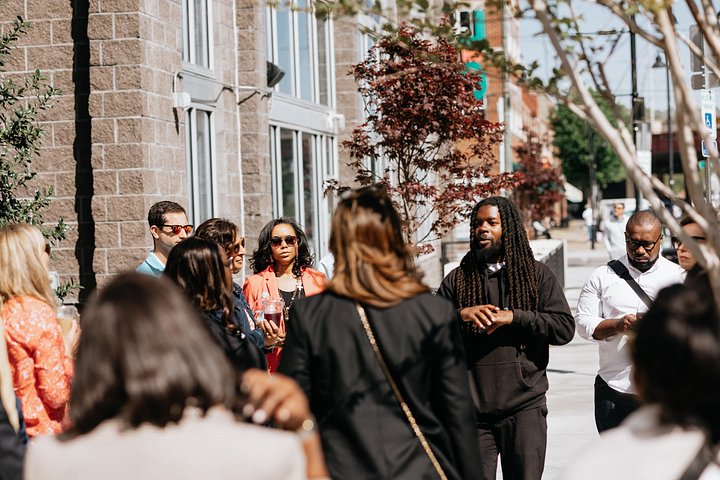
Greenwood Rising is the history center at the entrance to the historic Greenwood district, on North Greenwood Avenue. It tells the story of the Greenwood community, which grew in the early twentieth century into one of the most prosperous Black business districts in the United States and became known as Black Wall Street. The center then covers the 1921 Tulsa Race Massacre, when a white mob destroyed the district over two days, killing many residents and leaving thousands homeless, and it follows the community's long effort to rebuild, remember and seek justice. The exhibits use immersive media, artifacts, voices and carefully designed spaces to bring the story to life without sensationalizing it. All galleries are on one floor, and the experience is mostly self guided, with pre booked groups able to arrange docent tours. Expect an emotional visit. The center treats its subject with seriousness and gives visitors time to absorb it, and many people leave quiet and want to walk the district afterward.
Plan on about ninety minutes inside and more if you want to read every panel and watch each presentation. Timed entry tickets are recommended, especially for weekends, school holidays and the summer, and it is wise to buy them before arrival through the center's website. Days and hours can vary around holidays, and the center is typically closed on Mondays, so confirm the schedule before you travel. There is no parking lot on site, so use nearby street parking or the free lot at the Greenwood Cultural Center, about a block away.
Rules are posted at the entrance. Large bags and backpacks are generally not permitted, food and drink stay outside, and younger visitors need an adult with them. Hand held photography is usually allowed. The material is serious, and families should decide in advance whether it suits children. Older children and teenagers often find the center a powerful complement to what they learn in school, while younger children may find parts difficult.
Pair the center with a slow walk through the Greenwood district, including the memorials, murals and historic churches, and consider reading a little beforehand so that the exhibits connect with what you see on the street. For a longer reflective day, add the Greenwood District walk in this guide, then end with a meal in the nearby Arts District. Support for local Black owned businesses in and around Greenwood is also part of how many visitors choose to honor the story.
Allow some emotional room in your schedule. Many visitors prefer to go in the morning, when the galleries are quieter and the rest of the day is free for reflection, a meal and a walk. Staff and volunteers are generally generous with their time, and questions are welcome. If you are traveling with a group, let everyone move through at their own pace and meet afterward, because the experience affects people differently. Seniors, students and young visitors may qualify for reduced admission, and groups should arrange visits in advance.
What to expect
The experience
A self guided history center with immersive exhibits on Black Wall Street, the 1921 Tulsa Race Massacre and the community's recovery.
Best time
Weekday mornings for quieter galleries; book timed entry in advance for weekends.
How long
About ninety minutes.
Tips
Buy timed tickets ahead, travel light because large bags are not allowed, and allow time afterward to walk the district.
Quick picks
- Best for
- Anyone who wants to understand Tulsa's story, and history lovers of all ages.
- Families
- Best for older children and teenagers; the subject is serious.
- Couples
- A meaningful, reflective visit together.
- Pair with
- A walk through the Greenwood district and a meal in the Arts District.
- Time needed
- About ninety minutes.
Good questions
What is Greenwood Rising?+
A history center in the Greenwood district that tells the story of Black Wall Street and the 1921 Tulsa Race Massacre.
Do I need tickets in advance?+
Timed entry tickets bought online are recommended, especially on weekends and holidays.
Where do I park?+
There is no lot at the center. Use street parking or the free lot at the Greenwood Cultural Center nearby.
Is it suitable for children?+
It suits older children and teenagers best. The subject matter is serious and some parts are difficult.
How long does a visit take?+
About ninety minutes, plus time to walk the surrounding district.