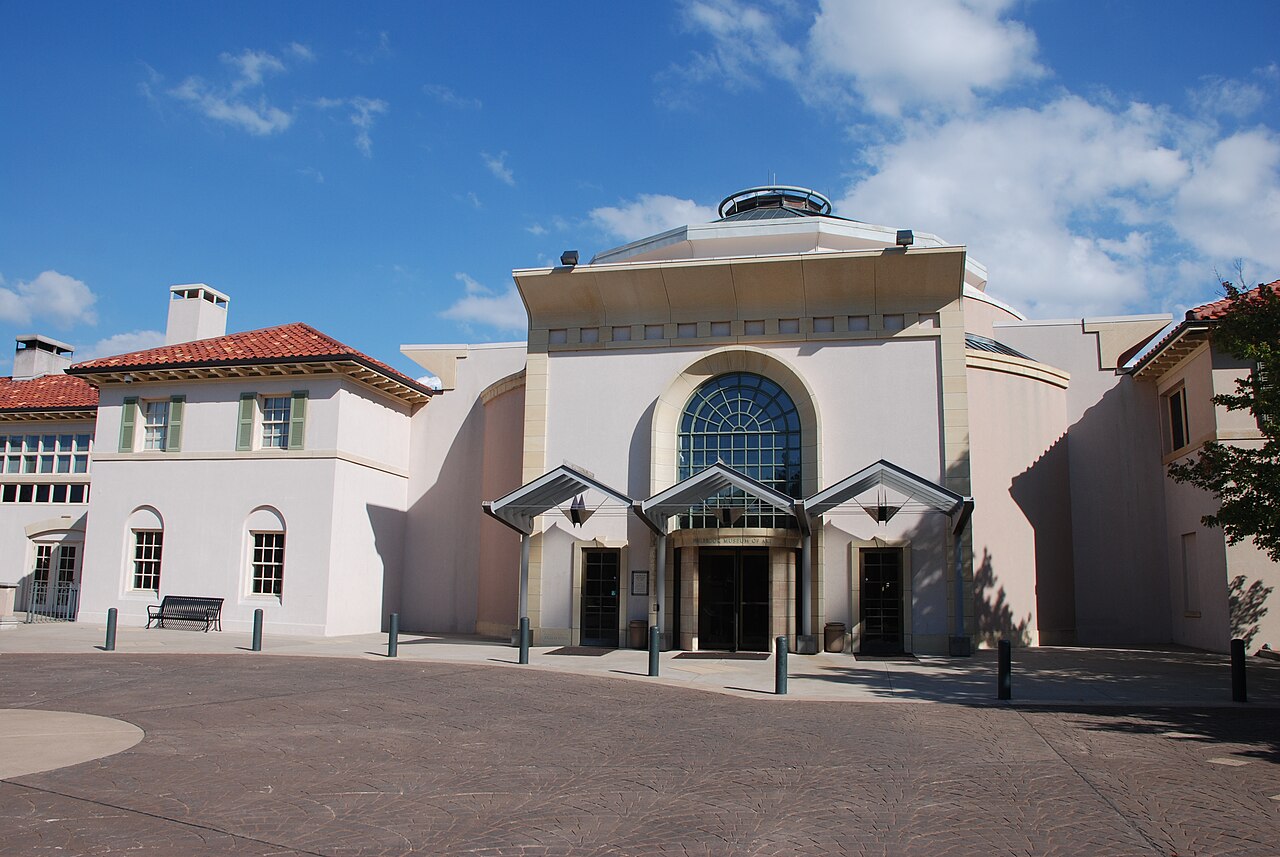
The Philbrook Museum of Art occupies Villa Philbrook, a grand Italian Renaissance style mansion completed in 1927 for oilman Waite Phillips and his family. The Phillips family gave the house and its grounds to the city in 1938 to become an art museum, and the setting remains one of the most beautiful in Oklahoma. A villa of pale stone sits at the top of formal terraces, with reflecting pools, long axial gardens and shaded lawns stretching away behind it. Many visitors arrive for the art and decide, after a few minutes on the terrace, that the gardens are the main event. Inside, the collection reaches well beyond what a regional museum might promise. There are European paintings and sculpture, including Italian works that suit the villa, American art from the nineteenth and twentieth centuries, modern and contemporary work, and an important collection of Native American art that reflects Oklahoma's place as a homeland to many tribal nations. Rooms are a mix of former family spaces and modern galleries, so you move between domestic scale and museum scale in a single visit.
Allow two to three hours for the house, longer if you like to linger in the gardens. A good order is to start in the galleries while you are fresh, then take a break at the museum cafe if it is open, and finish outdoors in the late afternoon when the light is warm on the stone.
The gardens are especially lovely in spring, when the beds and trees come into color, and they stay appealing into autumn. In summer the terraces provide shade, and in winter the interior galleries are a calm escape from the cold.
The museum suits couples, art lovers, garden lovers and families with older children who can enjoy quiet spaces. Strollers and wheelchairs are generally accommodated, and there are benches throughout the gardens. Photography rules vary by gallery, so look for signs. The museum hosts temporary exhibitions, talks, concerts and family days, so a short look at the calendar before you visit can turn a pleasant outing into something more memorable.
Admission is charged for the museum, and days and hours can differ between the museum and the gardens, so confirm what is open before you travel. The villa stands in the Midtown part of Tulsa, a short drive from downtown and close to Brookside and the Gathering Place, which makes it easy to combine with lunch and a walk by the river. If your schedule is tight, pair it with Boston Avenue Methodist Church and an art deco walk for a perfect day of Tulsa architecture.
Families sometimes ask whether the museum is worth the ticket if the weather is poor, and the answer is yes, because the galleries are comfortable and the villa itself is part of the exhibit. On a clear day, though, save the garden for last and let the late light finish the visit. The museum shop and cafe, where open, are good places to rest before you return to the car, and staff can point you toward current exhibitions that suit your interests.
What to expect
The experience
An art museum in a 1920s Italian style villa, with formal gardens, reflecting pools and a broad collection.
Best time
Spring and early autumn for the gardens; weekday mornings for quiet galleries.
How long
Two to three hours including the gardens.
Tips
Check which galleries and garden areas are open, wear comfortable shoes, and save time for a garden walk.
Quick picks
- Best for
- Art lovers, couples and garden lovers.
- Families
- Good for older children; the gardens give younger ones room to move.
- Couples
- Romantic setting, especially on the terraces in spring.
- Pair with
- Gathering Place or lunch in Brookside.
- Time needed
- Two to three hours.
Good questions
Who built the villa?+
Oilman Waite Phillips built it in the 1920s. His family gave it to the city in 1938 so it could become a museum.
What kind of art is inside?+
European, American, modern and contemporary work plus a significant Native American collection.
Are the gardens part of the visit?+
Yes, the formal gardens are a highlight. Check seasonal hours for garden access.
How long should I plan?+
Two to three hours covers the house and a stroll through the grounds.
Is it good for children?+
Older children usually enjoy it, and the lawns and terraces suit families. Young children are better at Gathering Place.