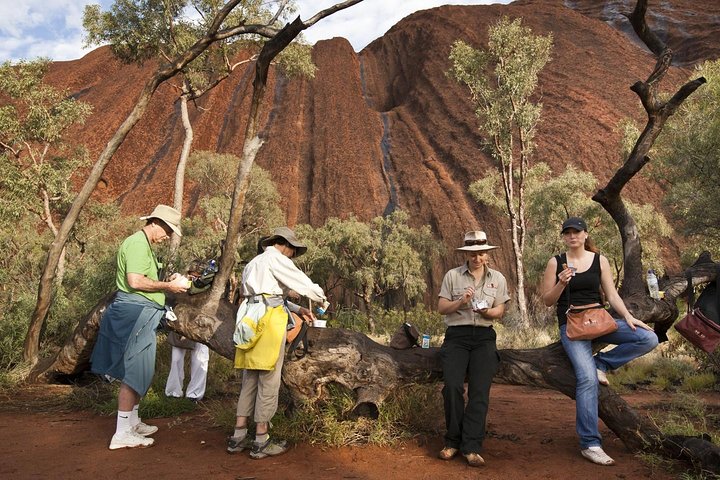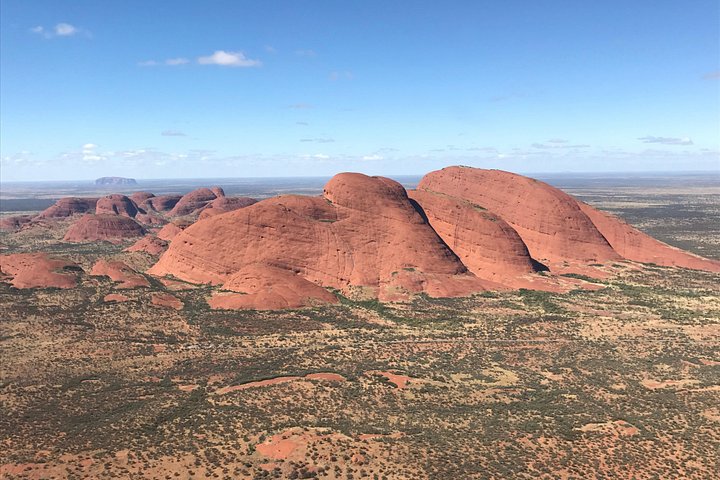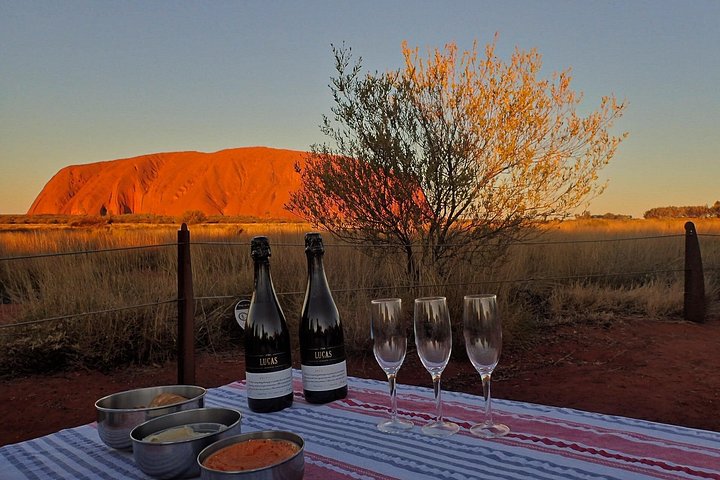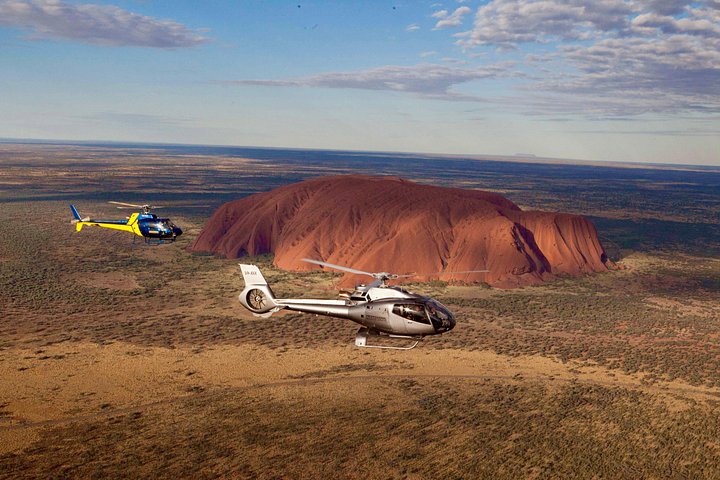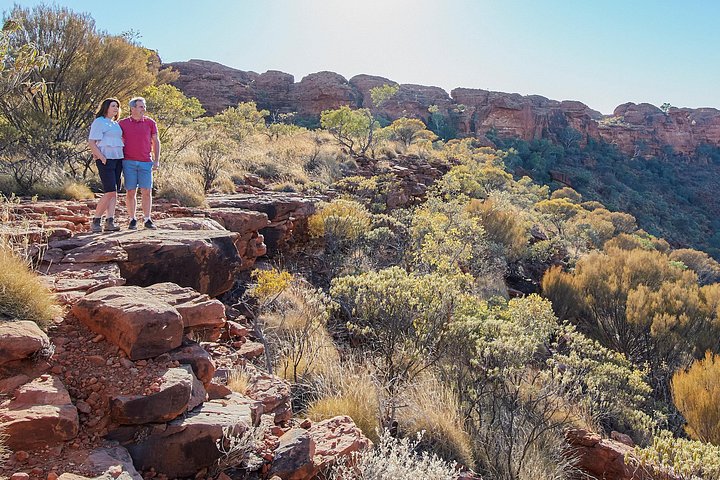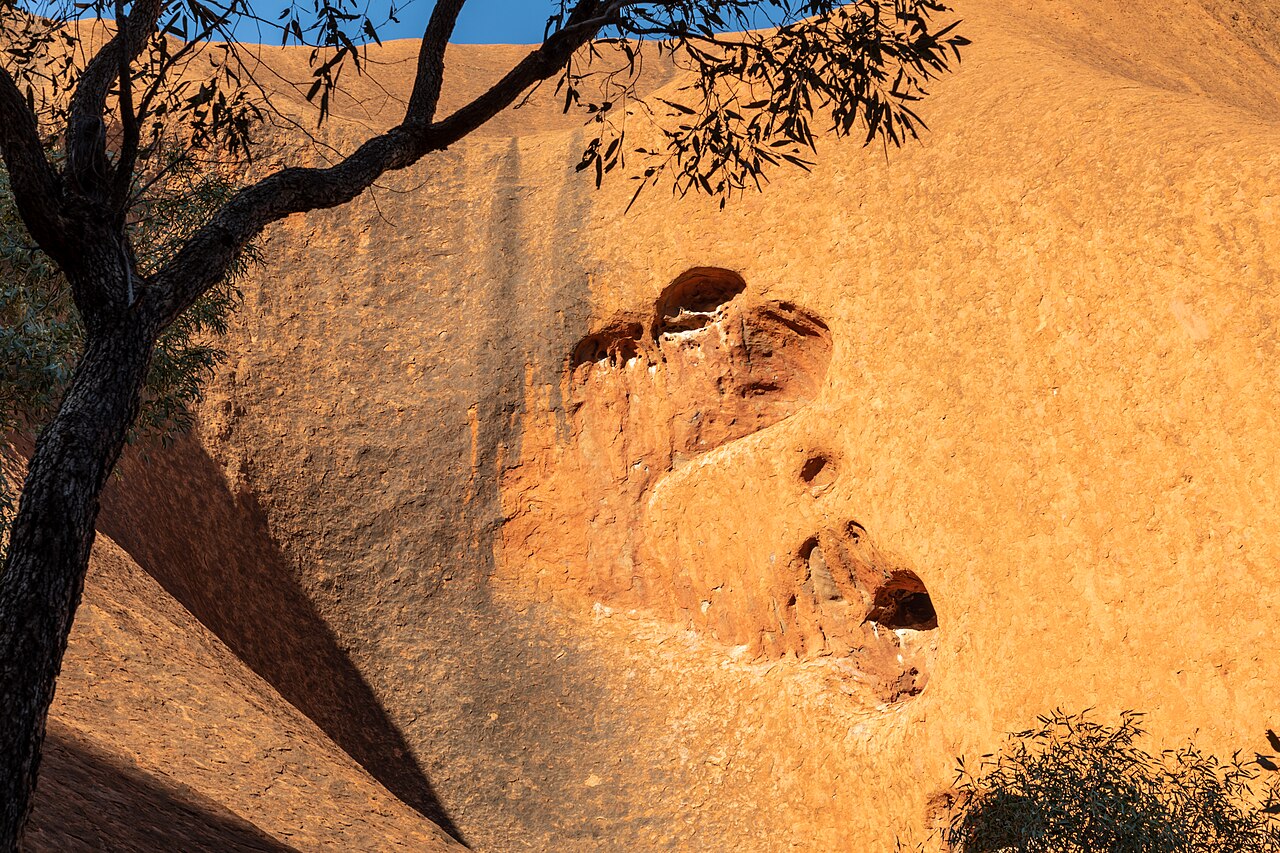
Uluru-Kata Tjuta National Park covers a huge stretch of desert in the south-west corner of the Northern Territory, and it is the reason almost everyone comes to Yulara. The park is Aboriginal land, owned by the Anangu traditional owners and leased to the Australian government, and it is jointly managed by Anangu and Parks Australia. It is listed for both its natural and its cultural values, which tells you something: this is not only a spectacular rock, it is a living cultural landscape where law, stories and daily care for Country continue. Uluru itself is a single sandstone monolith, and most of its mass lies underground. Kata Tjuta, about fifty kilometres away, is a cluster of towering domes with deep gorges between them. Between the two lie walking tracks, shaded gorges, waterholes that hold water long after the rains and caves with rock art. Guided experiences here include sunrise and sunset tours and day tours with a barbecue dinner, and booking one is a practical way to get a guide who handles the driving and the commentary. A park pass is needed to enter, and it is sold separately by the park.
How the park works
You need a park pass to enter. A three-day adult pass costs a modest fee and children and teenagers under 18 enter free; buy it online in advance or at the entry station on the way in. Some tours include the fee and some do not, so read the inclusions before you pay twice.
The pass covers this park only. The park is open daily, with opening hours that shift through the year to follow sunrise and sunset, and individual tracks close in the afternoon during the hot months to protect walkers from heat stroke.
Respect and rules
The Anangu ask visitors to learn before they walk. The climb was permanently closed on 26 October 2019 and the park now invites you to experience Uluru by walking around the base, joining ranger or Anangu-led talks and listening to the stories. Some places are sacred and are marked as such, with signs asking you not to photograph them; please follow every sign. Do not fly drones, do not take sand or stones, and stay on the tracks.
Planning your time
Two full days is the sweet spot, giving you a sunrise and a sunset at the rock, the base walk, a morning at Kata Tjuta and an evening show. Guided tours are worth considering for the first day because a good guide explains what you are seeing, and they remove the pre-dawn driving. Independent travellers can hire a car at the airport or use the free resort shuttle and join tours that pick up from the hotels.
What to expect
The experience
A vast national park with Uluru and Kata Tjuta, walking tracks, a cultural centre and viewing areas, explored on your own or with a guide who drives and explains.
Best time
April to September for comfortable walking, with cool mornings and warm days; summer is hot and tracks close early in the day.
How long
One full day gives you the headlines; two or three days let you slow down.
Tips
Buy your park pass before you arrive, carry far more water than you think you need, wear a hat and sturdy shoes, and follow every sign asking you not to photograph sacred places.
Quick picks
- Best for
- Everyone who comes to Uluru, and especially first-time visitors who want a guide to explain the place.
- Families
- Children under 18 enter free, and the shorter walks and the Cultural Centre suit them well.
- Couples
- A small-group sunset with the rock glowing in front of you is hard to beat.
- Pair with
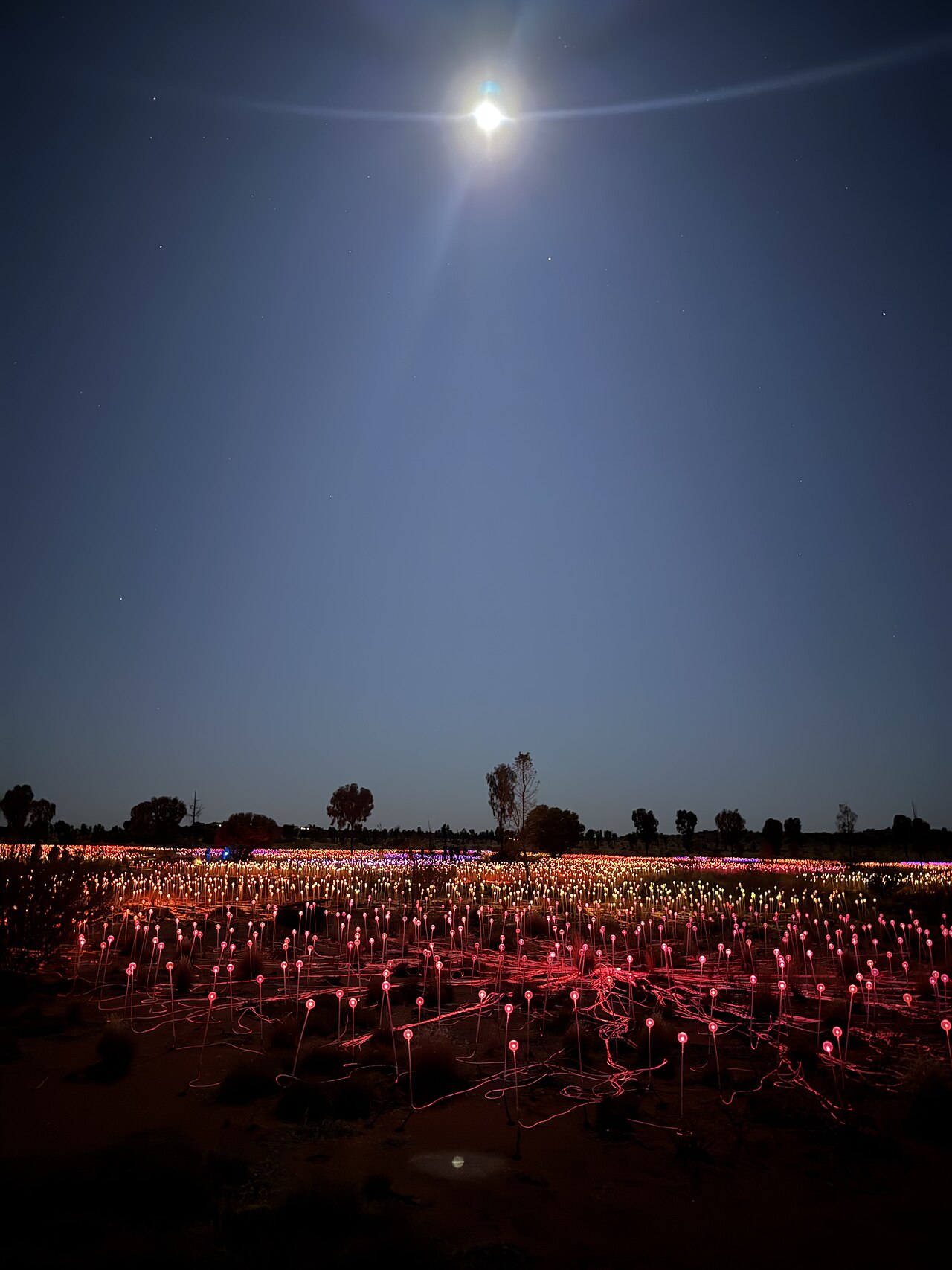
- The Cultural Centre, the base walk and an evening at the Field of Light.
- Time needed
- At least a full day, ideally two.
Good questions
Do I need a pass to enter Uluru-Kata Tjuta National Park?+
Yes. A park pass is required for everyone aged 18 and over, and it is valid for three days. You can buy it online or at the entry station, and children and teenagers under 18 enter free.
Can I climb Uluru?+
No. The climb was permanently closed on 26 October 2019 at the wish of the Anangu traditional owners. Visitors are invited to walk around the base and learn about the rock instead.
How many days do I need?+
Two days covers a sunrise, a sunset, the base walk, Kata Tjuta and a night experience comfortably. One day works if you are short on time and book a guided tour.
When is the best time to visit?+
Between April and September the days are mild and the mornings cool, which suits walking. Summer brings extreme heat and some tracks close from late morning.
Is a guided tour worth it?+
For a first visit, yes. A guide handles the driving, explains the cultural background and gets you to the right place at the right time, which is especially helpful at dawn.