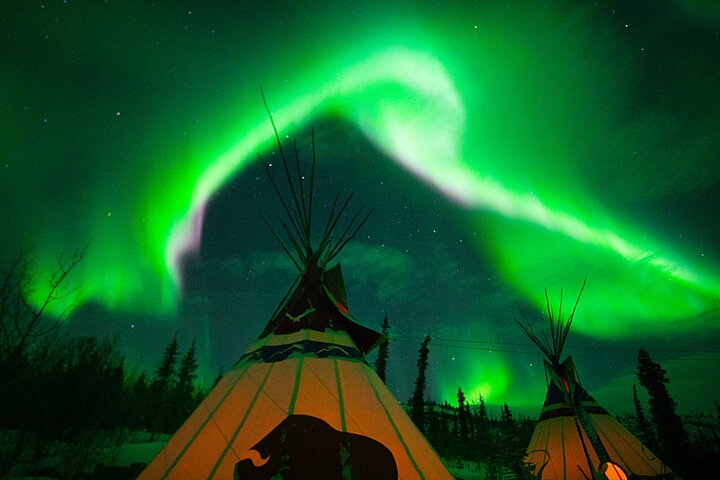
Whitehorse is one of the most dependable places in North America to see the aurora. The city lies well inside the auroral zone, the air is dry and cold, and the sky over the surrounding hills goes properly dark within minutes of leaving downtown. Viewing season runs from late August through to roughly April, and the long nights of November through March give the most hours of darkness to work with. The most popular way to do it is a late-night guided tour: you are collected from a downtown hotel lobby, driven out to a dark viewing site, and kept warm with hot drinks, snacks and a fire while the guides watch the forecast and the sky. A professional photographer guide is part of the experience, which matters because phones struggle with the aurora and a good frame needs a tripod, patience and the right settings. Our pick is the late-night aurora tour from Arctic Day, which has the deepest review base of any Whitehorse aurora outing and runs on a roughly four-hour evening schedule. Smaller operators run cabin-style evenings, dome viewings and combinations with snowshoeing or huskies, and the multi-night packages bundle several chances in a row, which is the smartest way to improve your odds because no operator can promise a show.
Understanding the odds helps you plan. The aurora needs three things: solar activity, a clear sky and darkness. Whitehorse supplies darkness and, in the cold months, many clear nights, but the sky can cloud over and the sun can be quiet. Even a faint display can be spectacular to the camera, and a strong night turns the whole sky green, pink and purple, moving overhead rather than hovering on the horizon.
Because of the variables, the tour you choose matters less than how many nights you give it. One evening is a gamble; three or four evenings in a row make a sighting very likely, and that is why the multi-day packages exist.
How to get the best night
Dress for standing still in the cold, not for walking. That means insulated boots, a warm layer under a parka, proper gloves with liners and a hat that covers your ears. Tours usually provide drinks and snacks but not clothing. Bring a spare phone battery, because cold drains batteries fast, and let your eyes adapt to the dark for twenty minutes before judging the sky.
Check the tour terms before booking
The evening tour we recommend runs in any weather and does not refund or rebook for cloud, snow or a quiet sun, so a refundable or multi-night option can be worth the extra cost if flexibility matters to you.
A word on timing and seasons. From late autumn the nights are long and the snow arrives, so conditions are good for both viewing and winter extras such as snowshoeing. Late-night tours start around the stroke of midnight, which means a sleep-in the next morning, so schedule museum visits and wildlife stops for the afternoons that follow. If you only have one night, go on the clearest evening in the forecast rather than the first one you have free.
What to expect
The experience
A late-night guided tour with hotel pickup, a drive to a dark viewing site, hot drinks, snacks and a fire, plus a photographer guide who helps you capture the sky.
Best time
Clear, cold nights from late August to roughly April, with the long nights of November to March offering the most darkness.
How long
Around four to five hours from pickup to drop-off, finishing in the small hours of the morning.
Tips
Dress for standing still in extreme cold, bring a spare phone battery and give it more than one night, because cloud and solar activity decide the show, not the tour.
Quick picks
- Best for
- Anyone who has always wanted to see the aurora and wants a guide to handle the driving, the dark site and the photography.
- Families
- Check age rules and the late finish; older children who can stay up and stay warm usually enjoy it most.
- Couples
- A fire, a hot drink and a green sky is about as romantic as winter travel gets; smaller cabin-style evenings add more privacy.
- Pair with
- A daytime stop at the Yukon Wildlife Preserve and an evening soak at the Eclipse Nordic Hot Springs on a different day.
- Time needed
- One late night per attempt, and ideally two to four nights to make a sighting likely.
Good questions
When is the best time to see the northern lights in Whitehorse?+
The viewing season runs from late August to about April, and the long, dark nights of November through March offer the most opportunities.
Is a sighting guaranteed?+
No. The aurora depends on solar activity and clear skies, and the recommended evening tour runs in any weather without refunds for cloud or a quiet night. Booking several nights raises your odds.
How cold will I be?+
Very cold if you stand still for hours, and winter nights can fall well below freezing. Wear insulated boots, a parka, warm layers, gloves and a hat, and ask whether the tour supplies extra gear.
Can I photograph the aurora with a phone?+
Newer phones can capture a strong display in night mode, but a tripod helps, and the photographer guide on the tour can set up shots and share souvenir photos.
Do I need a car?+
Not for a guided tour, which collects you from a downtown hotel. A rental car is only necessary if you want to chase the lights independently, and dark country roads in winter need confident driving.