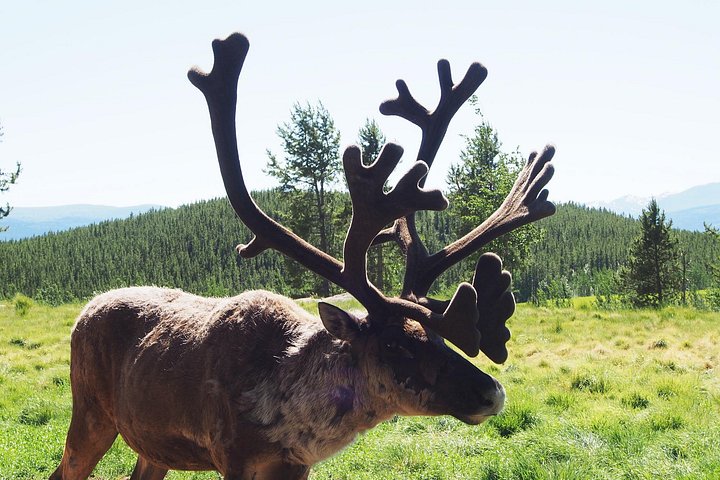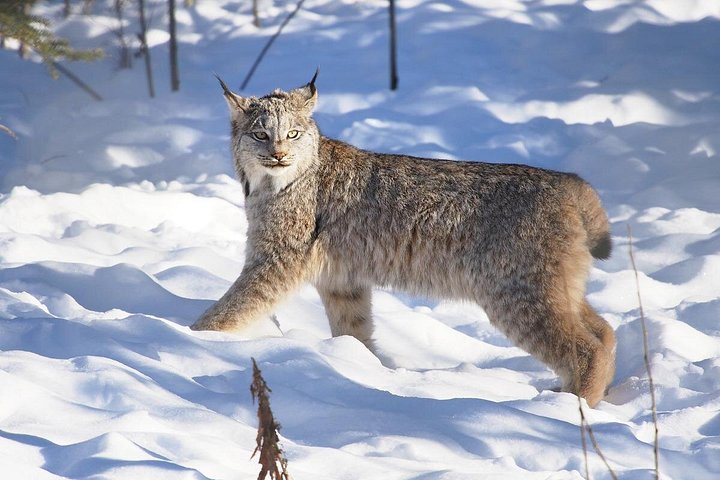
The Yukon Wildlife Preserve is a large outdoor reserve east of Whitehorse where animals native to the north live in large, natural enclosures. Rather than a zoo of small cages, it is a landscape of boreal forest and hillside where you walk or ride a circuit to see species such as muskox, wood bison, caribou, Canada lynx, moose, mountain goats and arctic fox. Visitors can follow the loop on foot, by bicycle or ski in the right season, or join a guided bus tour that adds commentary about the animals and the conservation work behind the preserve. It stays open through winter, which is when the animals look their best: thick coats, steaming breath and snow underfoot make for the best photographs of the year. From November to March the preserve keeps shorter winter hours and runs guided bus tours at noon and 3 pm daily, and personal vehicles are not allowed on site. If you would rather not drive, a half-day guided tour with hotel pickup includes the preserve admission, which is the easy choice in winter.
What you will see depends on the day, because the animals roam large enclosures and are not on show on a schedule. That is part of the appeal: spotting a lynx in the trees or a muskox herd on a slope feels earned. The bus tour is the most reliable way to see the species, since the guide knows where animals tend to be and explains behaviour, adaptation and conservation.
Walking the loop gives you more freedom and more quiet time, and you can stop as often as you like for photographs, but you will cover ground in the cold, so allow the time and the layers.
Planning notes for winter
The preserve opens at 11 am and closes at 5 pm daily from November to March, is shut on 25 December and for a short closure in spring, and does not open when the temperature falls below minus 35 degrees Celsius. Check the weather and the website on the morning of your visit if the forecast is brutal.
Tours are booked online in advance and tickets are non-refundable within 24 hours of the departure. A low-floor wheelchair-accessible bus is available, and calling ahead lets staff adjust capacity. Kicksleds can be rented on arrival if you want to try a Yukon way of getting around.
Who it suits
Families, wildlife photographers and anyone who wants a guaranteed animal encounter in the cold months without a long drive. The setting is also a good fit for a first day in Whitehorse, because it is calm, close to town and easy to understand. Pair it with a hot soak at the Eclipse Nordic Hot Springs, as many half-day tours do, and you have a winter day that feels distinctly northern.
What to expect
The experience
A large outdoor reserve explored on foot, by bike or ski, or on a guided bus tour, with northern animals living in big natural habitats.
Best time
Winter days around the midday and mid-afternoon bus tours, when animals have thick coats and the snow makes photographs.
How long
Allow two to three hours; a guided bus tour runs about an hour and a half.
Tips
Dress for the cold, book the bus tour in advance, check opening on very cold mornings, and remember private vehicles are not allowed on site.
Quick picks
- Best for
- Families and photographers who want a dependable wildlife encounter without a long drive.
- Families
- Excellent for children; the bus tour keeps little legs warm, and infants are admitted free with a parent.
- Couples
- A quiet winter wander among muskox and caribou followed by a soak at the hot springs makes a good day.
- Pair with
- Eclipse Nordic Hot Springs on the same afternoon, or the MacBride Museum on a different day.
- Time needed
- Half a day including travel from downtown.
Good questions
Is the Yukon Wildlife Preserve open in winter?+
Yes. From November to March it is open daily from 11 am to 5 pm, with guided bus tours at noon and 3 pm. It closes on 25 December and when temperatures fall below minus 35 degrees Celsius.
Do I need to book the bus tour?+
Booking online in advance is the safest plan, since tours are timed and changes within 24 hours are non-refundable. Walking admission can be purchased for self-guided visits.
Which animals will I see?+
Typical residents include muskox, wood bison, caribou, lynx, moose, mountain goats and foxes, though sightings depend on the day and where the animals are in their enclosures.
Can I drive my own car inside?+
No. Personal vehicles are not allowed on site, so you walk, bike, ski, kicksled or take the guided bus.
Is it wheelchair accessible?+
A wheelchair-accessible low-floor bus is available; call the preserve ahead so staff can adjust capacity for your group.