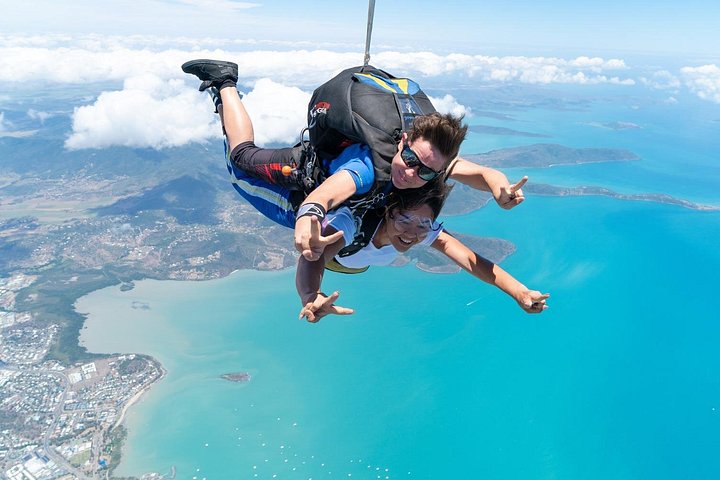
Few views anywhere compare with the Whitsunday Islands from the sky, and a tandem skydive puts you right in the middle of that picture. The jump takes place from a small aircraft that climbs over the coast, with the sea, the island chain and, on clear days, the outline of the outer reef beneath you. Depending on the package, the jump height ranges from around 10,000 to 15,000 feet, with the higher options adding more freefall time, which is the part many people describe as exhilarating and strangely peaceful. You do not need any experience. A tandem instructor is attached to your back, handles the equipment and controls the descent, while you enjoy the ride. Before the flight there is a short safety briefing, harness fitting and instruction on the exit position, so that you know what to do. After the freefall, the parachute opens and you drift for several minutes, with time to look around, take in the view and, if the instructor allows, steer the canopy for a moment before landing.
Preparation is simple but important. Eat a light meal beforehand, wear comfortable, fitted clothing and closed shoes, and leave loose items behind. Medical and weight limits apply, and the operator will ask you to confirm your fitness and sign a waiver. People with certain heart conditions, back injuries, pregnancy or alcohol in their system are not permitted to jump.
Tell the staff about any concerns when you book, and follow their instructions on the day. Most operators offer a video and photo package, which is worth considering because you will be too busy to take pictures yourself.
Weather decides everything. Wind, cloud and visibility must meet safety criteria, and operators postpone or cancel if they do not. Because of this, it is wise to book early in your stay so that you have spare days for rescheduling. Mornings often have the calmest air, while afternoons can bring stronger winds. Check the weather forecast, stay flexible with your plans and avoid scheduling the jump just before a flight home. If conditions turn, the operator will contact you and offer a new time.
What happens on the day usually follows a pattern. You check in, complete paperwork, meet your instructor and watch a briefing. A short drive or walk takes you to the aircraft, and the flight to altitude takes around fifteen to twenty minutes, during which the views alone justify the trip. At the door, your instructor guides you out, and after the freefall of roughly 30 to 60 seconds the canopy opens. The descent lasts around five minutes, ending with a gentle landing, often on a beach, with ground staff waiting.
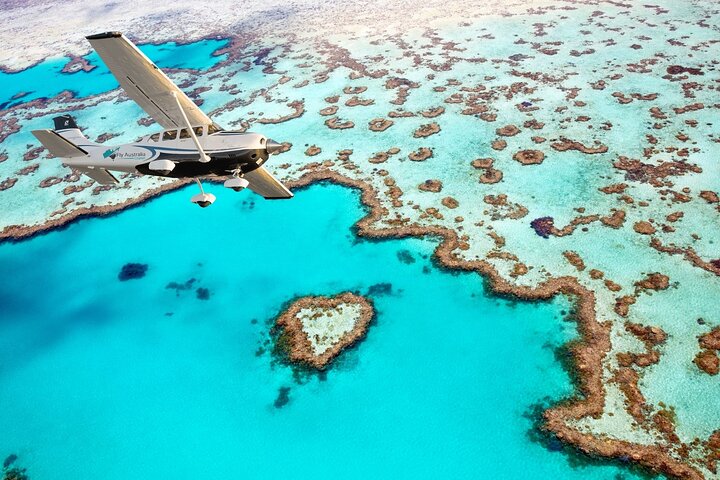
Nerves are normal, and instructors have heard every question. Many nervous jumpers say the anticipation was worse than the jump itself, and the freefall feels more like floating on a wind cushion than falling. If you are unsure, talk to the team before booking, watch a few videos, and remember that you can ask questions at any point before the exit. For those who would prefer a gentler view, the scenic flight over Heart Reef delivers the aerial perspective without the leap.
What to expect
The experience
A tandem skydive from a small aircraft over the Whitsundays, with a briefing, freefall and parachute descent to a beach landing.
Best time
Clear, calm mornings in the dry months from June to October. High wind or cloud can postpone jumps.
How long
Plan on a half day including briefing, flight and landing; the jump itself takes around 20 minutes.
Tips
Book early in your stay in case of weather, eat lightly, wear fitted clothes and check the weight and health limits.
Quick picks
- Best for
- Adrenaline seekers and anyone ticking off a bucket-list experience.
- Families
- Minimum age and weight limits apply; usually for adults and older teenagers.
- Couples
- Many couples jump together and buy a photo and video package.
- Pair with
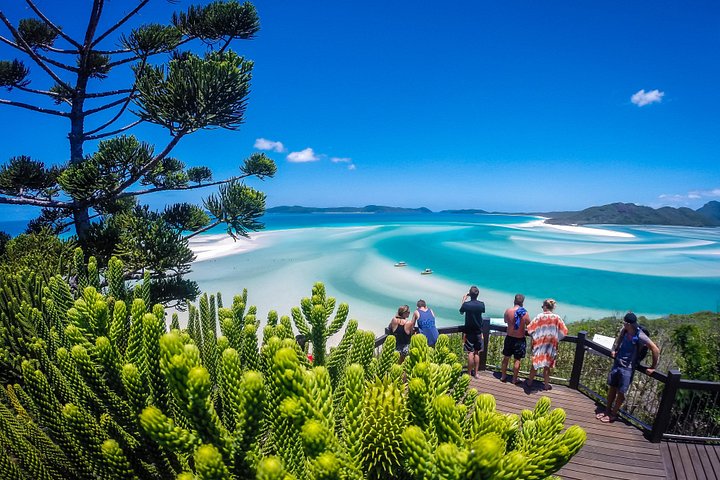
- A Heart Reef flight for a calmer aerial view or a Whitehaven day on another date.
- Time needed
- Half a day.
Good questions
Do I need experience?+
No. A qualified instructor is attached to you and handles the equipment and controls the descent.
How high is the jump?+
Typically between about 10,000 and 15,000 feet depending on the package. Higher jumps add more freefall time.
What if the weather is bad?+
Jumps are postponed or cancelled if wind, cloud or visibility are unsafe, so book early in your stay to allow for a new date.
Are there restrictions?+
Yes. There are weight, age and health limits, and conditions such as pregnancy or certain heart or back problems prevent jumping.
Can I get photos?+
Operators normally offer a video and photo package, which is worth considering since you will be busy enjoying the jump.