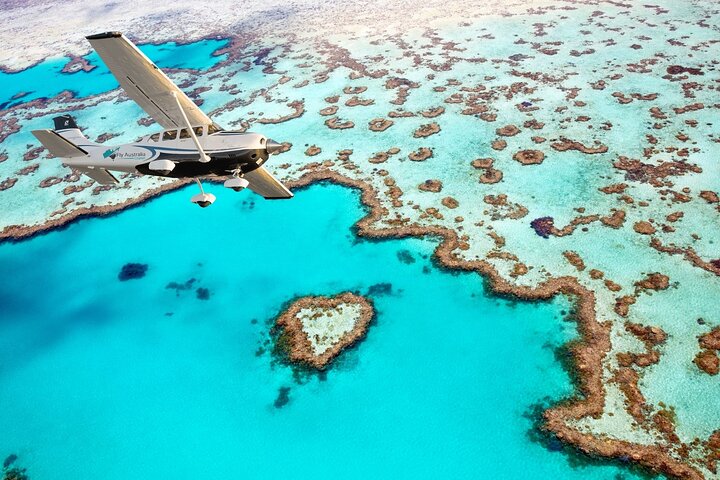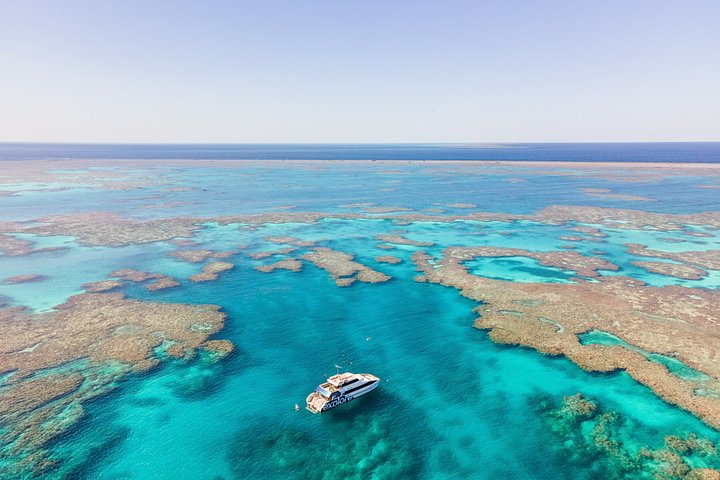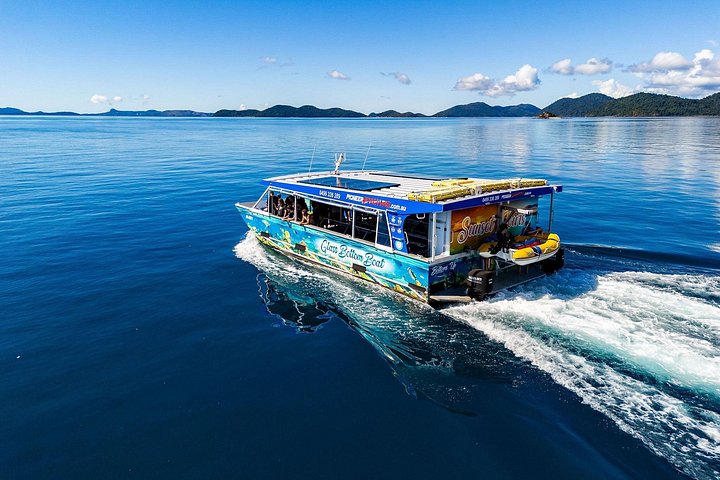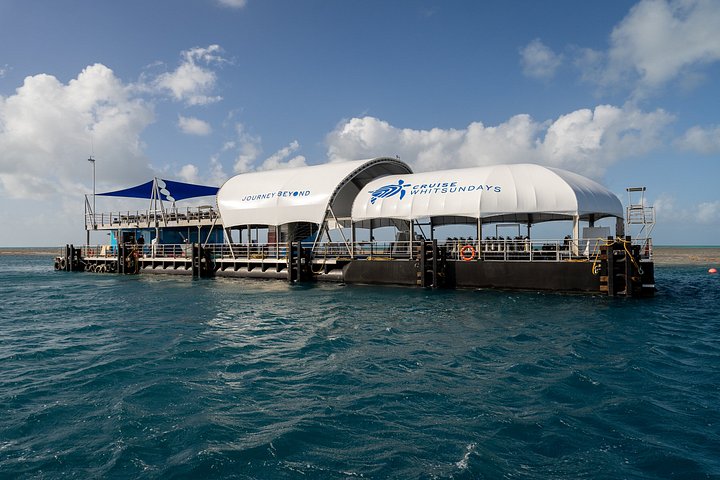
The outer Great Barrier Reef is the main reason many visitors come to Queensland, and from the Whitsundays the most popular route is a full-day trip to Hardy Reef. A fast catamaran leaves the Airlie Beach waterfront in the morning and cruises for roughly two hours across the Coral Sea to a floating pontoon moored at the reef, where passengers have about four hours to explore. The reef here is healthy, clear and rich with colour, and the platform makes the experience easy: a covered deck, a changing area, a lunch buffet and a gentle entry into the water. From the pontoon you can snorkel in a marked area, take a guided snorkel safari, join an introductory scuba dive, or stay dry on an underwater viewing platform and in a semi-submersible or glass-bottom boat. Marine biologists and crew on board give short talks about the reef, and many trips include a short helicopter or scenic flight as an optional add-on. For a first-time reef visitor, it is a well-organised way to see coral gardens and tropical fish without needing any prior experience.
The key decision is how to spend your time on the reef. Confident swimmers will want to snorkel as much as possible, since the gardens beside the pontoon hold giant clams, parrotfish, angelfish, butterflyfish and sometimes turtles, reef sharks or the large friendly Maori wrasse. Less confident visitors can use flotation devices, hold the rope that runs beside the platform, or watch the show from the viewing deck.
If you have never dived, an introductory dive with an instructor lets you go beneath the surface for a short guided session, and certified divers can arrange to join a longer dive on the reef.
Sea conditions matter. The Coral Sea is open water, and on windy days the two-hour crossing can be rough. Anyone prone to seasickness should take medication before boarding and sit near the back of the catamaran on the lower deck, where the motion is gentler. Operators supply stinger suits when jellyfish are around, and you will probably want one in the warmer months for protection from the sun as well. Bring reef-safe sunscreen, and reapply it before swimming, or use a rash vest to cover your skin and protect the coral.
Think about the day as a whole. You will spend many hours on the boat, so bring a book or a camera, and wear a light layer for the air-conditioned cabin. The pontoon offers shade, toilets, and lunch, but not much else, so bring your own water bottle and a small waterproof bag. Underwater cameras are popular, and some operators hire them or sell waterproof phone pouches. Photos in clear water are best near midday, when sunlight penetrates deepest.
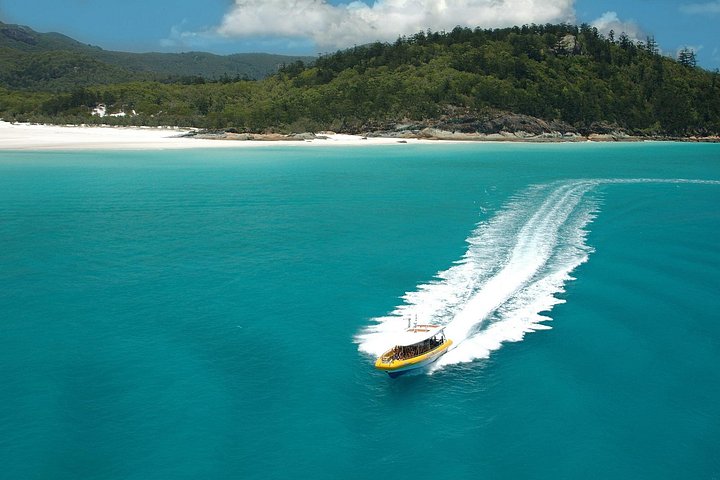
Compared with Cairns and Port Douglas, the Whitsunday reef trips are a long day trip, so they suit travellers who are already in the islands rather than those who want the shortest path to the reef. If you can only do one trip, decide between this and a Whitehaven day. Many visitors choose the island beach on one day and the reef on another, which makes a balanced stay and gives time to recover in between. Respect the rules of the marine park by not touching coral, not standing on it and not feeding fish.
What to expect
The experience
A fast catamaran to a pontoon at Hardy Reef with snorkelling, optional diving, a semi-submersible and a buffet lunch.
Best time
The dry months from June to October have clearer water and calmer seas. The wet season brings more wind and rain.
How long
About ten hours including two hours each way on the boat and around four hours on the reef.
Tips
Take seasickness medicine early, wear a rash vest, use reef-safe sunscreen and bring a waterproof bag and a spare layer.
Quick picks
- Best for
- First-time reef visitors who want a comfortable, well-supported outer-reef day.
- Families
- The platform is easy for children, with flotation aids and a viewing area; check age rules for diving.
- Couples
- Book an introductory dive or a guided snorkel for time away from the crowd.
- Pair with
- A Heart Reef scenic flight and a sunset sail on separate days.
- Time needed
- One full day.
Good questions
Do I need to know how to swim?+
Not necessarily. Flotation devices and the viewing platforms let non-swimmers see the reef, but you should be comfortable in the water for snorkelling and confirm the options with the operator.
How long is the journey?+
The outer reef is roughly two hours each way by fast catamaran, leaving about four hours at the pontoon.
Is it suitable for beginners?+
Yes. The pontoon is designed for first-timers with gear, instruction and lifeguards, and an introductory dive requires no experience.
What should I wear?+
Swimmers, a rash vest or stinger suit, and a light layer for the boat. Bring a hat, sunglasses and reef-safe sunscreen.
Can I see Heart Reef from the pontoon?+
Not from the water. The heart-shaped formation is best seen on a scenic flight, which some reef trips offer as an optional extra.