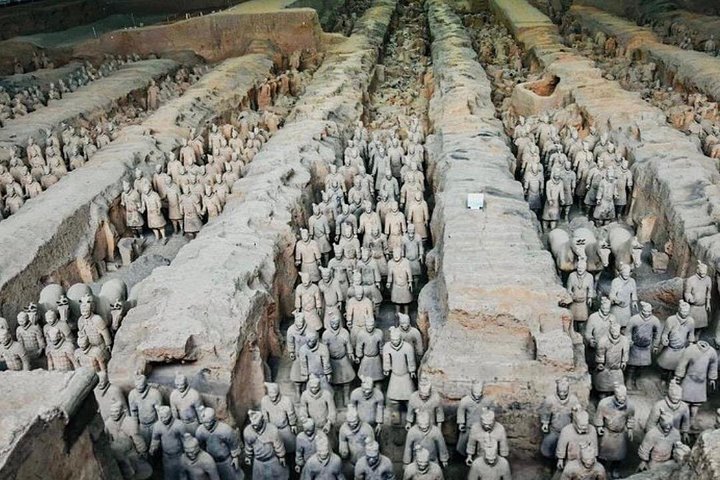
Xi’an is the city of clay. The Terracotta Army is the most famous pottery project in history, and local kilns have turned out roof tiles, bricks, tomb figures and tableware for well over two thousand years. A pottery class puts that history in your hands. Over about two hours, an instructor and an English-speaking guide walk you through the basics of working clay: wedging, centring, pulling up the walls of a bowl or cup and smoothing the rim, with time to try decoration if the studio offers it. No experience is needed, and the session is built for beginners, so a wobbly first bowl is completely normal and part of the fun. It is a calm, tactile change of pace after days of walking on stone and climbing towers, and it works for a solo traveller, a couple or a family with older children. The class also makes a thoughtful pairing with a morning at the Terracotta Army, because you will look at the soldiers differently once you have felt how stubborn wet clay can be. Pieces usually need to dry and be fired, so ask at the start how finished items are handled and whether they can be collected or sent on.
How to book
Reserve a time slot in advance, especially in spring and autumn when Xi’an is busy. The product is a small-format class with an English-speaking guide, so confirm the start time and the meeting point when you book. Wear clothes you do not mind getting a little muddy, and avoid long sleeves that drag in the slip. An apron is normally provided, but check when you book.
What to expect
The class begins with a short introduction to Shaanxi pottery and the clay used in the region, then moves to hands-on work. Beginners usually start with a simple form such as a bowl, a cup or a small plate. The instructor steps in when the clay collapses, which it will, and helps you rescue the shape. Most studios keep the groups small, so you get real attention rather than a demonstration from the back of a room.
What happens to your piece
Because clay has to dry and be fired in a kiln, a piece made today is rarely ready to carry out the door. Ask whether finished items can be collected on a later day, delivered to your hotel or shipped, and be realistic about fragile ceramics in a suitcase. Some visitors prefer to keep a photograph and a small ready-made piece instead, and that is a perfectly good way to enjoy the class.
Making the most of it
The session fits neatly into a gap between sights, such as the afternoon after the Terracotta Army or the day you want a break from crowds. Pair it with the Muslim Quarter for dinner, or with the dumpling-making class for a hands-on culture day. Children who are old enough to follow instructions usually love it, though very young ones may lose patience, so mention ages when you book. If you have limited mobility, tell the organiser, because wheels and low stools are common.
A note on context
Shaanxi has been a centre of ceramics since the villages of the Yangshao culture, whose painted pots are on show at Banpo, and the tradition runs through Qin tomb figures and Tang glazed horses. If this class sparks an interest, the Shaanxi History Museum holds some of the finest examples in the country, and the Terracotta Army shows clay work at an industrial scale. Seeing those pieces after you have handled clay yourself is a small revelation, because you start to notice finger marks, joins and tool work that were invisible before.
What to expect
The experience
A small hands-on pottery class with an instructor and an English-speaking guide, aimed at complete beginners.
Best time
An afternoon between sights, or a rest day from the bigger monuments.
How long
About two hours.
Tips
Wear clothes you do not mind marking, ask how finished pieces are fired and collected, and mention children’s ages when you book.
Quick picks
- Best for
- Travellers who want to make something with their hands rather than only look.
- Families
- Good for older children who can follow instructions and enjoy messy projects.
- Couples
- A relaxed shared activity with a small keepsake as the reward.
- Pair with
- The Terracotta Army in the morning, or the Muslim Quarter for dinner.
- Time needed
- Two hours plus travel to the studio.
Good questions
Do I need pottery experience?+
No. The class is designed for beginners, and the instructor helps with each stage from preparing the clay to shaping the piece.
Can I take my piece home?+
Clay needs to dry and be fired, so it is usually not ready the same day. Ask the organiser how finished pieces are collected or sent on.
Is it suitable for children?+
Older children who can follow instructions usually enjoy it. Mention ages when you book so the guide can plan the session.
What should I wear?+
Comfortable clothes you do not mind getting muddy. Short sleeves are easier, and an apron is normally provided but is worth checking.
How does it connect to Xi’an’s history?+
The region has a very long pottery tradition, from Neolithic village ware to the Terracotta Army, and the class begins with a short introduction to that background.