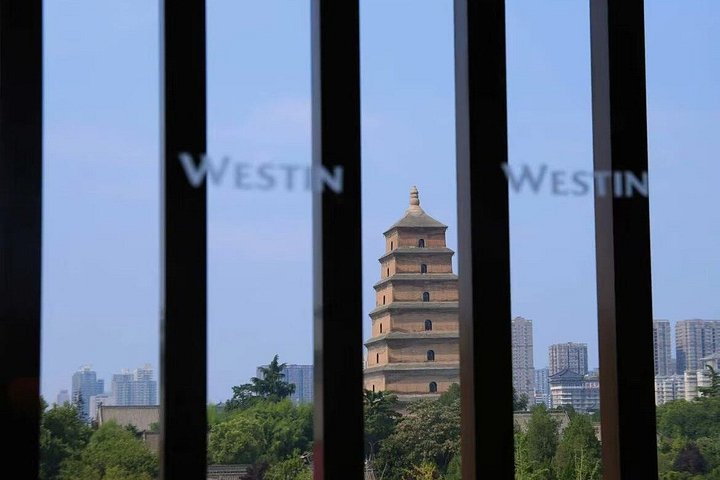
The Giant Wild Goose Pagoda, also called Dayan Pagoda, is the great Tang-dynasty landmark of southern Xi’an. It was completed in 652 to store the Buddhist scriptures that the monk Xuanzang carried back from his long pilgrimage to India, the journey that later inspired the novel Journey to the West. The square brick tower now rises seven storeys to about 64.5 metres, a plain, powerful shape that has been repaired and heightened over the centuries but still reads clearly as Tang architecture. It stands inside the Daci’en Temple, a peaceful complex of halls, courtyards and old trees, and in 2014 it became part of the UNESCO World Heritage Silk Road site. Outside the temple, the North Square and the modern Tang-themed streets around it fill with families and strollers in the evening, and the area has become one of the liveliest in the city.
How to visit
The pagoda is in the Yanta district in the south of the city. Metro Line 3 stops at Dayanta station, and several city buses and taxis serve it directly. A ticket for the Daci’en Temple covers the grounds, and an extra ticket is needed to climb the pagoda itself, though access to the interior can change, so check on the day.
What to expect
Inside the temple grounds you will find the main hall, a bell and drum tower, the pagoda courtyard and an exhibition on Xuanzang’s journey. If you climb, the stairs are narrow and the upper floors give a view over the Tang-themed district to the north and the Qinling mountains on a clear day. Allow one to two hours for the temple and pagoda, and more if you want to wander the surrounding streets.
Making the most of it
The temple and pagoda close in the late afternoon, so visit earlier in the day and save the North Square and the Datang Everbright City streets for the evening, when they are lit. The famous musical fountain show on the North Square is paused from November through January, so plan around that in winter. A quick read about Xuanzang’s journey beforehand makes the exhibits more rewarding.
November is cool and clear, which suits the walk and the climb. Wrap up if you plan to stay out after dark.
What to expect
The experience
A walk through a Buddhist temple to a seven-storey Tang pagoda, with an optional climb and an exhibition on Xuanzang.
Best time
A weekday morning, then the North Square streets in the evening.
How long
One to two hours at the temple and pagoda, longer with the surrounding district.
Tips
Visit before the late-afternoon closing, check whether climbing is open, and note that the fountain show pauses in winter.
Quick picks
- Best for
- Anyone interested in Tang history, Buddhism and the Silk Road.
- Families
- Children enjoy the climb and the open squares around the pagoda.
- Couples
- Come for the temple by day and the lit streets of the Tang-themed district at dusk.
- Pair with
- The Shaanxi History Museum, a short ride away.
- Time needed
- One to two hours.
Good questions
Who built the Giant Wild Goose Pagoda?+
It was completed in 652 to house the scriptures that the monk Xuanzang brought back from India. It has been repaired and reshaped over the centuries and now has seven floors.
How tall is it?+
The pagoda is about 64.5 metres high, with a square base about 25 metres on each side. It is the largest surviving Tang pagoda in the city.
Can you climb the pagoda?+
A separate ticket has traditionally been needed on top of the temple entrance, but access can change, so check on the day. The stairs are narrow and the view is worth it.
Is the fountain show running in winter?+
The North Square musical fountain show is paused from November through January, apart from special holidays. Check the schedule if you are visiting in the colder months.
How do I get there?+
Metro Line 3 stops at Dayanta station, close to the temple. Buses and taxis also reach it easily from the centre.