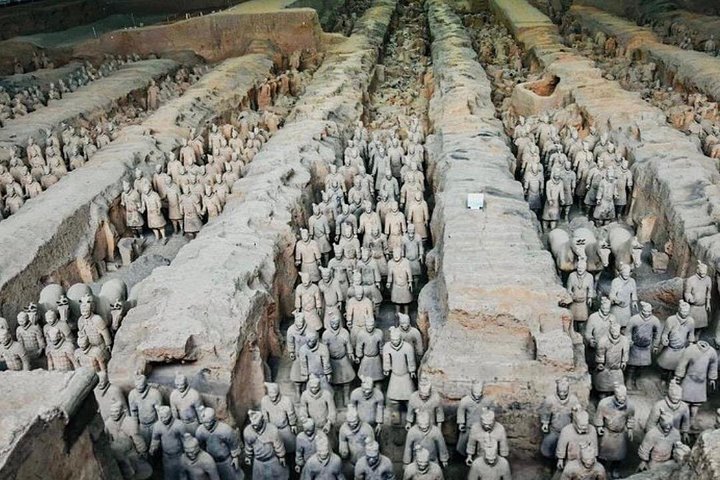
The Terracotta Army is the reason most travellers come to Xi’an, and it lives up to its reputation. The figures were made to guard the tomb of Qin Shi Huang, the first emperor to unify China, and lay buried and forgotten until farmers digging a well found them in 1974. Today three excavation pits sit under large hangar-like halls. Pit 1 is the biggest and the most dramatic, a vast trench where rows of soldiers still stand in battle formation; it is believed to hold about 6,000 warriors and horses, of which about 2,000 are on display. Pit 2 holds a mix of archers, cavalry and chariots, and Pit 3 is thought to be the command post. Each soldier has its own face, hairstyle and posture, which is the detail that stays with you. A ticket-only product is the simplest way in if you plan to explore alone, while guided and transfer options suit those who want context or an easy journey.
How to visit
The museum is in Lintong district, about 40 kilometres east of the city centre. Public tourist buses and shuttles run from the railway station area, taxis and ride-hailing cars make the trip in roughly an hour, and many visitors join a transfer or guided option. Entry is tied to your passport or ID, so bring it, and book ahead for busy periods so you are not stuck in a queue at the ticket hall.
What to expect
Start at the on-site theatre or exhibition hall for background on how the figures were made and what the site was for, then visit the pits in reverse order, finishing with Pit 1 when you have the context to appreciate it. Allow around three hours. Photography is allowed but flash and tripods are not. The halls are large and can be cool in winter, so a jacket helps, and the viewing galleries can be crowded in the middle of the day.
Making the most of it
Arrive at opening, when the tour buses have not yet landed, and go on a weekday outside China’s public holidays if you can. A guide or an audio guide is worth having, because the pits are easier to understand when someone explains the formations, the painted colours that once covered the figures and the way the army was organised. The site is a long day if combined with other stops, so consider keeping the afternoon free.
November is a good month
Cooler, calmer and clearer than summer, with shorter opening hours in winter. Check the closing time before you go, and plan to arrive with plenty of daylight to spare.
What to expect
The experience
A self-paced walk through three excavation halls, with an exhibition area and a theatre for background, reached by a trip of about an hour from the city.
Best time
At opening on a weekday outside public holidays, before the tour groups arrive.
How long
About three hours at the site, and a half day including the journey from Xi’an.
Tips
Bring your passport, book ahead in busy periods, see the background exhibits first and Pit 1 last, and take a jacket in winter.
Quick picks
- Best for
- First-time visitors to China who want its most famous archaeological site.
- Families
- Older children are impressed by the scale of Pit 1, but younger ones tire quickly in the long halls.
- Couples
- Go at opening for quieter galleries, then pair it with an unhurried lunch in the city.
- Pair with
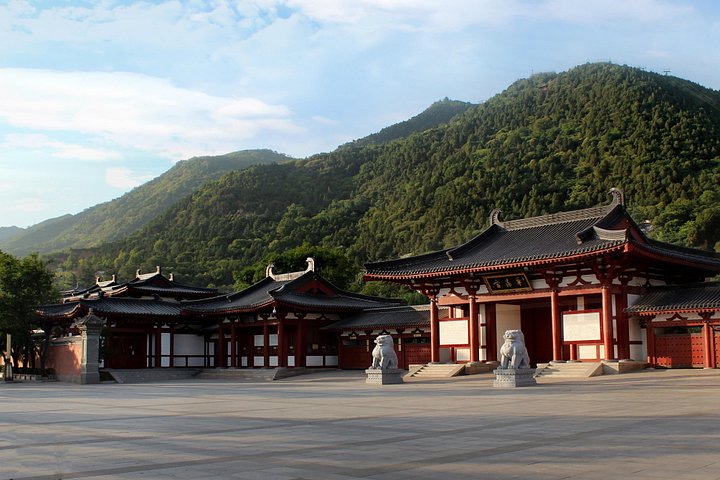
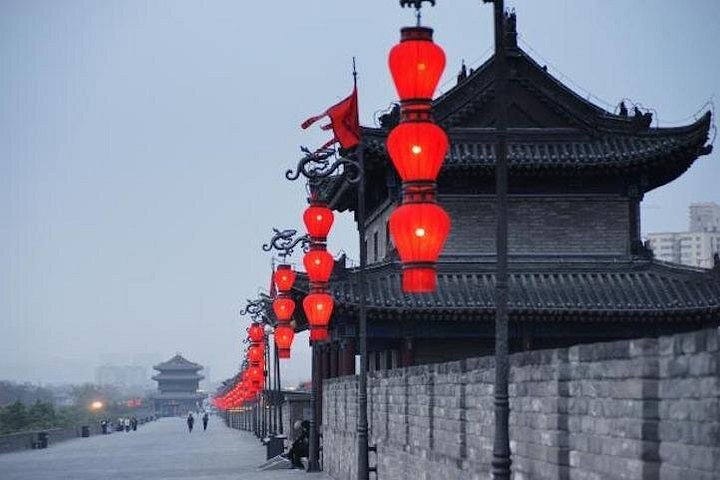
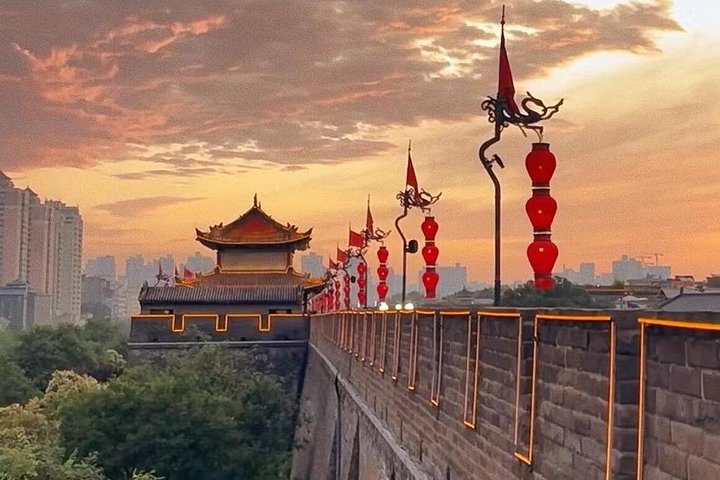
- Huaqing Palace on the same day, or the City Wall in the evening.
- Time needed
- Half a day, or a full day if combined with Huaqing Palace.
Good questions
How far is the Terracotta Army from Xi’an?+
It is about 40 kilometres east of the city centre in Lintong district, roughly an hour by road or tourist bus. Most visitors go as a half-day trip from the city.
Do I need a passport to enter?+
Yes, entry is tied to your passport or ID, so carry it with you and have it ready when you buy or collect your ticket. Booking ahead is wise in busy periods.
How long should I allow?+
Allow about three hours for the three pits, the exhibition hall and the walk between them. A guide can make the visit feel longer in a good way, because it adds context.
Which pit is best?+
Pit 1 is the most impressive, with its long rows of soldiers, so save it for last. Pit 2 and Pit 3 show different parts of the army and are quieter.
Can I take photos?+
Photography is allowed, but flash and tripods are not. The halls are dimly lit, so a phone with a good low-light mode helps.