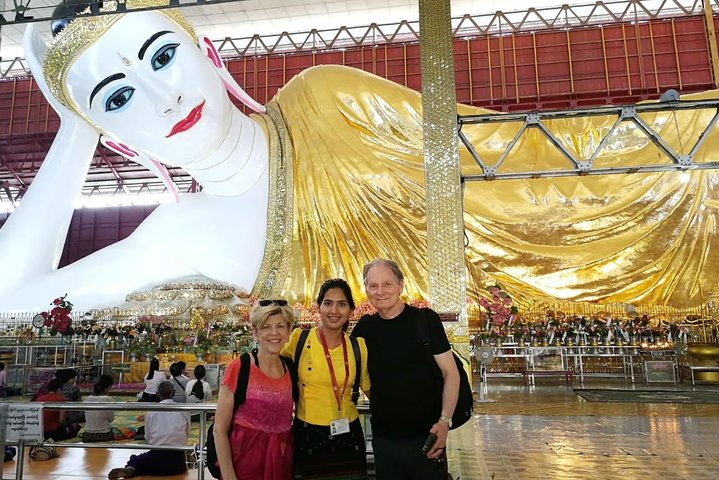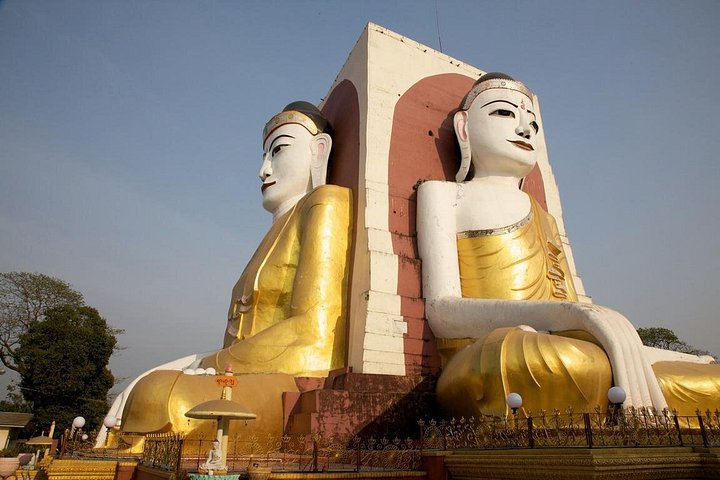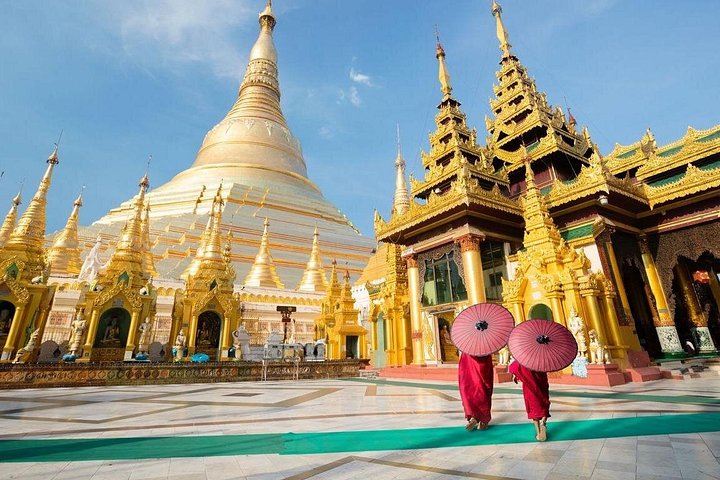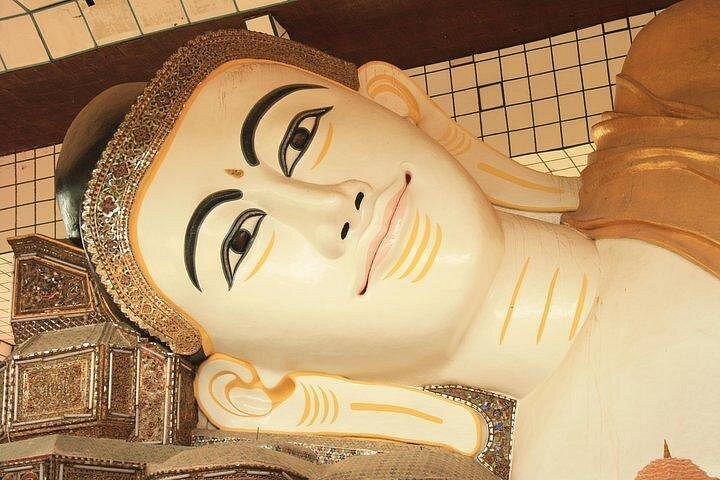
Taking the train to Bago adds a layer of local life to a classic day trip. Instead of watching the road from a car window, you ride in a carriage with commuters, traders and families, passing stations, markets and fields before arriving in the old Mon capital. The rail line from Yangon to Bago is a short stretch of the main line north, and the journey gives a good sense of how people travel across the country. Once in Bago, the sightseeing is the same rich mix as on the road tours: the Shwemawdaw Pagoda, with its soaring golden stupa, the great Shwethalyaung reclining Buddha, Kyaikpun’s four seated Buddhas and other pagodas and monasteries. The guide leads you through the stops, explains the history of the Mon kingdom and fits in lunch and market time before the return, which may be by train or road. For travellers who like a sense of adventure, it is a pleasant alternative to a car, and it adds a story to the day. It does depend on train schedules and can involve waits, so it suits flexible travellers who are comfortable with simple conditions.
How it works
You meet the guide in Yangon, travel by train to Bago and use local transport or a vehicle to reach the sites. Trains are basic, with a mix of seating classes, and the schedule is built around the timetable. After the visits you return by train or vehicle, depending on the operator. Check the exact itinerary and what is included.
What you see
Station life, farmland and villages from the train, then the main sights of Bago, including the Shwemawdaw Pagoda and the reclining Buddha. The guide will also point out smaller details such as the pagoda decorations and the way worshippers make offerings.
Making the most of it
Bring water, light snacks and a sun hat, and wear comfortable shoes that are easy to take off. Carriages can be hot and crowded, so keep valuables close. Be flexible with timings, as local trains do not always run exactly on schedule, and ask the guide for tips on seating and boarding.
Good to know
The train option is less polished than a private car, but it offers more spontaneity and a closer connection to local life. If you prefer comfort over experience, the road tour is the better fit. In the rainy season, delays are more likely, so allow extra time.
Practical notes
Dress for both heat and temples, with light long trousers or a skirt and a shirt that covers your shoulders. Carry a small bag for shoes and a scarf to shield your face from sun and dust at stations. Platforms can be crowded and tickets are often bought on the day, so follow your guide closely and stay with the group when boarding.
If you love photography, window seats offer lovely moments of paddies, stations and children waving, but hold your camera strap tightly. Allow a buffer in the evening in case the return is delayed.
Ask your guide to explain the symbols and legends of each site, because Bago’s story of a Mon kingdom founded on the legend of a hamsa bird perched on a sandbar is part of what makes the town special.
What to expect
The experience
A guided day trip combining local train travel with a tour of Bago’s main pagodas and monuments.
Best time
The cool season from November to February, starting early.
How long
A full day.
Tips
Bring water and snacks, wear easy shoes, and be flexible with train timings.
Quick picks
- Best for
- Travellers who like local transport and a slower pace.
- Families
- Suited to older children who can handle a basic train.
- Couples
- A shared adventure with local flavour.
- Pair with
- Shwedagon at sunset on another day.
- Time needed
- A full day.
Good questions
Is the train comfortable?+
It is basic, with simple seating and no air conditioning in most carriages. The charm is the local atmosphere.
How long does the train take?+
The ride to Bago takes a couple of hours, depending on the service.
Do we return by train?+
It depends on the operator, so check the itinerary.
Which sights are visited?+
The main Bago pagodas, including Shwemawdaw and the reclining Buddha, are standard.
What if the train is delayed?+
Local trains can run late, and the guide will adjust the plan. Allow flexibility in your schedule.