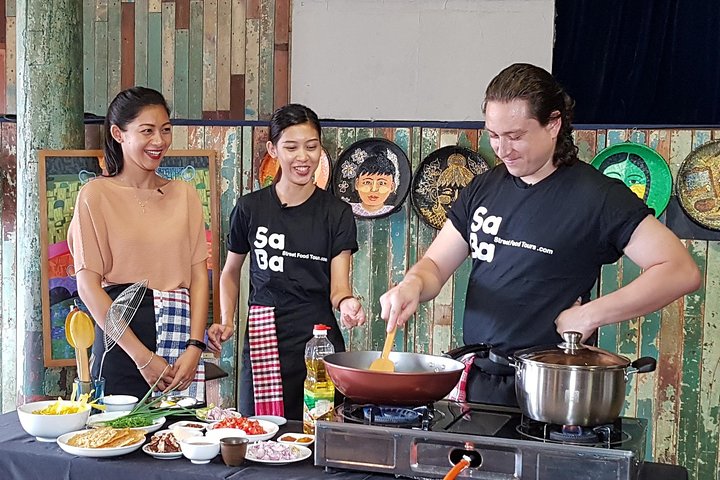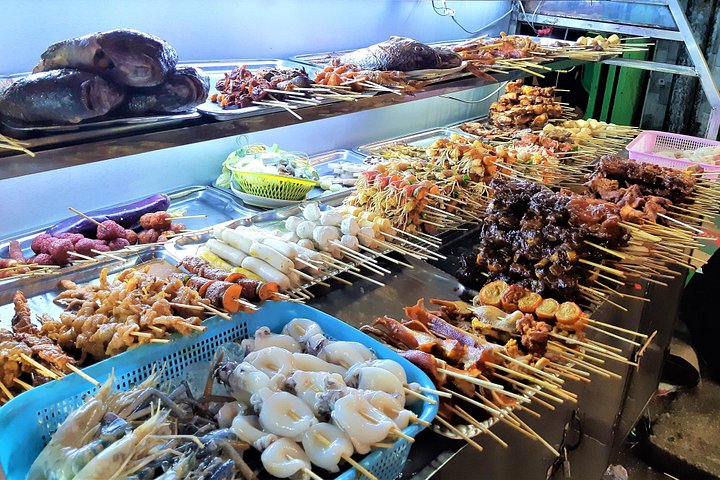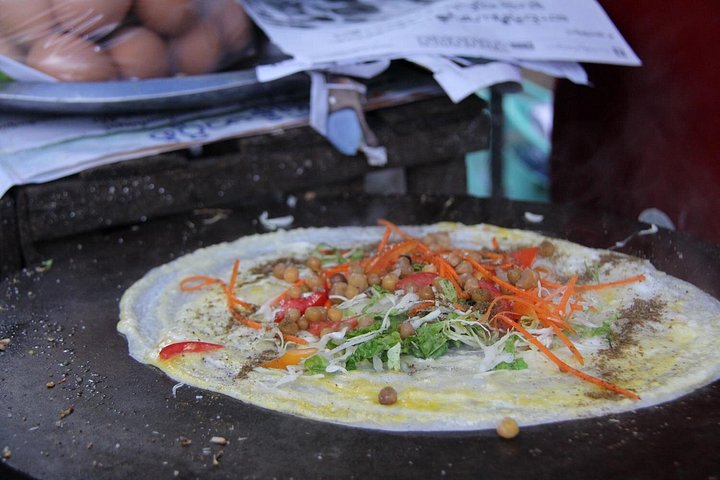
Yangon’s food scene comes alive in the evening, when pavement stalls fill with plastic stools, charcoal smoke drifts along the streets and the city seems to eat outside. A guided street food walk is the easiest way to taste it without worrying about what to order or whether a stall is any good. Burmese cooking is distinct from its neighbours: it leans on fermented tea leaves, dried shrimp, chickpea flour, garlic, onion and fish sauce, with Indian, Chinese and Shan influences that show up in biryanis, samosas, stir-fries and noodle soups. You might taste mohinga, the fish-and-banana-stem noodle soup that is the national breakfast, or laphet thoke, the tea leaf salad crunchy with fried beans and nuts, or Shan noodles, grilled meat skewers, coconut noodles and sweet snacks. A guide explains each dish, how it is made and when people usually eat it, and also helps with the practicalities, from where to wash your hands to which sauces are hot. The walk also passes through markets, where you see the ingredients behind the dishes, from piles of fresh herbs and chillies to dried fish and mounds of tea leaves. It is a lively, sociable evening and a good first night in the city.
How it works
The tour starts in the early evening in downtown Yangon and moves between stalls, small restaurants and markets on foot, usually for around three hours. Tastings are included, and you generally try enough to make a full dinner. Group size varies, and there may be vegetarian options if you tell the operator in advance. Check the meeting point and what is included in the price.
What you see and taste
Expect a mix of noodle soups, salads, grilled snacks and sweets, plus tea in a local tea shop, where sweet milky tea is served with fried pastries. The market sections show how locals shop, with vegetables, fruit, dried goods and cooked food side by side. Your guide can explain eating etiquette, which dishes are spicy and what to order if you are on your own later.
Making the most of it
Arrive hungry and wear closed shoes, since pavements can be wet and uneven. Tell the guide about allergies, spice limits and food preferences before you start, as fish paste and shrimp are common in Burmese cooking. Carry hand sanitiser and small notes for extras such as drinks. If you have a sensitive stomach, drink bottled water and stick to freshly cooked items, which the guide will point out.
Good to know
Stall owners often work in a family rhythm, with certain dishes served only at particular times, which is why a local guide matters. Cash is the norm, and the walk is paced so you can digest between stops. If you prefer a sit-down dinner afterwards, many guides will happily recommend a restaurant for the next night. The evening air can be warm and humid, so wear light clothes and carry a small towel.
Why it works
Burmese street food is hard to navigate alone because menus are often in Burmese script and prices and portions are not obvious. With a guide you skip the guesswork, meet the people behind the stalls and learn names you can use again on your own. The route also gives a feel for the neighbourhoods at night, from the bright strip lights of busy streets to the quiet lanes where families eat together.
What to expect
The experience
A guided walk through evening streets and markets, with tastings at stalls and small restaurants.
Best time
Early evening, when stalls are busiest and the heat has eased.
How long
About three hours.
Tips
Arrive hungry, wear closed shoes, and tell the guide about allergies and spice limits.
Quick picks
- Best for
- Food lovers who want to understand Burmese cuisine on their first night.
- Families
- Good for adventurous older children, but dishes can be spicy and the streets crowded.
- Couples
- A relaxed shared dinner with plenty of stories.
- Pair with
- A morning cooking class or the Circular Train tour.
- Time needed
- One evening.
Good questions
What food will I try?+
Typical tastes include noodle soups, tea leaf salad, grilled skewers and sweets, though the exact dishes vary by route.
Can vegetarians join?+
Usually yes with notice, but fish paste and shrimp feature in many dishes, so tell the operator in advance.
Is the food spicy?+
Burmese food is more savoury than fiery, but chilli is available on the side. Ask your guide to adjust.
Is it safe to eat street food?+
Choose freshly cooked food at busy stalls, which the guide will steer you toward, and drink bottled water.
Where does the tour start?+
The meeting point is in or near downtown Yangon, confirmed when you book.