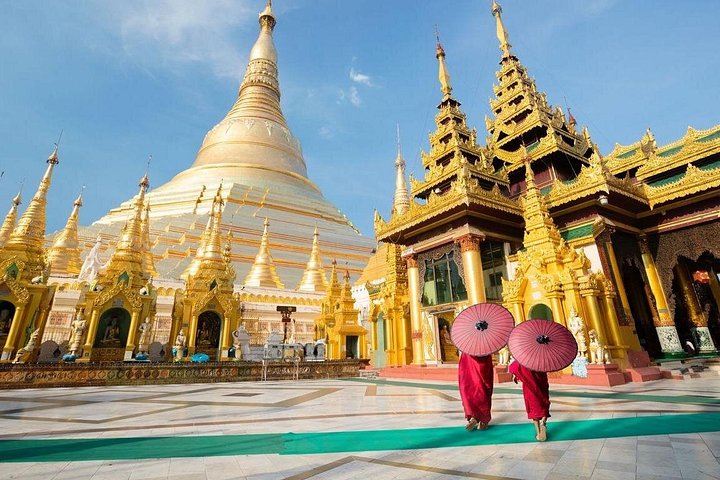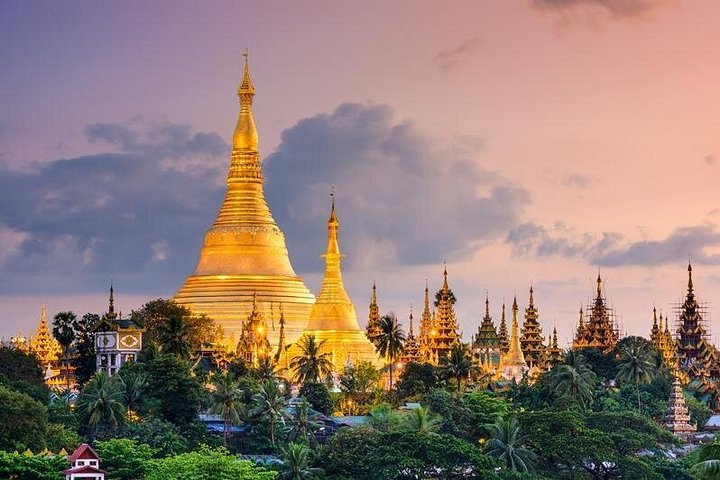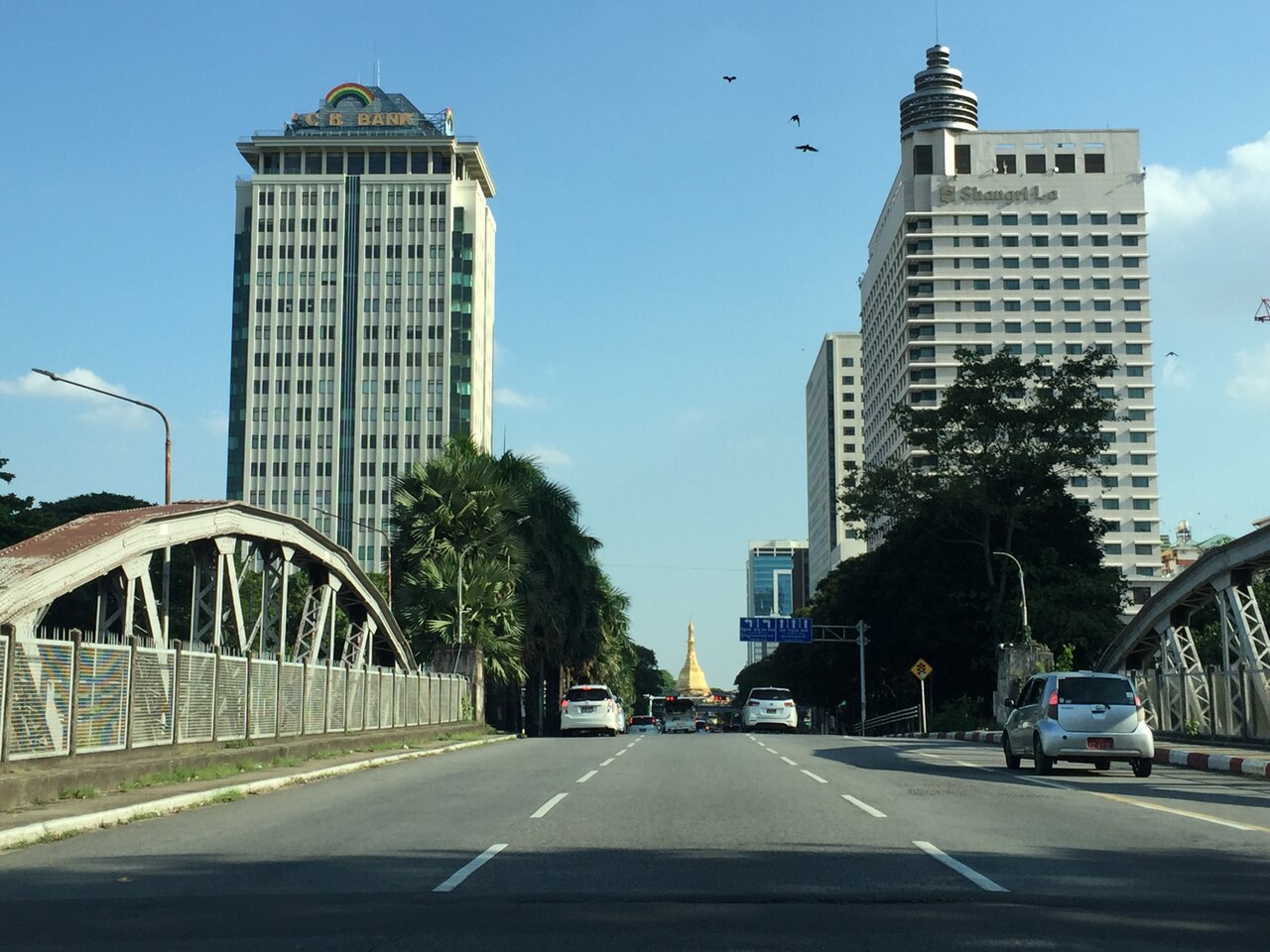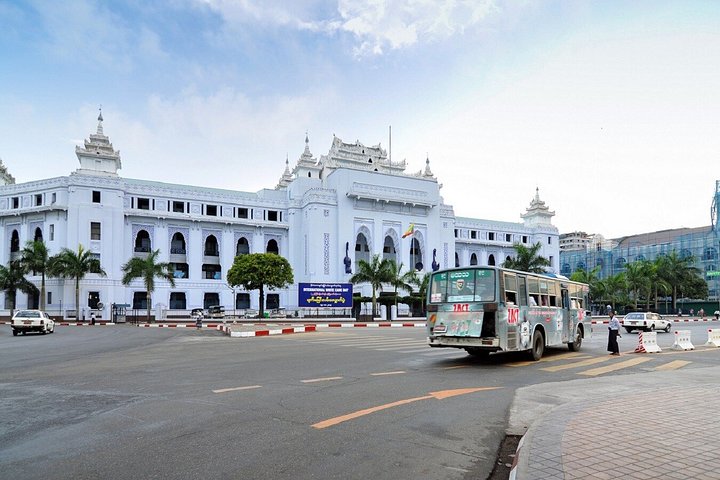
Downtown Yangon holds one of the largest collections of colonial-era buildings in Southeast Asia, and a walking tour is the best way to see it. When the British made Rangoon their capital in the nineteenth century they laid out a grid of straight streets around the Sule Pagoda and filled it with town halls, courts, banks, a stock exchange and merchant houses in styles ranging from Victorian Gothic to Art Deco and Anglo-Burmese hybrids. After independence many of these buildings were left to age, so the district today has a faded, atmospheric quality: trees growing from cornices, laundry on balconies, pavement tea stalls beneath crumbling facades and a street life that has changed less than you would expect. A heritage walk puts names and dates to the buildings and links them to the people who used them, from colonial administrators to the independence movement. It also takes you past the places that make the downtown more than an architectural museum: the Sule Pagoda sitting in the middle of a traffic roundabout, Maha Bandula Park and its independence monument, and the mix of mosques, temples, synagogue and churches that sit within a few blocks of each other. This tour combines that walk with a visit to Shwedagon, so you cover the colonial and the sacred sides of the city in half a day.
How it works
A local guide leads you on foot through the downtown grid, usually starting with hotel pickup or a meeting point near the Sule Pagoda, and then transfers you by vehicle to Shwedagon for the second half. The walking part covers a few kilometres at an easy pace with stops for explanation and photographs, and the total tour lasts roughly half a day. Check whether the Shwedagon entrance ticket is included, and whether the route skips any buildings that are closed to the public, since many colonial buildings can only be viewed from the outside.
What you see
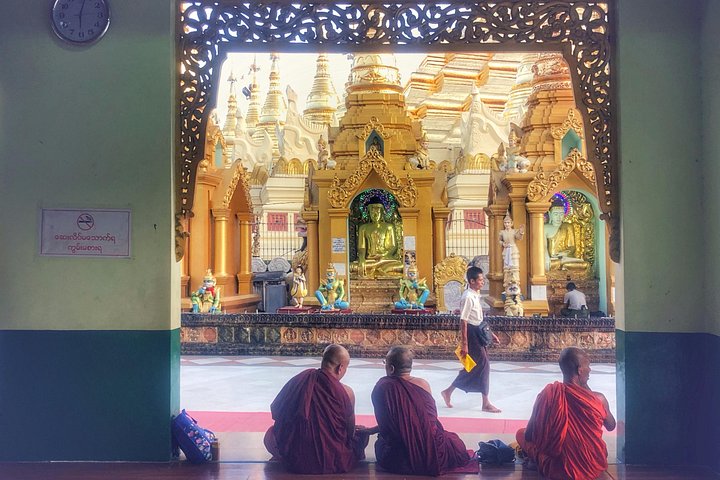
The Sule Pagoda, City Hall with its Burmese-style roofs on a British plan, the High Court and the nearby old administrative buildings, Maha Bandula Park, and street-level scenes such as book vendors, tea shops and the stalls selling everything from flip-flops to fresh betel. Along the way you pass houses of worship for several faiths, which gives a fair impression of how mixed old Rangoon was. The finish at Shwedagon is a very different atmosphere from the downtown streets, with the stupa glowing above the terrace and the marble floors filled with worshippers.
Making the most of it
Wear shoes that are easy to take off, because you will be barefoot at the pagoda, and carry a hat, water and sunscreen for the downtown stretch. Pavements are uneven, so watch your step and keep valuables close in the crowded parts. Morning starts avoid the worst of the heat, but a late-afternoon version of the tour lets you end at sunset. Allow time afterwards for a tea shop break with a mohinga or a glass of sweet tea.
Good to know
Yangon’s downtown is changing as old buildings are repaired, converted or left to age, so what you can enter varies. Weekday mornings are busiest around the courts and offices, while weekends are calmer. If you want to go deeper afterwards, the same streets are easy to explore alone, and the tea shops around Sule offer a convenient place to rest and plan the next stop.
What to expect
The experience
A guided walk through the downtown grid with a vehicle transfer to Shwedagon Pagoda at the end.
Best time
Morning for cooler walking, or a late-afternoon start if you want to finish at the pagoda around sunset.
How long
Roughly four hours, with about half spent on foot in the downtown streets.
Tips
Wear shoes that are easy to remove, carry water and a hat, and watch your step on uneven pavements.
Quick picks
- Best for
- First-time visitors who want to understand both colonial Rangoon and sacred Yangon in a single outing.
- Families
- Kids who like exploring will enjoy the street life, but the heat and the walking suit children from about eight or nine.
- Couples
- A good shared introduction to the city, with a golden finish.
- Pair with
- The circular train the next morning or an evening street food tour.
- Time needed
- Half a day for the tour, plus time for tea or lunch afterwards.
Good questions
Does the tour go inside the colonial buildings?+
Most of the buildings are seen from the outside, since many are government offices or in poor repair. Your guide will explain what each one was used for and what is planned for it.
How much walking is involved?+
Expect a few kilometres on flat but uneven pavements, with plenty of stops. The pace is easy, but the heat can make it feel longer.
Is Shwedagon included?+
Yes, the tour finishes at the pagoda. Confirm whether the entrance ticket is included when you book.
What is the best time of day?+
Mornings are cooler for the walk, while an afternoon start lets you end at Shwedagon around sunset. Both work well in the cool season.
What should I bring?+
Bring water, a hat, sunscreen and a small amount of cash for tea. Wear clothes that cover your shoulders and knees for the pagoda.