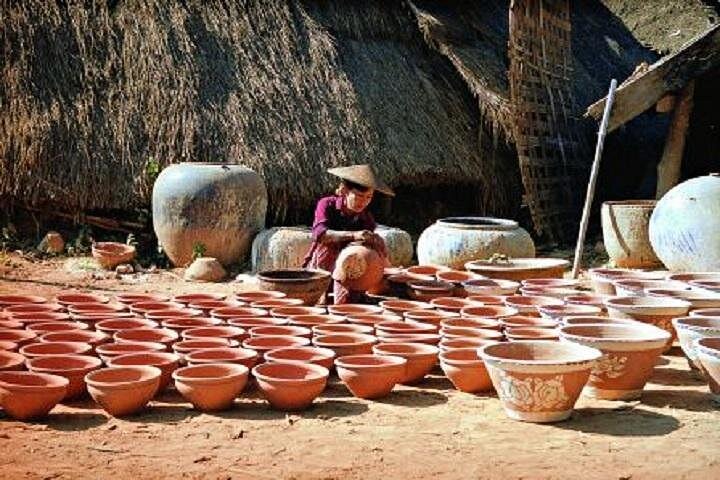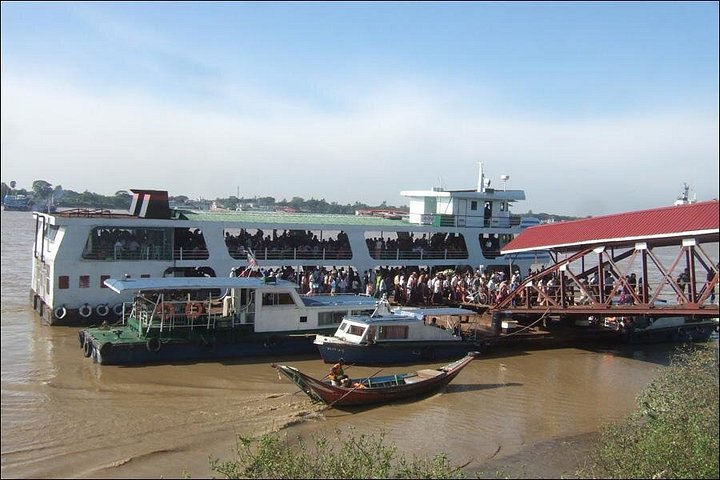
Dala lies directly across the Yangon River from downtown, and the contrast is striking. Ten minutes on a crowded local ferry takes you from high-rise offices and traffic to a rural township of dirt lanes, wooden houses, rice fields, ponds, small monasteries and tea shops, where life moves at the pace of a bullock cart. For many visitors it is the easiest way to see village Myanmar without leaving the city. A day tour usually starts at the ferry jetty on the Yangon side, where the guide handles tickets and helps you through the scrum of passengers, motorbikes and vendors. On the other side you travel by trishaw, a bicycle with a sidecar seat, or by small vehicle, stopping at pagodas, monasteries, a market, a fishing area and perhaps a workshop making crafts or a home where women prepare food. Because Dala has been less developed than the city proper, you also see the impact of the river on daily life: boat building, fishing, and the long commute that thousands make each morning. Guides speak about changes in the township and what the area was like before and after the cyclone that hit the delta, and conversation with locals, translated by the guide, is a highlight. It is a gentle, human tour and a good counterweight to the city’s big monuments.
How it works
You meet your guide at a pickup point or hotel, travel to the Pansodan jetty area, cross the river by ferry and spend several hours exploring the Dala side by trishaw or on foot. The day often includes a simple lunch in a local restaurant or a home, and finishes with a ferry or vehicle return. Check the start time, the length of the tour and whether the ferry fare, trishaw and lunch are included, as inclusions differ.
What you see
The ferry crossing itself is part of the experience, with views of the downtown skyline from the water. In Dala you see village lanes, rice fields and fish ponds, pagodas and monasteries, local shops and markets and sometimes artisans at work. Trishaw rides are slow and bumpy but give a close view of daily life, and drivers often know shortcuts and friendly stops.
Making the most of it
Wear light, breathable clothes, a hat and sunscreen, and closed shoes if you want to walk through muddy lanes. The tour is quiet in the rainy season from June to October and lanes can be muddy, but it is also green and beautiful. Bring small notes for donations and tips, and ask before photographing people. Respect monasteries by covering shoulders and knees, and remove your shoes where asked. Because the ferry is a working commuter service, expect crowds at peak times and keep bags close.
Good to know
The tour is a relaxed way to spend a morning or day if you have already seen the big pagodas. Dala is a working township, not a tourist attraction, so a respectful attitude goes a long way, and a small purchase from a village stall is a welcome gesture. Many guides combine Dala with nearby Twante for a longer excursion.
What to expect
The experience
A guided ferry crossing and trishaw or walking tour through village lanes, pagodas and riverside life.
Best time
Morning, when the ferry is busy with commuters and the heat is gentle; the cool season is most comfortable.
How long
Half to full day depending on the itinerary.
Tips
Wear light clothes and closed shoes, bring small notes, and ask before photographing people.
Quick picks
- Best for
- Travellers who want a taste of rural life without leaving the city.
- Families
- Children enjoy the ferry and trishaws, and the pace suits families.
- Couples
- A quiet, gentle outing away from traffic.
- Pair with
- A Twante pottery day or the circular train.
- Time needed
- Half to full day.
Good questions
How do we get to Dala?+
By local ferry from the Yangon side, a crossing of about ten to fifteen minutes. The guide handles tickets and logistics.
Is a trishaw ride included?+
Many Dala tours use trishaws, but check the inclusions when you book.
Is Dala suitable for children?+
Yes, the ferry and trishaws are fun for kids, though the day can be hot, so bring water and hats.
Is lunch included?+
It depends on the operator, so check what is covered.
What should I wear?+
Light clothes that cover shoulders and knees for monasteries, plus closed shoes for muddy lanes.