Garni and Geghard sit side by side in the Azat valley, about half an hour east of Yerevan, and together they make the most popular day trip in the country. Garni is a Greco-Roman style temple with a colonnade of Ionic columns, perched on a triangular cliff above a gorge, the only such pagan temple to survive in Armenia. Below it, a short descent leads to the Symphony of Stones, where hexagonal basalt columns hang down the canyon wall like organ pipes. Geghard, a few minutes further up the valley, is a medieval monastery partly carved from the rock, with chapels, cells and a spring inside the mountain, and it is a UNESCO World Heritage site. The Viator tour listed here is a small-group day trip that adds lavash baking and tasting, which makes it a fuller cultural experience than a simple drive-by. The itinerary typically runs for most of a day and returns to Yerevan in the afternoon, with an optional lunch available at a small extra cost.
The two sites tell different stories. The temple at Garni dates to the first century and is usually linked to a royal summer residence of the early Armenian kings. It was reconstructed in the twentieth century from the original stones, and the fortress walls, the royal bathhouse with its mosaic floor and the views over the gorge are all part of the visit. Geghard, whose name refers to the spear said to have pierced Christ, is a quieter and darker experience: you step from a courtyard into cave-like chapels, with khachkar crosses carved into the walls and echoing acoustics that make a cappella singing a highlight when it is offered.
A small-group tour is the practical way to do it. Public transport reaches Garni by minibus, but connecting to Geghard and getting back is slow. Group tours depart from central Yerevan in the morning, include a driver and guide, and run for around six to seven hours. The product on our link has several hundred reviews and a high rating, and it offers a lavash-baking class in a village house where you press dough onto the walls of a tonir oven. Entrance fees at the sites are usually separate and paid in cash, so read the inclusions.
Weather and clothing matter. The valley is higher and cooler than the city, so wear layers in winter and spring and good shoes for the stone steps and uneven ground. Women should have a scarf or covering for the monastery chapels. Spring and autumn are especially pleasant, and a clear morning gives dramatic light on the gorge.
What to expect
The experience
A guided small-group day trip by minibus from Yerevan to Garni temple, the Symphony of Stones and Geghard monastery, with a lavash-baking stop.
Best time
Spring and autumn for mild weather, and any clear morning for the best light in the gorge.
How long
Roughly six to seven hours door to door, including a lunch break.
Tips
Wear layers and sturdy shoes, carry some cash for entrance fees, and bring a scarf for the monastery chapels.
Quick picks
- Best for
- First-time visitors who want one outstanding day outside the city.
- Families
- Good for children who like climbing and caves, though the gorge steps are steep for toddlers.
- Couples
- A relaxed, scenic day trip that ends with fresh lavash and a sunset return to the city.
- Pair with
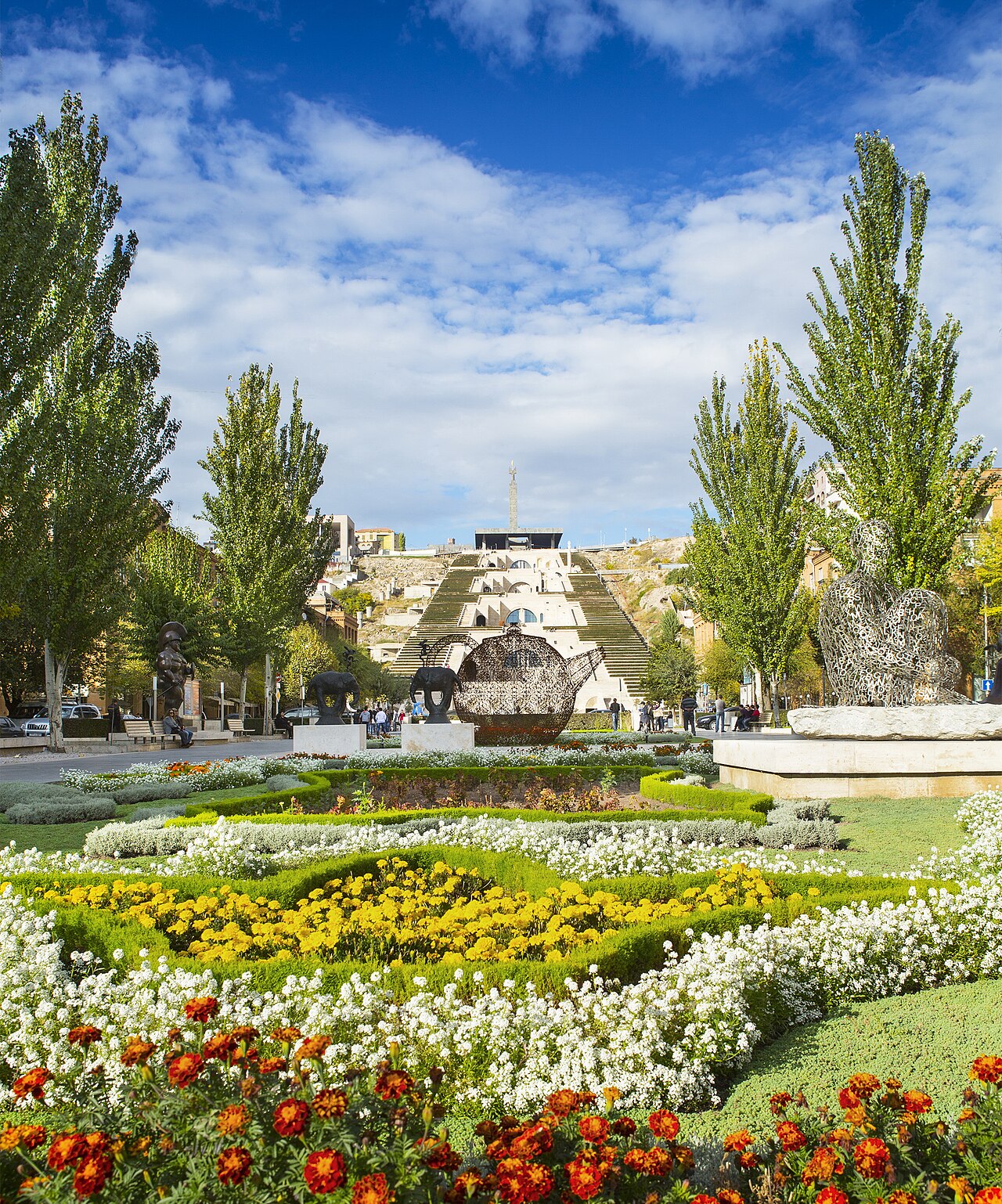
- A Khor Virap and Areni wine day, or an evening at the Cascade.
- Time needed
- Plan a full half-day to most of a day.
Good questions
How far are Garni and Geghard from Yerevan?+
Garni is about half an hour east of the city by road, and Geghard is a short drive beyond it. A day tour covers both with time for each.
Are entrance fees included?+
Often they are not, and lunch is an optional extra. Check the inclusions on the booking page before you pay.
Is the tour suitable for kids?+
Yes, many families join, and the lavash baking is popular with children. The basalt steps and cave chapels need some care with very small children.
What is the Symphony of Stones?+
It is a gorge wall of hexagonal basalt columns near Garni, formed by cooled lava. A short walk from the temple takes you down to see them.
Can I go independently?+
Yes, minibuses and taxis reach both sites, but timing and transfers take planning. A guided tour is simpler and gives context at both places.