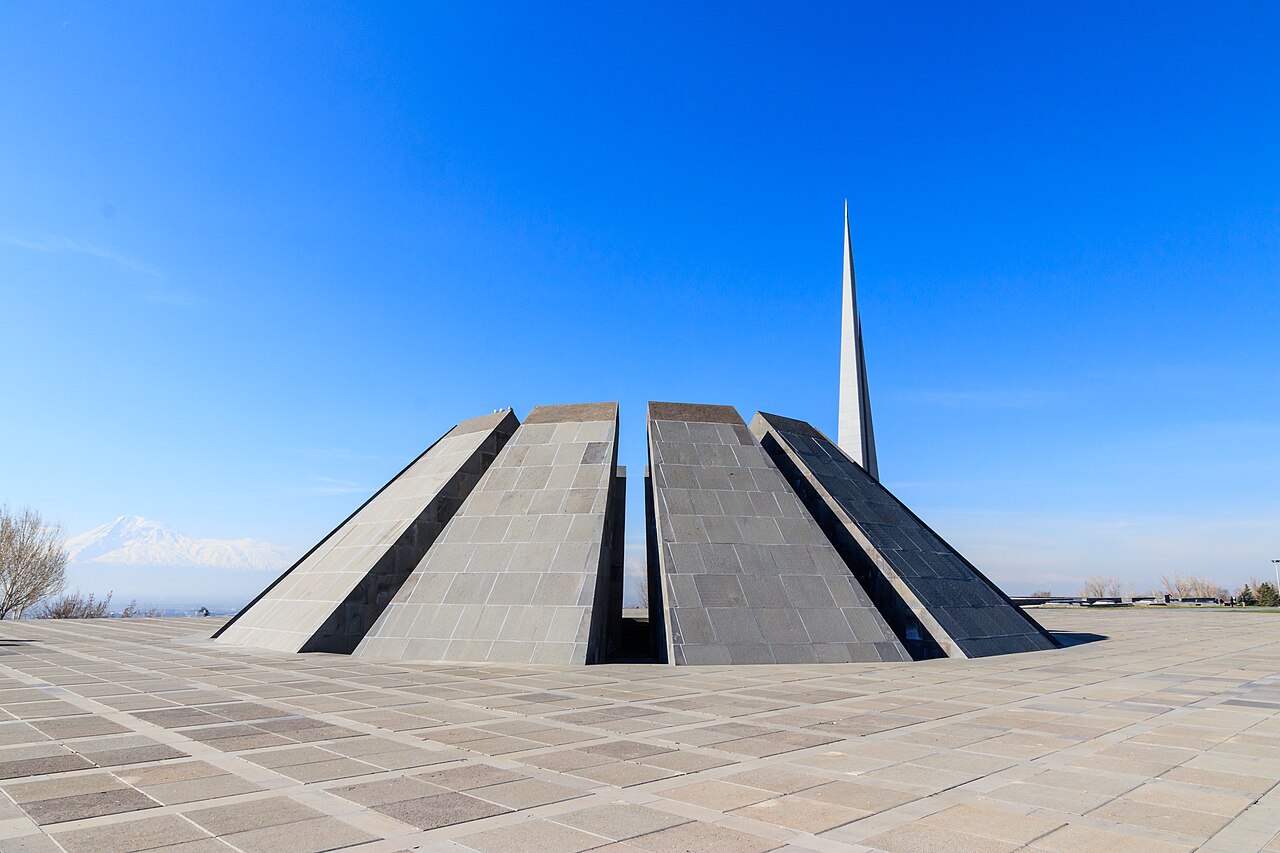
Tsitsernakaberd is Armenia's memorial to the victims of the Armenian Genocide of 1915, and it is the place where the country remembers. The memorial complex stands on a hilltop above the Hrazdan gorge and includes a long Memorial Wall, a sanctuary of twelve inward-leaning basalt slabs surrounding an eternal flame, and a tall stele that symbolises national rebirth. Walking between the slabs, in silence, to the flame is one of the most affecting experiences in the capital. Close by, the Armenian Genocide Museum-Institute tells the story through documents, photographs, testimony and artefacts across its second-floor exhibition. Admission to the museum is free, and the museum asks for donations in a box in the foyer. The setting is serene, with the green hillside and views across the valley to Mount Ararat on a clear day. Visitors of all nationalities come here, and many leave flowers at the flame. The site is not a sightseeing stop in the usual sense, and it works best when you approach it quietly.
The memorial was built in the 1960s after large public demonstrations commemorating the genocide, and it has become the focus of the annual remembrance each April. The museum opened in the mid-1990s and today also functions as a research institute. Exhibits trace events from the late Ottoman period through the massacres and deportations of 1915 and the survivors' later journeys, using photographs, letters and maps, and the labelling is clear and measured in English.
Check the opening hours before you go. The museum is closed on Mondays and on official holidays, with a shorter winter schedule that begins on the fifteenth of November, and Sunday hours are shorter than weekdays. Guided tours in several languages are available by reservation for a fee and last roughly forty minutes to an hour, but they are not offered to children under thirteen, so plan accordingly. Eating, drinking and smoking are not permitted inside.
Give the visit space. Many people spend an hour at the museum and another walking the grounds. It is a short taxi ride from the centre and a bit far to walk, and a private city tour often includes it. It helps to pair it with something gentle afterwards, such as a coffee on Tamanyan Street, rather than a busy sightseeing schedule. Dress modestly, keep voices low and photograph with respect.
What to expect
The experience
A hilltop memorial of basalt slabs around an eternal flame, with a museum of documents and photographs a short walk away.
Best time
Weekday mornings are quietest, and the museum is closed Mondays, so plan for Tuesday to Sunday.
How long
One and a half to two hours across the memorial and the museum.
Tips
Dress modestly, stay quiet, bring a flower if you wish, and reserve a guided tour by phone if you want one; guides do not take children under thirteen.
Quick picks
- Best for
- Anyone who wants to understand modern Armenia and its national memory.
- Families
- The memorial grounds suit families, but the museum is hard material and guided tours are closed to children under thirteen.
- Couples
- A reflective visit best followed by a quiet meal rather than another busy sight.
- Pair with
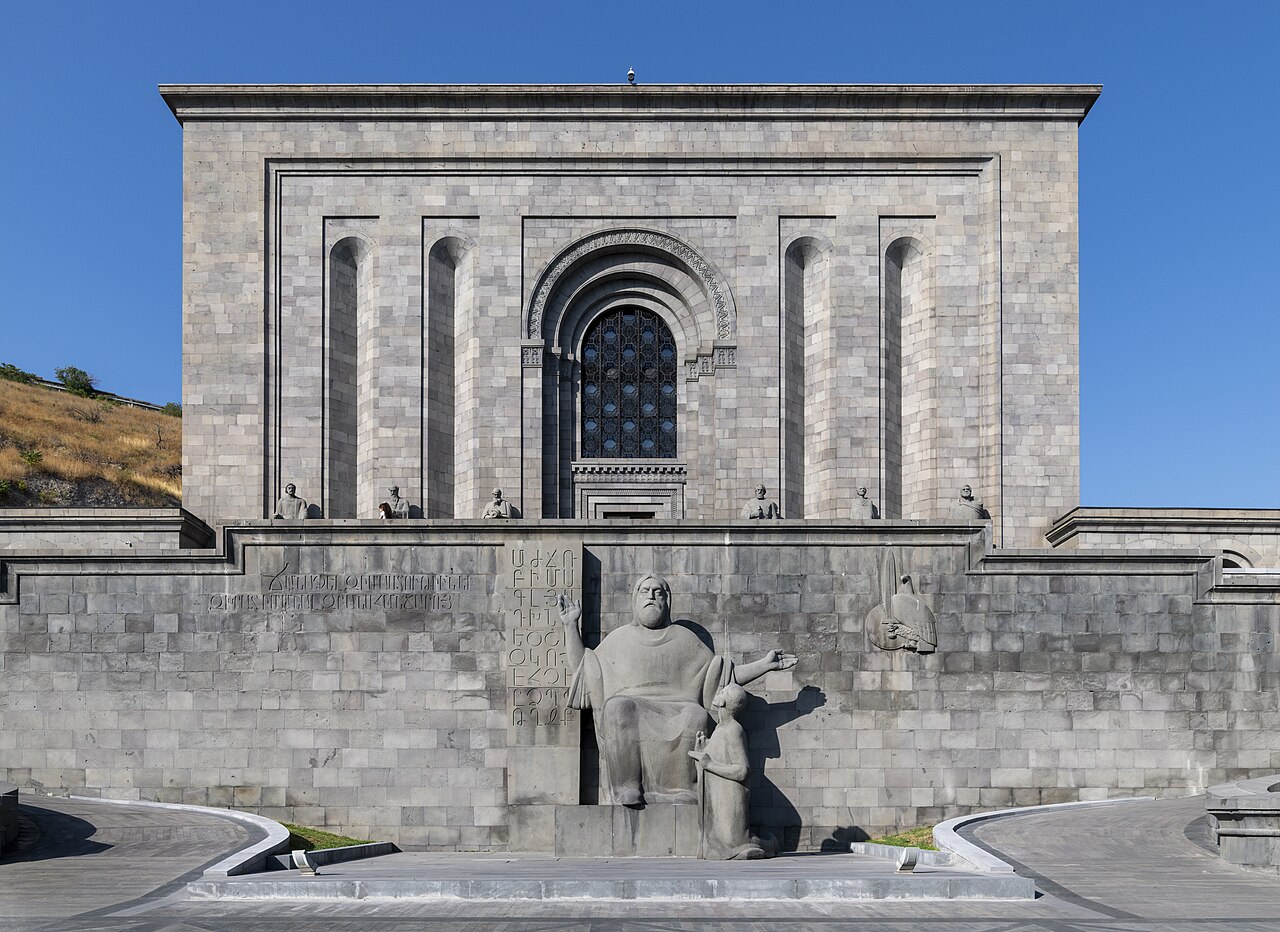
- The Matenadaran, the Cascade and a Yerevan city tour.
- Time needed
- Allow two hours, plus travel time up the hill.
Good questions
Is the museum free?+
Yes, admission is free and donations are welcome in a box in the main foyer. Guided tours are a separate paid service.
What are the opening hours?+
Tuesday to Saturday it opens in the morning and closes in the late afternoon, with a shorter winter schedule from mid-November, and Sunday is shorter still. It is closed Mondays and on official holidays.
Can I book a guided tour?+
Yes, by phone, up to sixty days ahead, in English, Russian, French, German or Armenian. Tours are not offered to children under thirteen and start promptly.
Is there a dress code?+
The official page lists none, but modest, quiet behaviour is expected at a memorial. Eating, drinking and smoking are forbidden inside the museum.
How do I get there?+
The hilltop memorial is a short taxi ride from the city centre, and many city tours stop here. Walking is possible but uphill.