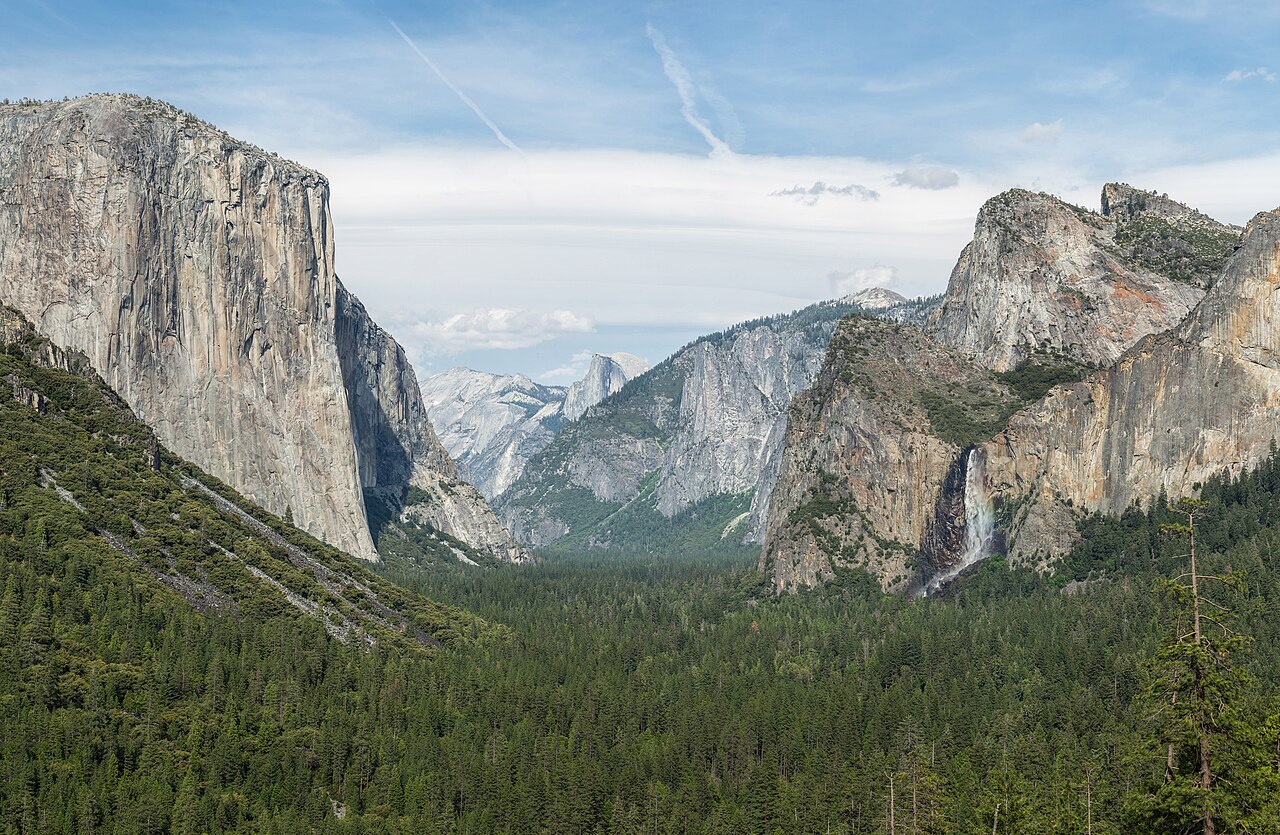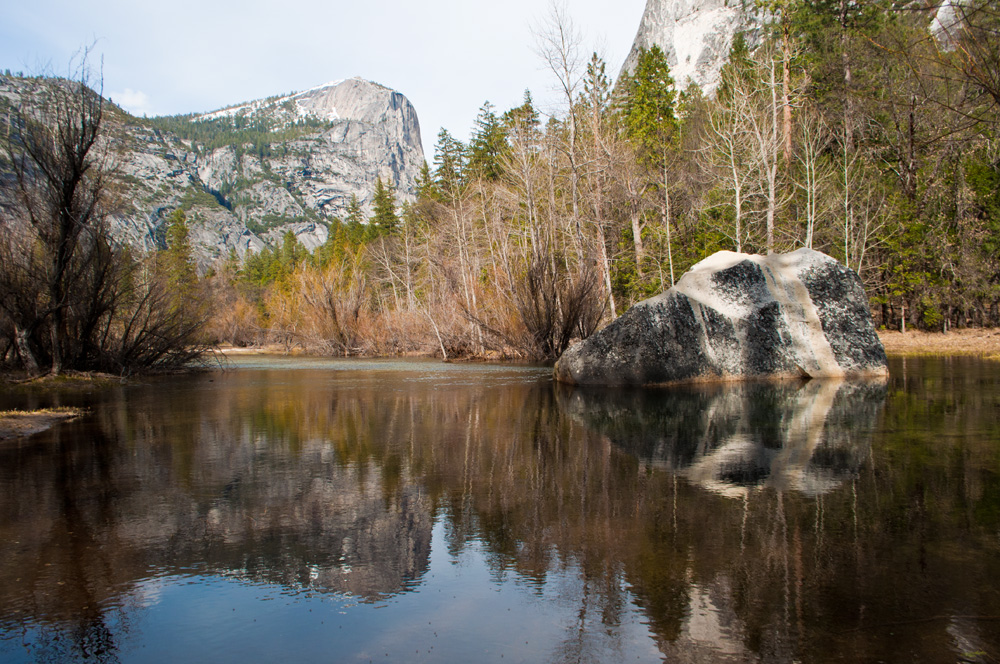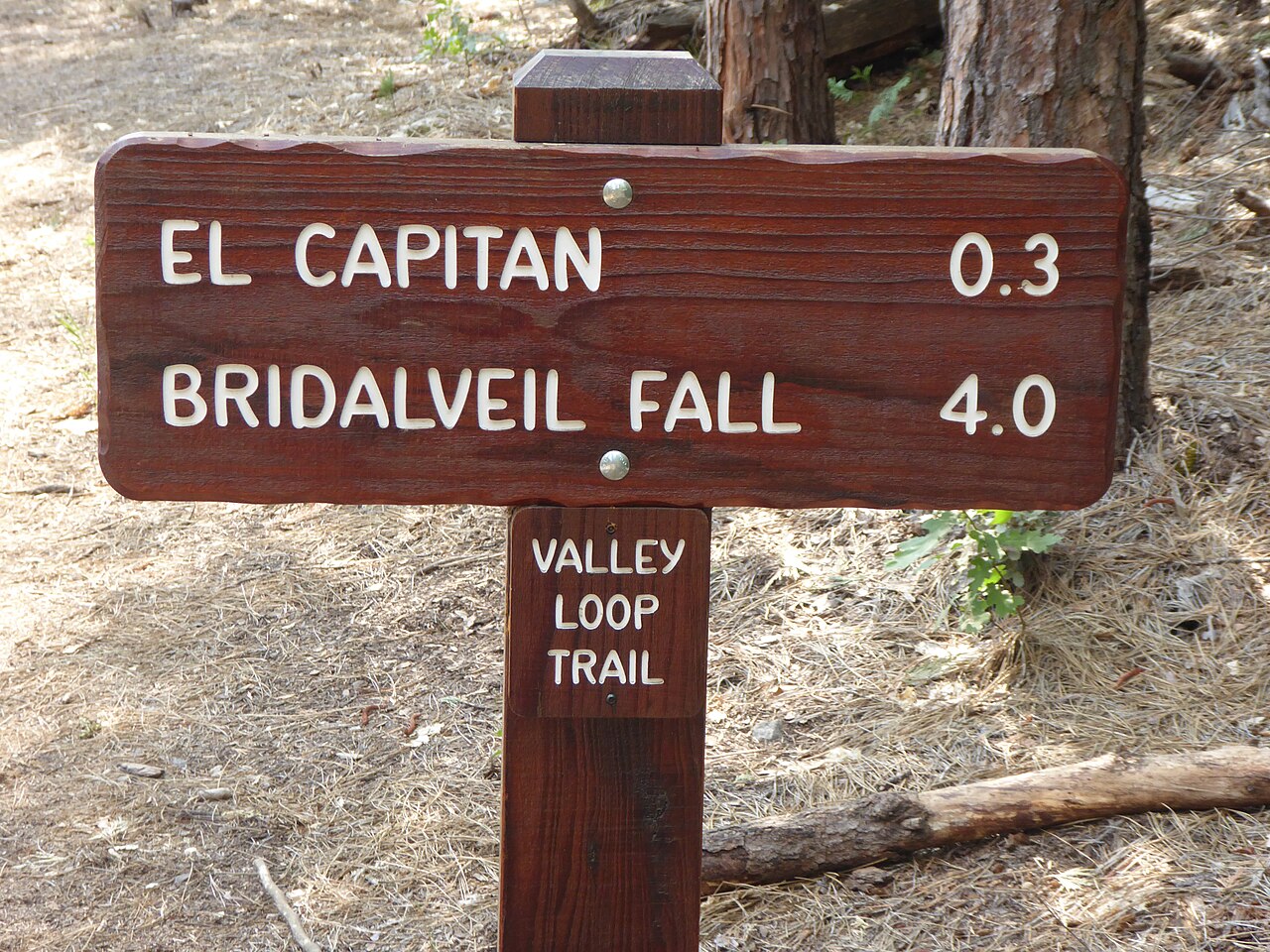
El Capitan is the granite monolith that guards the western end of Yosemite Valley, rising about 3,000 feet straight from the valley floor, and it is the most celebrated rock climb on Earth. From El Capitan Meadow, a short walk from the road and a stop on the valley shuttle, you can lie in the grass and scan the wall for the tiny dots of climbers who spend days on its routes, sleeping on portaledges hung from the rock. The Nose, the line up the prow facing the meadow, is the most famous route, and the wall became world-famous again when Alex Honnold climbed it without ropes in the film Free Solo. Bring binoculars: on a busy autumn or spring day, there can be climbers on many routes at once, and in the evening headlamps glimmer on the face. The best way to experience El Capitan and the valley around it on foot is the Valley Loop Trail. The NPS describes a full loop of about 11.5 miles (5 to 7 hours) and a half loop of about 7.2 miles (2.5 to 3.5 hours), starting from Lower Yosemite Fall at shuttle stop 6. The trail is mostly level but mixes dirt, rock, sand and old pavement, and it passes meadows, talus slopes and the Merced River with views of Sentinel Rock, Cathedral Rocks, Bridalveil Fall, El Capitan, Three Brothers and Yosemite Falls. El Capitan Meadow is shuttle stop 9, a handy place to pick up a ride back. One 2026 caveat matters: the NPS reports that the trail crossing at El Capitan Bridge is closed on weekdays through December 2026 for bridge work, with limited weekend access, which affects the half loop. Plan a detour or check current conditions before setting out. In winter, the trail stays open but can be snowy and icy, especially on the shaded south side.
El Capitan has drawn climbers since the first ascent of The Nose in 1958, an expedition-style effort that took well over a year of work spread across many days on the wall. Since then the rock has been the stage for climbing history — the first free ascents, speed records measured in hours, and the 2015 Dawn Wall free climb watched live around the world. For non-climbers, the meadow is the best seat in the house. Rangers and climbers sometimes set up spotting scopes, and conversation with whoever is next to you often turns up a story. The meadow itself is fragile; stay on established paths and boardwalks and do not trample the vegetation.
Walking the valley. The Valley Loop Trail is the quiet alternative to the road and the shuttle, and it lets you see the valley the way early travelers did. Start early from Lower Yosemite Fall and head west along the north side past the Three Brothers and El Capitan, cross the Merced at a bridge, and return along the south side under Cathedral Rocks and past Bridalveil. Because the El Capitan Bridge crossing is restricted on weekdays through the end of 2026, check the NPS page before you go and consider the full loop or another crossing. There is no drinking water on the trail, so carry plenty; route-finding can be tricky, so carry a map. Bikes, pets and strollers are not allowed on the trail itself.
When and how to visit. Late afternoon is the classic time for El Capitan photos, as the face catches warm light. In February, a few evenings around mid-to-late month can turn Horsetail Fall, which flows down the east side of El Capitan, into a glowing ribbon at sunset — the famous Firefall. The NPS has used viewing restrictions in some years, so check the rules. Winter often brings a dusting of snow on the meadow and the summit, and few crowds. For families, the meadow is an easy, flat walk from the road; combine it with Bridalveil Fall and Tunnel View for an easy loop by car or shuttle.
What to expect
The experience
A flat meadow viewpoint at the foot of El Capitan, shuttle stop 9, connected to the 7.2-mile half loop or 11.5-mile full loop of the Valley Loop Trail.
Best time
Late afternoon for warm light on the face; spring and fall for climber watching; mid-to-late February for Horsetail Fall.
How long
Thirty minutes at the meadow; two and a half to seven hours on the loop.
Tips
Bring binoculars to spot climbers. Carry water and a map on the loop. Check the El Capitan Bridge closure, which runs on weekdays through December 2026.
Quick picks
- Best for
- Anyone fascinated by big-wall climbing — and anyone who wants the valley on foot, away from traffic.
- Families
- The meadow is easy; kids love hunting for climbers with binoculars. Keep the long loop for older children.
- Couples
- A sunset picnic at the meadow watching the wall glow and climbers' headlamps appear.
- Pair with
- Tunnel View and Bridalveil Fall, five minutes west, and Lower Yosemite Fall to the east.
- Time needed
- An hour at the meadow, or a full day on the loop.
Good questions
How tall is El Capitan?+
It rises roughly 3,000 feet from the valley floor, making it one of the largest granite monoliths in the world and the most famous big-wall climb.
Where is the best place to watch climbers?+
El Capitan Meadow, at valley shuttle stop 9 along Northside Drive. Bring binoculars, stay on established paths, and look for portaledges on The Nose and nearby routes.
How long is the Valley Loop Trail?+
About 11.5 miles for the full loop or 7.2 miles for the half loop, starting at Lower Yosemite Fall. It is mostly level, with mixed surfaces and some route-finding.
Is there a closure on the Valley Loop in 2026?+
Yes. The NPS says the trail crossing at El Capitan Bridge is closed on weekdays through December 2026 for bridge work, with limited weekend access. Plan a detour.
When is the Horsetail Fall Firefall?+
On clear evenings in mid-to-late February, if the fall is flowing. It is seen best from just east of El Capitan, and the park may apply viewing restrictions, so check before you go.