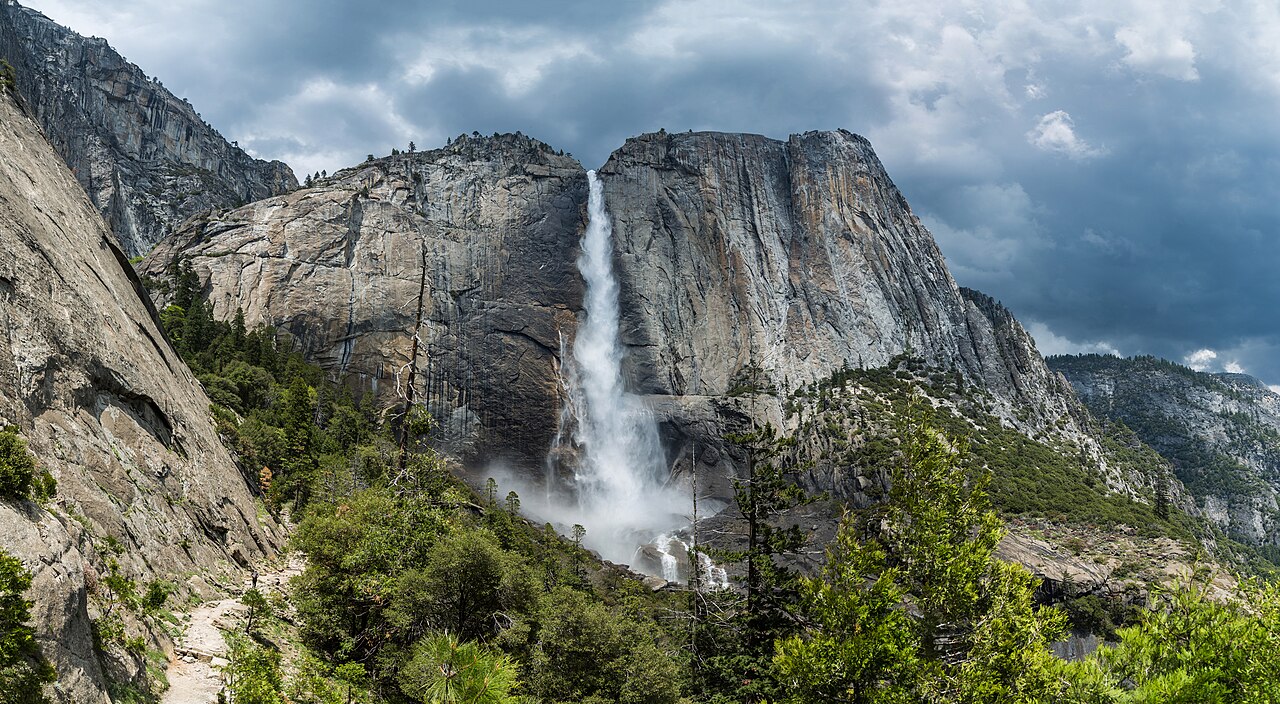
Yosemite Falls is the waterfall that gives the valley its voice. The National Park Service puts its total height at 2,425 feet, made up of Upper Yosemite Fall, a set of middle cascades, and the final 320-foot plunge of Lower Yosemite Fall, and in a big snow year the roar carries across the valley floor and shakes the footbridge at its base. The easy way to see it is the Lower Yosemite Fall Trail: a paved loop of about one mile with only about 50 feet of gain, starting from the trailhead near Yosemite Valley Lodge and shuttle stop 6, with views of both the upper and lower falls along the way. The NPS recommends walking it clockwise for the best views, and the eastern section is wheelchair accessible when free of ice and snow. For a bigger day, the Upper Yosemite Fall Trail climbs from Camp 4 in tight, rocky switchbacks — about 2 miles round trip and roughly 1,000 feet of gain to Columbia Rock, a superb viewpoint over the valley, or about 7.2 miles and 2,700 feet to the top of the fall, a strenuous all-day effort. Flow is the key variable. The fall runs roughly from November through July and peaks in May; by late summer it can be a trickle or dry, and the NPS conditions page described it as a trickle at the end of October 2026. Early-winter storms bring it back, and in cold spells an ice cone builds at the base of the upper fall, sometimes hundreds of feet high. Spring is the spectacle: mist drenches the bridge and moonbows can appear on bright spring nights. In winter, the paved loop stays open but the climb to the footbridge on the western side can ice over, and the upper trail becomes a serious undertaking that demands traction devices and experience.
The falls are fed by Yosemite Creek, which drains a broad basin of granite and meadow north of the valley rim. Because the creek depends almost entirely on snowmelt, the falls tell you what kind of winter the Sierra had: after a big snowpack they thunder into July; after a dry one they may fade in June. That is why so many visitors plan spring trips around them, and why a fall visitor can be surprised by an empty cliff. Even dry, though, the setting is stunning — the black streaks on the granite show where water runs, and the view from the lower fall bridge up the full height of the cliff is still one of the great sights of the park. In the rare years when early storms arrive, the first flow after a dry summer is a moment locals celebrate.
Hiking it well. For the lower loop, start at the trailhead by the shuttle stop or walk over from Yosemite Valley Lodge, follow the loop clockwise, and allow half an hour to an hour with photo stops. The upper trail is one of the oldest in the park, built in the 1870s, and its switchbacks are relentless and exposed to the afternoon sun; start early in warm months, carry plenty of water, and turn around at Columbia Rock if the full climb is too much — the view there is arguably the best on the route. Above Columbia Rock, the trail briefly descends with a sudden, close view of the upper fall before the final climb. In winter, the NPS warns of icy patches, and the upper trail can be snow-covered and hazardous; do not attempt it without traction and experience. Never wade into the creek above the fall or climb on the wet rocks near the base — currents are powerful and rocks slick.
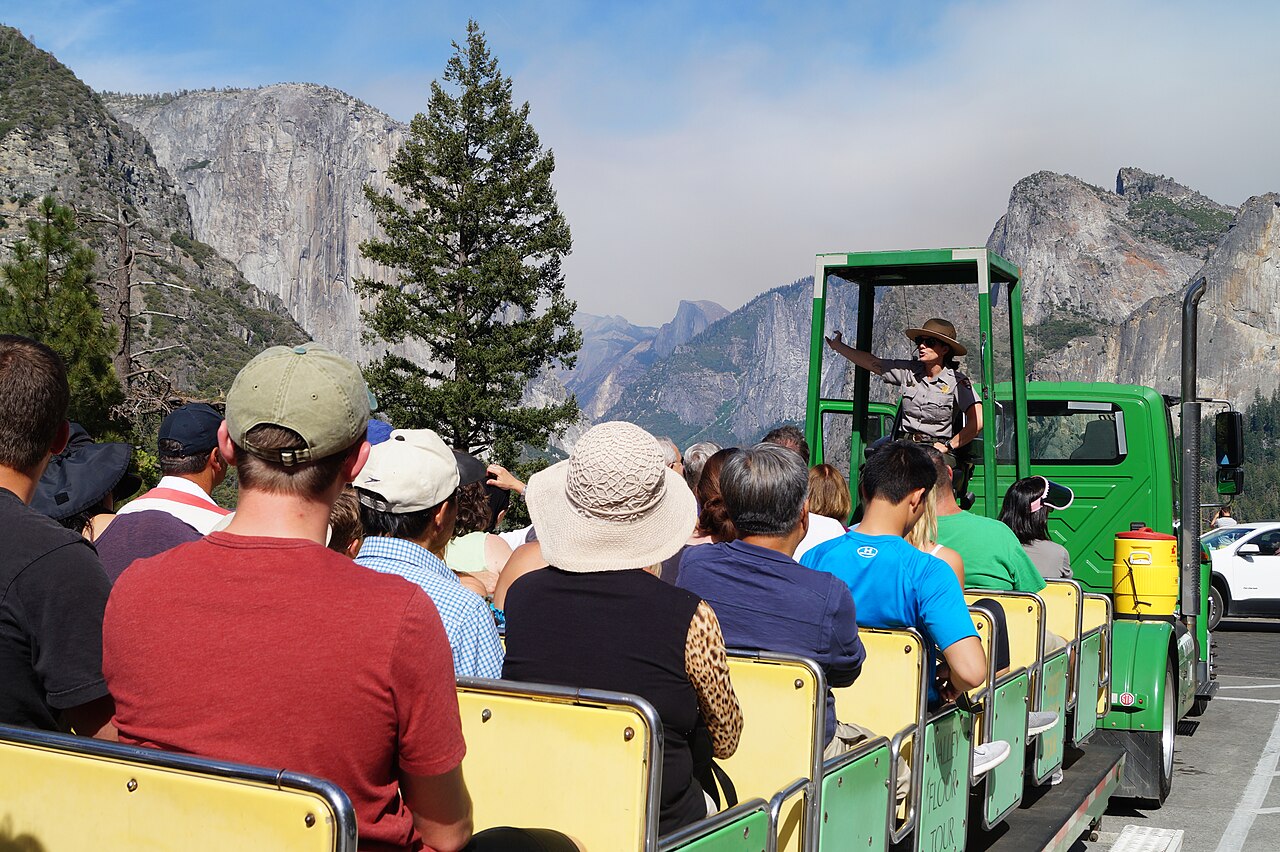
Fitting it into your day. The lower fall is a natural evening stroll after dinner at the lodge, and a favorite with families because the walk is flat and the payoff immediate. Photographers like the meadows near Cook's Meadow and Sentinel Bridge for reflections of the falls in spring, and the view from the Valley Floor Tour stop near Yosemite Village. Combine the lower fall with Yosemite Village, the Ansel Adams Gallery and the Valley visitor center area, or pair the upper trail with a lazy afternoon by the Merced River. In winter, a frosty morning at the base of the lower fall followed by skating at Curry Village makes a perfect valley day.
What to expect
The experience
A flat, paved one-mile loop to the base of Lower Yosemite Fall, with an optional strenuous climb on the Upper Yosemite Fall Trail from Camp 4 to Columbia Rock or the top of the fall.
Best time
May and June for peak flow and mist; early morning for quiet; winter cold snaps for the ice cone at the base of the upper fall.
How long
Half an hour for the lower loop; two to three hours to Columbia Rock; six to eight hours to the top.
Tips
Walk the loop clockwise. Expect spray in spring and ice in winter near the western footbridge. On the upper trail, start early, carry plenty of water and use traction in winter.
Quick picks
- Best for
- Everyone — the lower loop is the easiest big payoff in the valley.
- Families
- The paved loop is ideal for strollers and young kids; skip the upper trail with little ones.
- Couples
- An early walk to the lower fall, or the climb to Columbia Rock for a valley view to yourselves.
- Pair with
- Yosemite Village and the Ansel Adams Gallery, or a Valley Floor Tour from Yosemite Valley Lodge.
- Time needed
- An hour for the lower fall, a full day for the top.
Good questions
How tall is Yosemite Falls?+
It drops 2,425 feet in total, including Upper Yosemite Fall, the middle cascades and the 320-foot Lower Yosemite Fall, according to the National Park Service.
When does Yosemite Falls have water?+
Usually from about November to July, peaking in May. By late summer and fall it can be a trickle or dry; early winter storms often bring it back.
How long is the Lower Yosemite Fall trail?+
About a one-mile paved loop with roughly 50 feet of gain. The NPS suggests going clockwise, and the eastern section is wheelchair accessible when it is clear of ice and snow.
How hard is the Upper Yosemite Fall Trail?+
Strenuous. It is about 2 miles round trip and 1,000 feet of gain to Columbia Rock, or about 7.2 miles and 2,700 feet to the top of the fall. Expect steep switchbacks and full sun.
Can I visit Yosemite Falls in winter?+
Yes. The lower loop stays open year-round, though icy spots are possible. An ice cone often forms at the base of the upper fall in cold weather. The upper trail requires winter experience and traction.