The journey from Kunming to Dali and Lijiang is the classic Yunnan route. It crosses the province from the lake plateau to the Bai and Naxi homelands, with scenery that rises from farmland to snow peaks. Thanks to the high-speed railway, it is easy to do, but how you plan the trip changes what you see. This guide covers the options.
By train
High-speed trains link Kunming South Railway Station with Dali in roughly two hours, depending on the service, and continue on towards Lijiang. The trains are comfortable, with reserved seats and luggage racks. Tickets are sold at stations, through apps and through tour operators. Bring your passport, because it is needed to buy and collect tickets and to pass through station gates. Allow plenty of time at the station for security checks, and check which station your train uses, since Kunming has more than one.
By air and road
Flights from Kunming to Lijiang are short and useful if you want to save time, and Dali also has an airport. Roads are good but long, so a private driver is practical only for those wanting flexibility. Between Dali and Lijiang the journey by train or road takes a couple of hours, and the scenery includes terraced fields, villages and, on clear days, snow-capped mountains.
Dali as a day trip
A day trip from Kunming to Dali by train is possible and popular. You arrive in the morning, walk the old town, visit the Three Pagodas and perhaps see a section of Erhai Lake, then return in the evening. It is a busy day, but it gives a taste of the Bai culture for those short of time. A private guided day tour handles tickets and transfers.
Why stay overnight
Dali and Lijiang reward a slower pace. In Dali, an overnight lets you see the old town in the evening and morning, cycle part of Erhai Lake and visit Xizhou. In Lijiang, an overnight gives you the early-morning lanes and a day at Jade Dragon Snow Mountain or Baisha. If you can, spend two nights in each town.
A suggested route
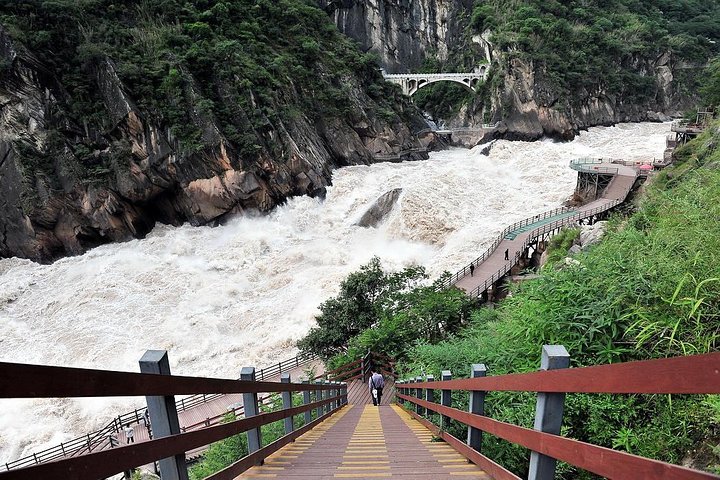
Day one, train from Kunming to Dali, walk the old town and the Three Pagodas. Day two, Erhai Lake and Xizhou by car or bike. Day three, train or car to Lijiang, afternoon in the old town. Day four, Jade Dragon Snow Mountain and Baisha village. Day five, Tiger Leaping Gorge or a trip to Shangri-La, or return to Kunming by train or flight.
Altitude and weather
Dali is at around 2,000 metres and Lijiang around 2,400, so most people feel fine, but the sun is strong and evenings are cool. Bring layers, sun protection and a rain jacket, especially in summer. If you plan to go up Jade Dragon Snow Mountain, rest the day before and drink water.
Luggage and logistics
Travel light if you can, since cobbled old-town lanes are hard on wheeled bags. Many hotels will store luggage for a day or two if you return. Taxis and ride-hailing work in Dali and Lijiang, and hotel staff can write addresses in Chinese. Confirm pickup times for tours, and keep a copy of your itinerary.
Booking tips
Book trains early for holiday weeks, since popular services sell out. Tickets for Jade Dragon Snow Mountain, including the cable car, may need advance reservation. If you prefer a guided approach, a private tour arranges transport and entry. For flexibility, combine independent travel with a few well-chosen guided days.
Beyond Lijiang
From Lijiang you can continue to Shangri-La, visit Tiger Leaping Gorge or return to Kunming. The north of the province offers Tibetan culture and big mountains, but the roads are longer and the altitude higher, so plan carefully. Whichever way you go, the Kunming to Dali to Lijiang corridor is a rewarding introduction to the diversity of Yunnan.
Rainy-day backups
If clouds hide the mountains, Dali and Lijiang still offer plenty to do indoors: tea houses, craft workshops, tie-dye classes, museums and long lunches of local food. Keep a flexible plan for the snow mountain days, since views often clear later or on the following morning. Having a spare day in the schedule is the best insurance against weather, and it lets you linger when you find a place you love.