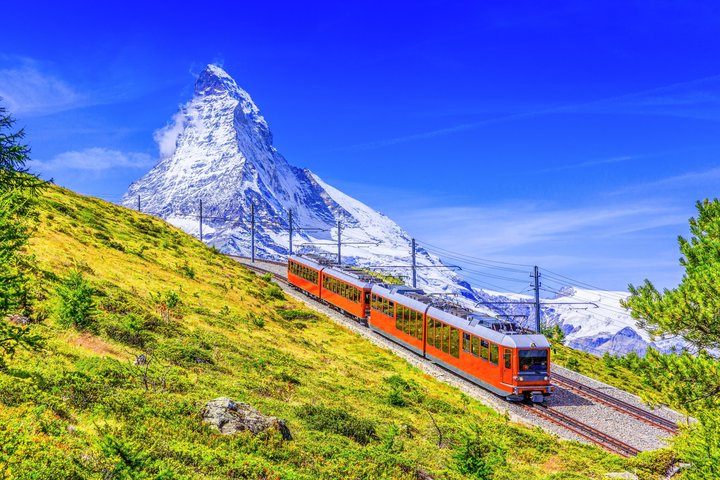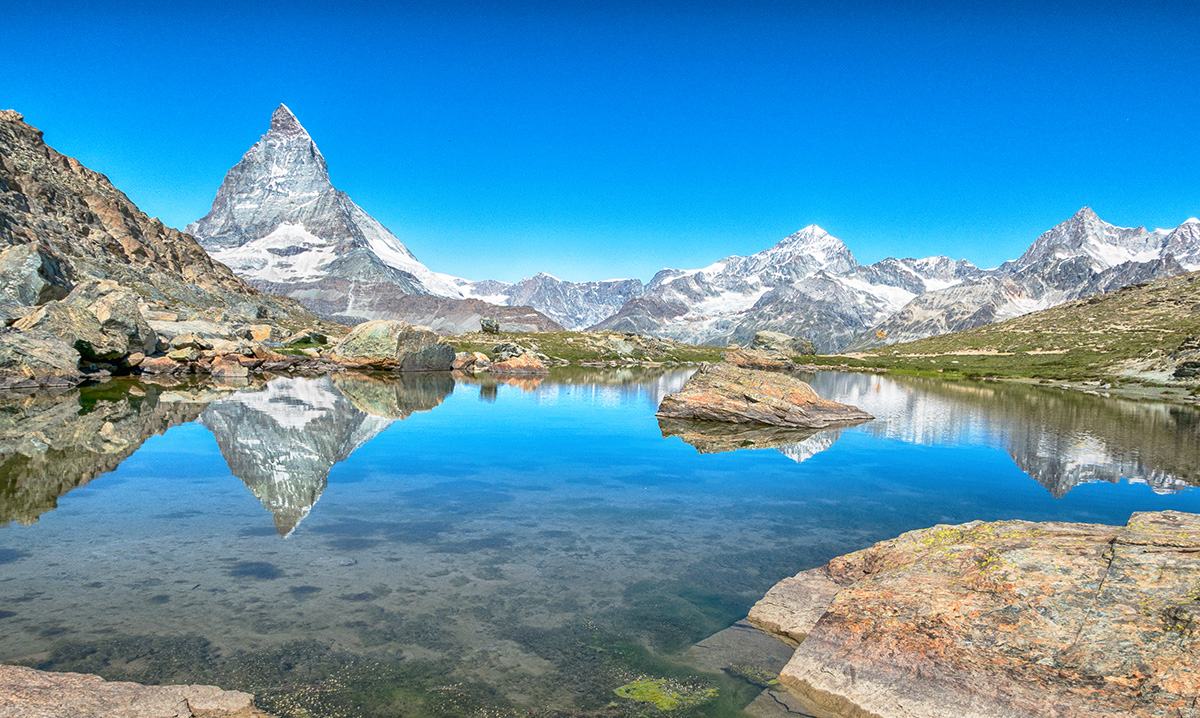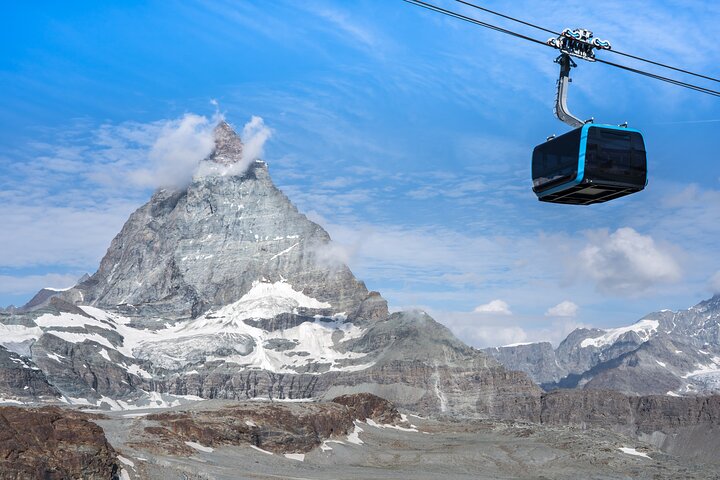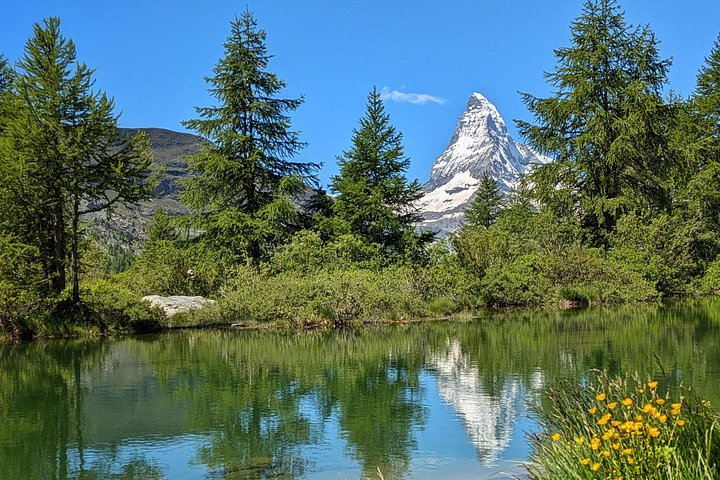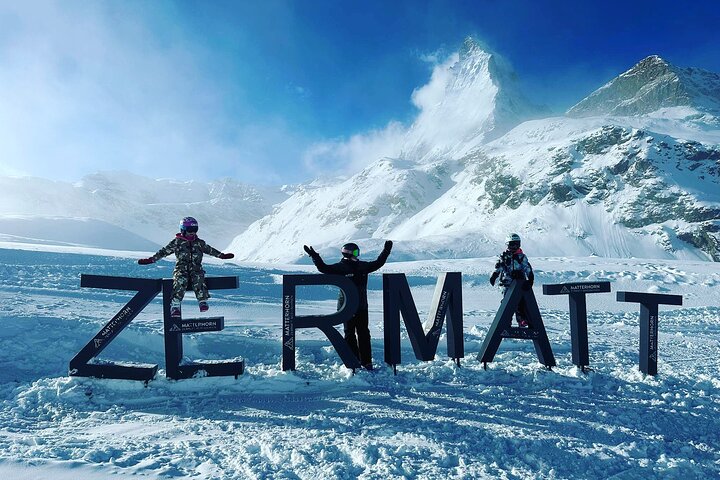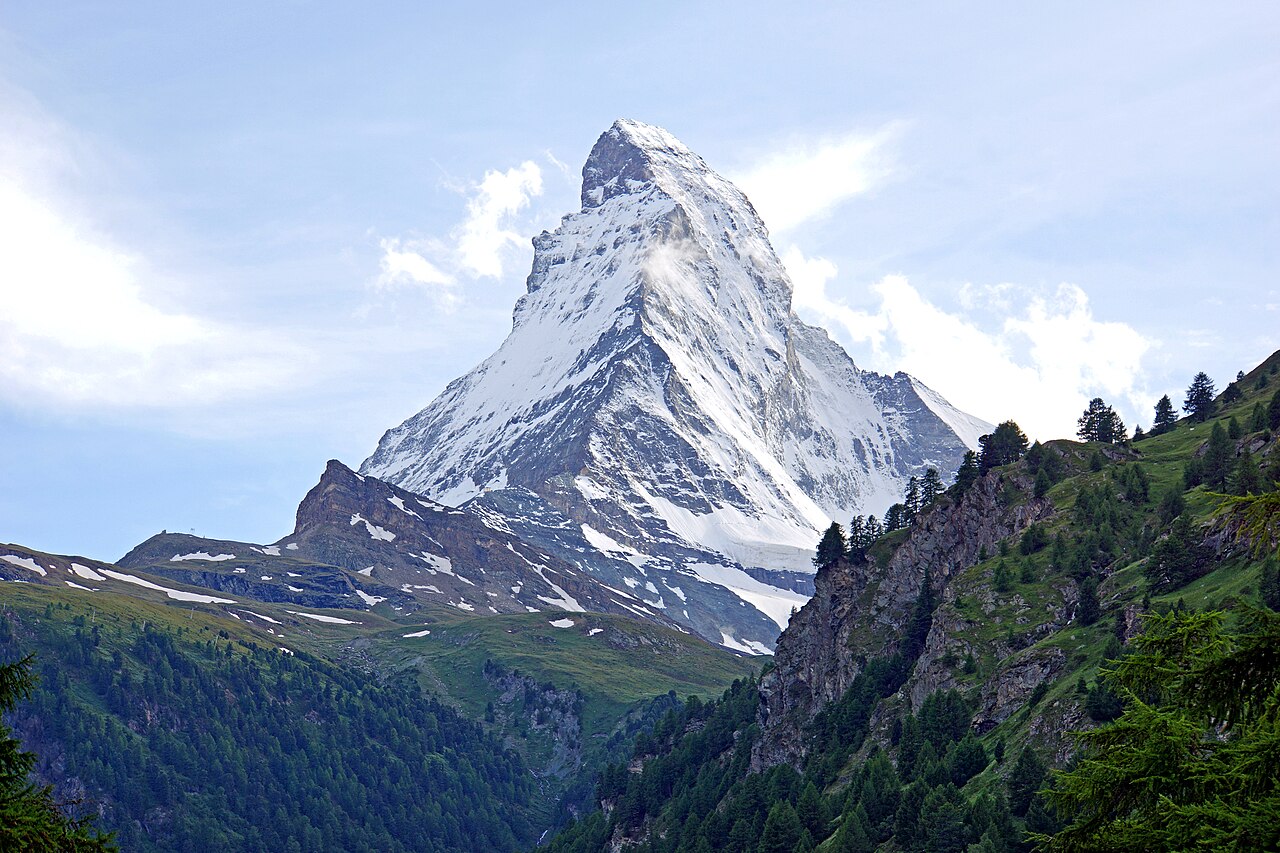
Zermatt has been photographed so often that the best vantage points have names. The tourist board lists eleven photo points for Matterhorn pictures, a mixture of village corners, lakes and mountain stations. In the village they include the Kirchbrücke, or church bridge, Kirchplatz with its community centre terrace, the old part of the village and the Riedweg. Higher up are the Riffelsee, at 2,757 metres, and the Stellisee, at 2,537 metres, two lakes with surfaces that can mirror the Matterhorn, plus Riffelalp, Tufteren, Zen Stecken and a small bench at Höhbalmen. On the Gornergrat is the Golden Spot, a restored gilded historic locomotive, number 3003, one of the first locomotives of the railway, set up with the Matterhorn behind it; a themed trail leads to it and it is open all year and free of charge. Most of these points can be visited on foot or with the lifts you already plan to use.
Using the list as a checklist is the easiest way to organise a photographic trip. Start in the village, because the church bridge, Kirchplatz and the old quarter can be visited in an hour on foot and give the classic combination of barns, spire and peak. These work in almost any weather, because even with cloud on the summit the foreground can carry the picture, and at sunrise and sunset the light on the Matterhorn can turn the summit gold or pink.
The lakes are the high-value targets. Riffelsee, reached from Rotenboden on the Gornergrat line, and Stellisee, one of the lakes on the Sunnegga side, both depend on still water for the reflection, so early morning is the bet to place. The Golden Spot gives a more playful picture, with the polished locomotive and the mountain in one frame, and because it is on the Gornergrat it combines naturally with a ride on the railway.
The tourist board page names the other viewpoints without describing them, so use the tourist office map to find their routes and check what is open.
For better results, check the webcams the evening before, go early and carry a lens cloth, a warm layer and a tripod if you shoot in low light. Respect hamlet residents and churchyards, stay on marked paths and keep drones in line with local rules. Cloud on the Matterhorn is common, so spread your photographic days across a trip, and accept that the mountain is sometimes shy. A walk through the Hinterdorf or the Matterhorn Museum makes a good fall-back when the view is lost.
What to expect
The experience
A self-guided tour of named viewpoints, from the church bridge in the village to the lakes and the Golden Spot on the Gornergrat.
Best time
Early morning and evening for the best light; still mornings for lake reflections.
How long
An hour for the village points, a morning or day for the lakes and the Gornergrat.
Tips
Check webcams the evening before, carry warm layers and spread photo days across your trip in case of cloud.
Quick picks
- Best for
- Photographers and first-timers who want a ready-made list of the best Matterhorn viewpoints.
- Families
- Easy village points suit children, and the Golden Spot locomotive is a fun stop.
- Couples
- Sunrise or sunset light on the peak makes a memorable shared moment.
- Pair with
- The Gornergrat railway and the Riffelsee.
- Time needed
- One hour to a full day.
Good questions
How many photo points are there?+
The tourist board lists eleven named photo points, including village viewpoints, lakes and the Golden Spot.
What is the Golden Spot?+
A restored, gilded historic locomotive, number 3003, one of the Gornergrat Railway first locomotives, displayed with the Matterhorn behind it. It is open all year and free.
Which lakes reflect the Matterhorn?+
Riffelsee at 2,757 metres and Stellisee at 2,537 metres both have mirror-like surfaces that can reflect the mountain in calm weather.
Are the village points free?+
Yes, the church bridge, Kirchplatz and the old quarter are public places that cost nothing to visit.
When is the best light?+
Early morning and evening, when the sun colours the summit and the lake surfaces are calmer. Cloud can hide the mountain at any time.