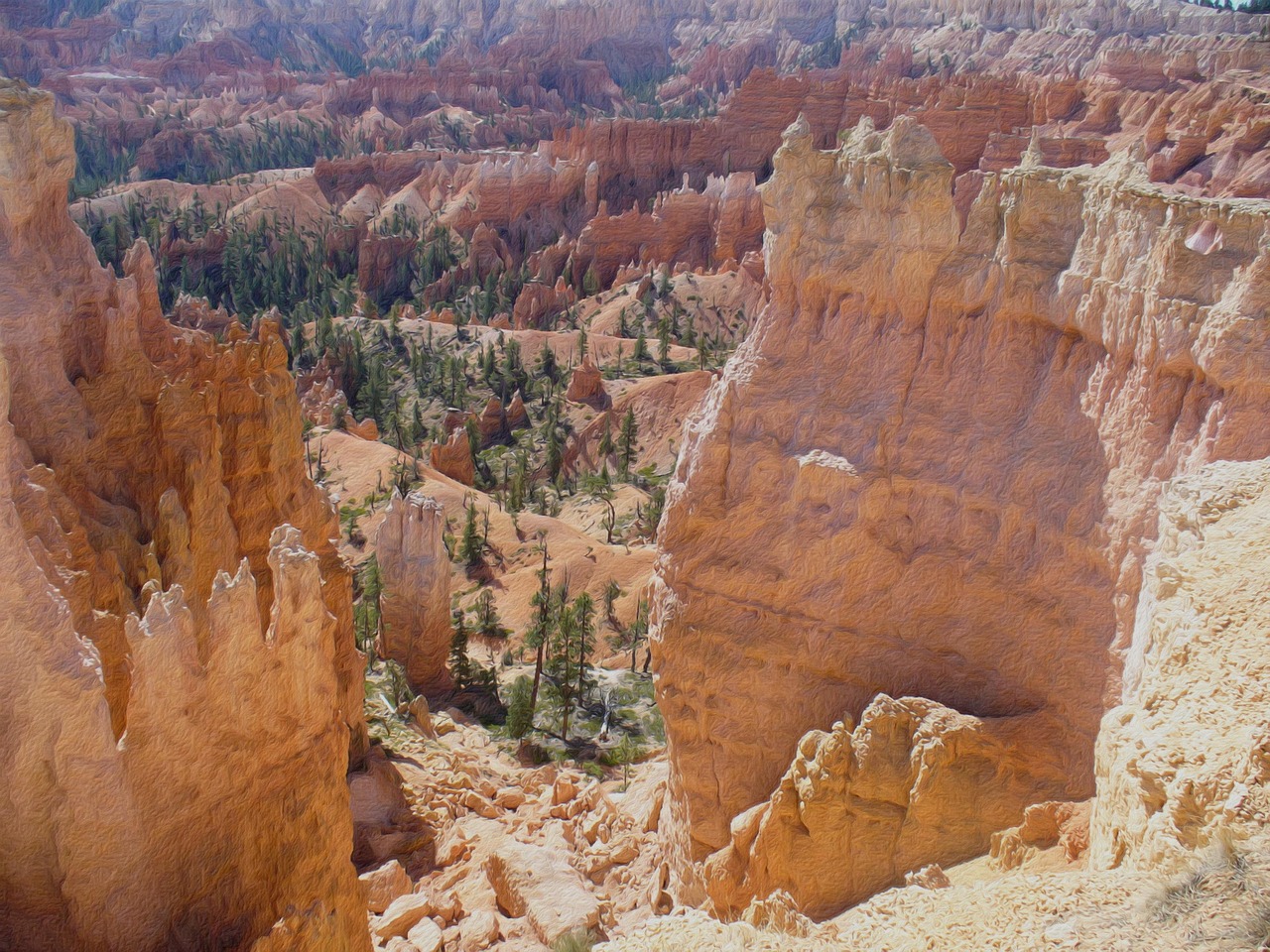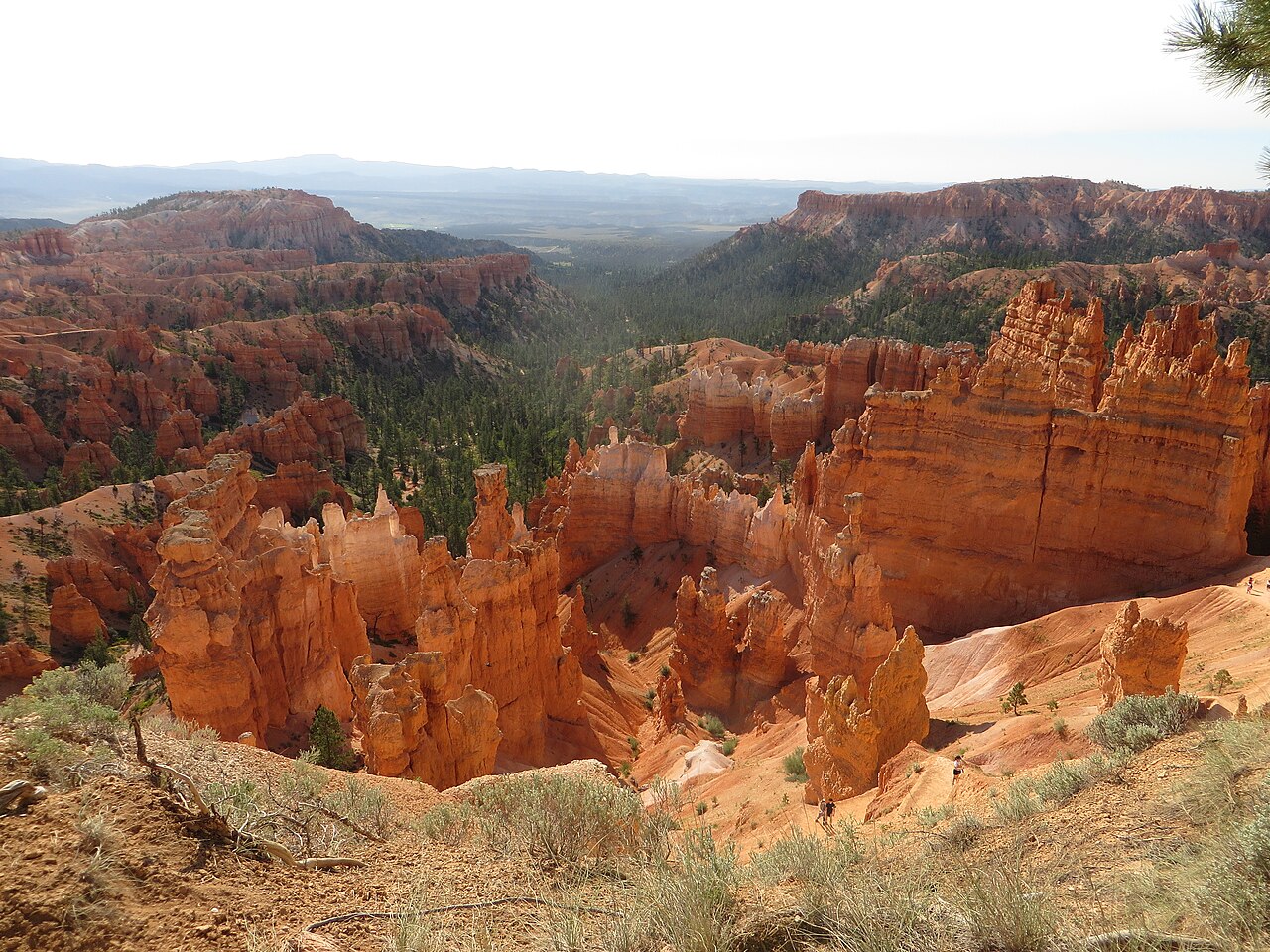
Bryce Canyon is not really a canyon at all but a series of natural amphitheaters carved into the edge of the Paunsaugunt Plateau, and the largest of them, the Bryce Amphitheater, holds the densest concentration of hoodoos on Earth: thousands of spires, fins and windows of pink, orange and cream limestone that seem to march in ranks down from the rim. The Rim Trail is the way to see it. It runs 5.5 miles along the edge from Bryce Point in the south to Fairyland Point in the north, passing the four classic viewpoints — Bryce Point, Inspiration Point, Sunset Point and Sunrise Point — each with its own parking area. You can walk any piece of it: Bryce to Inspiration is 1.5 miles, Inspiration to Sunset 0.7, Sunset to Sunrise just half a mile, and Sunrise to Fairyland 2.8. The stretch between Sunrise and Sunset Points is paved and nearly flat, with only about 34 feet of climbing, and is the one section where leashed pets are allowed; the full trail gains around 700 feet as it rises and falls between points. Inspiration Point, with its tiered overlooks, gives the most overwhelming view of the hoodoo city called Silent City; Sunset Point looks down on Thor's Hammer; Bryce Point is the classic sunrise spot. The rim sits at around 8,000 feet and higher, so the air is thin and cold at dawn even in summer, and winter brings deep snow, when the Bryce Point to Inspiration Point section is regularly closed. The park's free summer shuttle has ended for 2026, so you drive between points until it resumes next season.
The hoodoos are the product of frost and rain. At Bryce's altitude, water seeps into cracks in the limestone and freezes on well over half the nights of the year, prying the rock apart, while summer storms wash away the debris. Layers of harder and softer rock erode at different rates, leaving caps on top of softer columns, and iron and manganese give the colors. The result is a landscape that changes constantly with the light — muted and pastel at midday, flaming orange when the sun is low — and that looks entirely different under snow, when the hoodoos wear white caps against a red background.
Plan your visit around the light. Despite the names, Sunrise Point and Bryce Point are best at dawn, when the first rays hit the hoodoos and the amphitheater glows from within; Sunset Point is lovely in the evening, but many photographers prefer Inspiration Point then. Bring warm layers for dawn even in summer. The paved Sunrise-to-Sunset section is the easiest walk and accessible to many visitors with mobility needs, with accessible restrooms at Sunset Point. Beyond the main amphitheater, the 18-mile park road continues south to Rainbow Point at the highest part of the plateau, with a string of viewpoints along the way — an excellent half-day drive, though snow can close sections in winter.
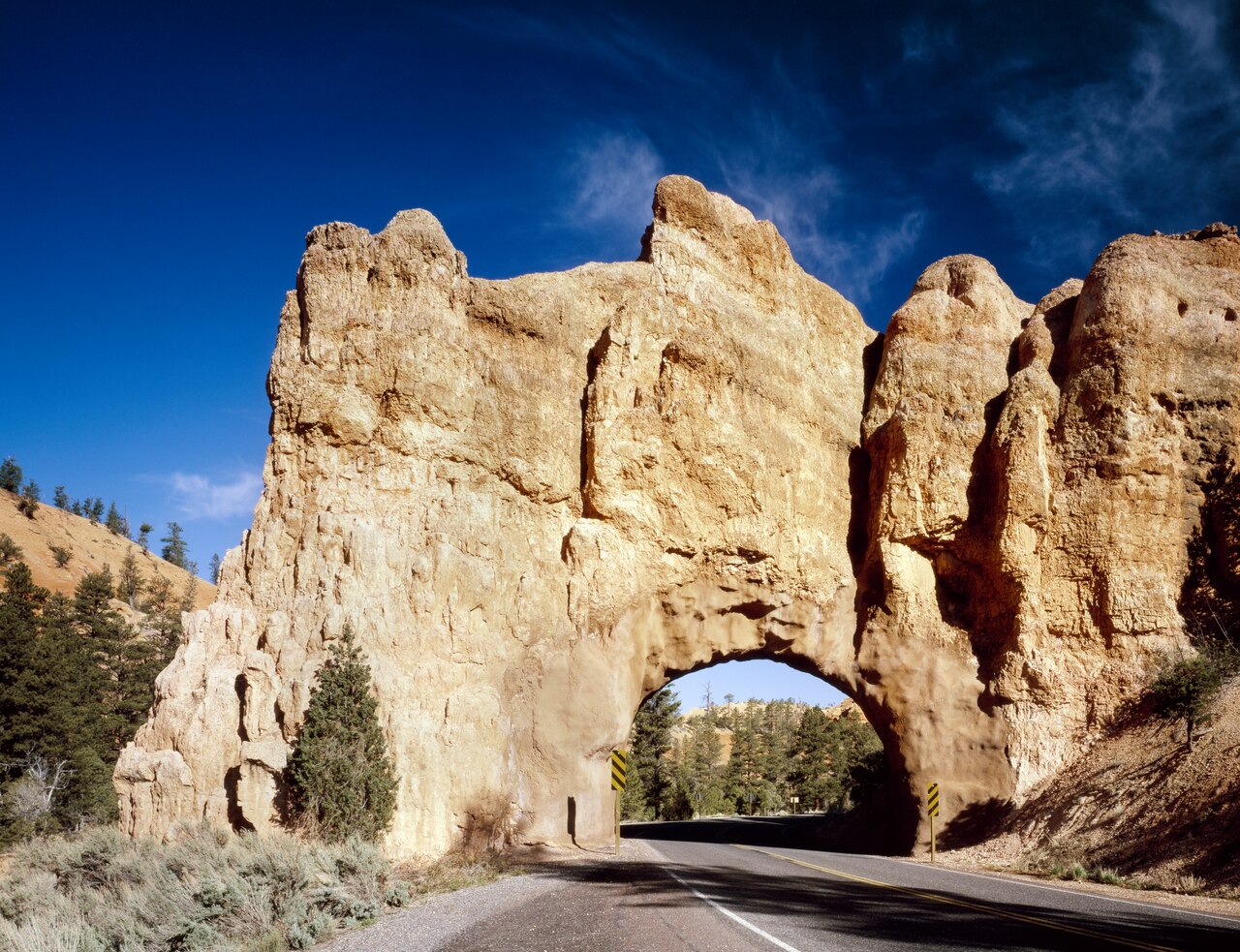
Bryce is famous for its dark skies, and the park is one of the best places in the country for stargazing; on moonless nights the Milky Way arches over the rim. Winter is a special season: the crowds vanish, the snow highlights every hoodoo, and the Bryce Canyon Winter Festival, held each Presidents Day weekend at nearby Ruby's Inn, offers snowshoe tours and cross-country skiing. Note that since 2026, nonresidents of the United States aged 16 and over pay a $100 per-person surcharge on top of the regular entrance fee, unless they hold the nonresident annual pass. Combine the rim with a hike below it on the Navajo Loop and Queen's Garden, and with Red Canyon on the drive in.
What to expect
The experience
A 5.5-mile rim path from Bryce Point to Fairyland Point linking the four classic viewpoints; the half-mile between Sunrise and Sunset Points is paved and nearly flat.
Best time
Sunrise at Bryce or Sunrise Point; golden hour at Inspiration Point; after fresh snow in winter.
How long
An hour for the paved section and viewpoints; three to four hours for the whole rim.
Tips
Dress warmly at dawn — the rim is above 8,000 feet. Leashed pets only on the paved Sunrise-Sunset section. Bryce Point to Inspiration closes in winter. The shuttle is seasonal, so drive between points from November.
Quick picks
- Best for
- Everyone — the single most essential Bryce experience, with options for every ability.
- Families
- The paved Sunrise-to-Sunset stretch is perfect for strollers and grandparents; keep kids back from unfenced edges.
- Couples
- Sunrise at Bryce Point with a thermos, then breakfast at a lodge in Bryce Canyon City.
- Pair with
- The Navajo Loop and Queen's Garden below the rim, and Red Canyon on the drive in.
- Time needed
- Two hours at the main points, a full day with the park road and a hike.
Good questions
Where is the best place to watch sunrise at Bryce Canyon?+
Bryce Point and Sunrise Point are the classic choices, and Inspiration Point is superb too. Arrive half an hour early and dress for freezing temperatures, even in summer.
How long is the Rim Trail?+
It is 5.5 miles from Bryce Point to Fairyland Point. The paved half-mile between Sunrise and Sunset Points is the easiest and most popular section.
Can I bring my dog on the Rim Trail?+
Only on the paved section between Sunrise and Sunset Points, on a leash. Pets are not allowed on other trails.
Is the Bryce Canyon shuttle running?+
The free shuttle is seasonal and has ended for 2026. In winter you drive between the viewpoints, which have their own parking areas.
Do international visitors pay more?+
Yes. Since 2026, non-U.S. residents aged 16 and over pay a $100 per-person surcharge at Bryce Canyon unless they hold the nonresident annual pass.