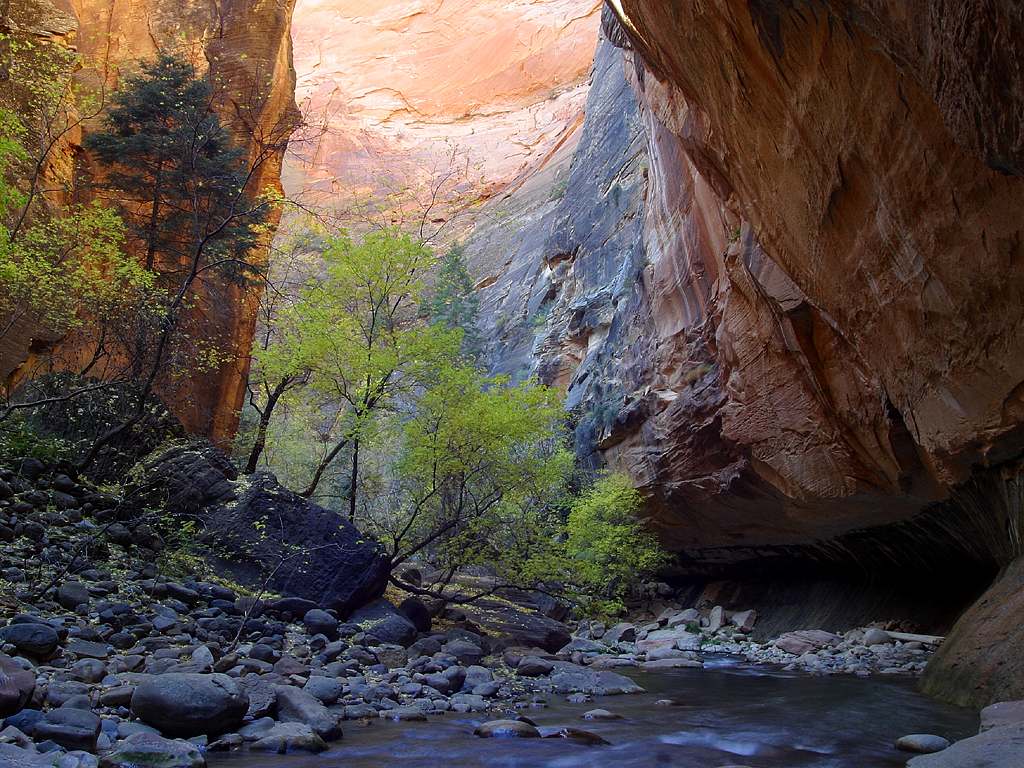
The Narrows is Zion's other great hike, and the opposite of Angels Landing in almost every way: instead of climbing out of the canyon you walk up the river that carved it, wading the North Fork of the Virgin River between sandstone walls that rise sheer for hundreds of feet and close in to just a few yards apart. It begins at the Temple of Sinawava, the last stop on the Zion Canyon shuttle, with the Riverside Walk — a paved, mostly level mile along the river through hanging gardens of ferns and monkeyflower, suitable for strollers and wheelchairs with assistance. Where the pavement ends, the river becomes the trail. The bottom-up day hike needs no permit and lets you go as far as Big Spring, a strenuous ten-mile round trip, though most people turn around when they have had enough, and even an hour upstream delivers the experience. The most famous stretch, Wall Street, begins a couple of hours in, where the canyon tightens beyond the Orderville Canyon junction and the walls soar overhead. Expect to spend most of the time in water that ranges from ankle to waist deep, over slippery round rocks. The National Park Service closes The Narrows when the river flows above 150 cubic feet per second, and during any Flash Flood Warning, staying closed for at least two hours afterwards; between 70 and 150 cfs, walking against the current is challenging. Wear closed-toe shoes and carry a sturdy walking stick — sandals and bare feet are not appropriate — and heed the park's cyanobacteria advisory: do not drink the river water or submerge your head.
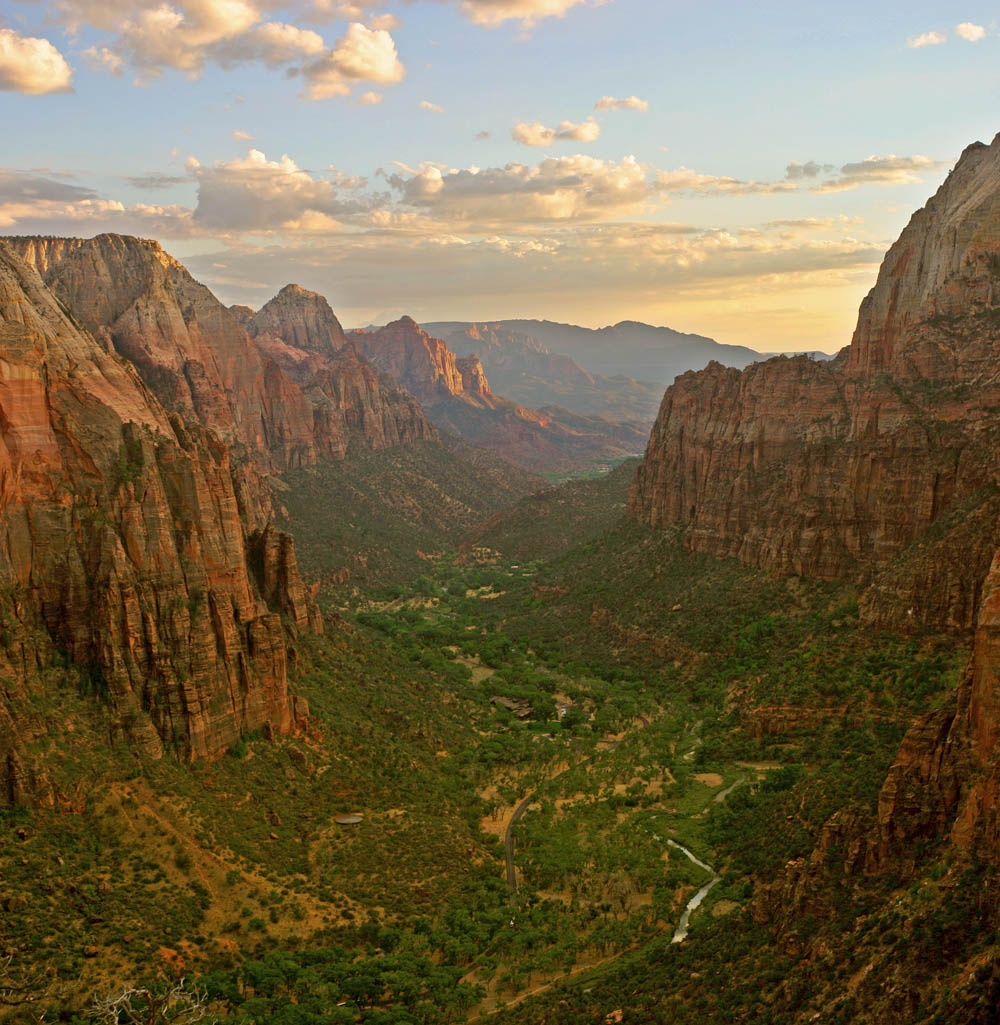
The canyon is a lesson in how Zion was made. The North Fork of the Virgin River has cut down through the Navajo Sandstone faster than the walls could erode back, which is why the canyon is so deep and so narrow, and why water is both the attraction and the danger. A thunderstorm miles upstream, out of sight, can send a flash flood down the slot with little warning, and there are stretches with no high ground. That is why the flow and flood rules matter, and why rangers take them seriously. Check the National Weather Service flash flood potential and the park's conditions page before you go, and turn back immediately if the water rises, darkens or carries debris.
Gear makes or breaks the hike. Outfitters in Springdale rent canyoneering shoes, neoprene socks and walking poles, and in the cold months drysuits; the river is cold year-round under those shaded walls and frigid from late fall through spring, when hypothermia, not fatigue, is the real risk. In summer, quick-drying layers and a dry bag for phone, snacks and a warm top are enough. Go early: the first shuttles reach the Temple of Sinawava well before the crowds, and by mid-morning in peak season the lower river can feel like a parade. Late November and most of December are quiet, but water temperatures then make a drysuit essential rather than optional, and the shuttle does not run between November 29 and December 25, so you drive to the Temple of Sinawava instead.
For the full experience, the top-down route covers sixteen miles from Chamberlain's Ranch outside the park to the Temple of Sinawava, done in one long day or with a night at one of the designated campsites. It requires a wilderness permit and a shuttle to the trailhead, and it is only open when conditions allow. Most visitors will be perfectly happy with the bottom-up hike to Wall Street and back. Pair it with a quiet ride back down the canyon on the shuttle, stopping at Big Bend for the view up to Angels Landing — the area where an August 2026 rockfall briefly cut shuttle access before the road reopened the next day.
What to expect
The experience
A one-mile paved Riverside Walk, then an out-and-back wade up the North Fork of the Virgin River — as short or as long as you like, up to Big Spring (about ten miles round trip) without a permit.
Best time
Summer and early fall when the water is warmer and flows are low; early morning to beat the crowds. Never during a flash flood warning.
How long
Three to four hours to Wall Street and back for most hikers; a full day to Big Spring.
Tips
Check flow and flash flood potential first. Rent closed-toe canyoneering shoes and a pole in Springdale, plus a drysuit in the cold months. Do not drink the river water or put your head under.
Quick picks
- Best for
- Anyone who wants the canyon from the inside — no exposure, no permit, pure scenery.
- Families
- The paved Riverside Walk suits all ages, and older kids love the first hour of wading with poles and good shoes.
- Couples
- An early start to Wall Street, then a late lunch back in Springdale.
- Pair with
- The Riverside Walk on the way in, and Weeping Rock or Big Bend on the shuttle ride back.
- Time needed
- A half-day for the classic hike to Wall Street; a full day to Big Spring.
Good questions
Do I need a permit for The Narrows?+
Not for the bottom-up day hike from the Temple of Sinawava as far as Big Spring. The 16-mile top-down route from Chamberlain's Ranch requires a wilderness permit.
When does The Narrows close?+
When the Virgin River flows above 150 cubic feet per second, and during any Flash Flood Warning, staying closed for at least two hours after it is lifted. Spring snowmelt often keeps it closed for weeks.
What should I wear?+
Closed-toe shoes with grip and a sturdy walking stick — never sandals or bare feet. Quick-dry layers in summer; neoprene socks or a rented drysuit when the water is cold.
Is the water safe?+
The park advises against drinking the river water or submerging your head because of toxic cyanobacteria. Carry your own water and keep children from swallowing river water.
How far should I go?+
Wall Street, where the walls close in, is the classic turnaround for a half-day. Even an hour upstream from the Riverside Walk shows you the essence of the canyon.