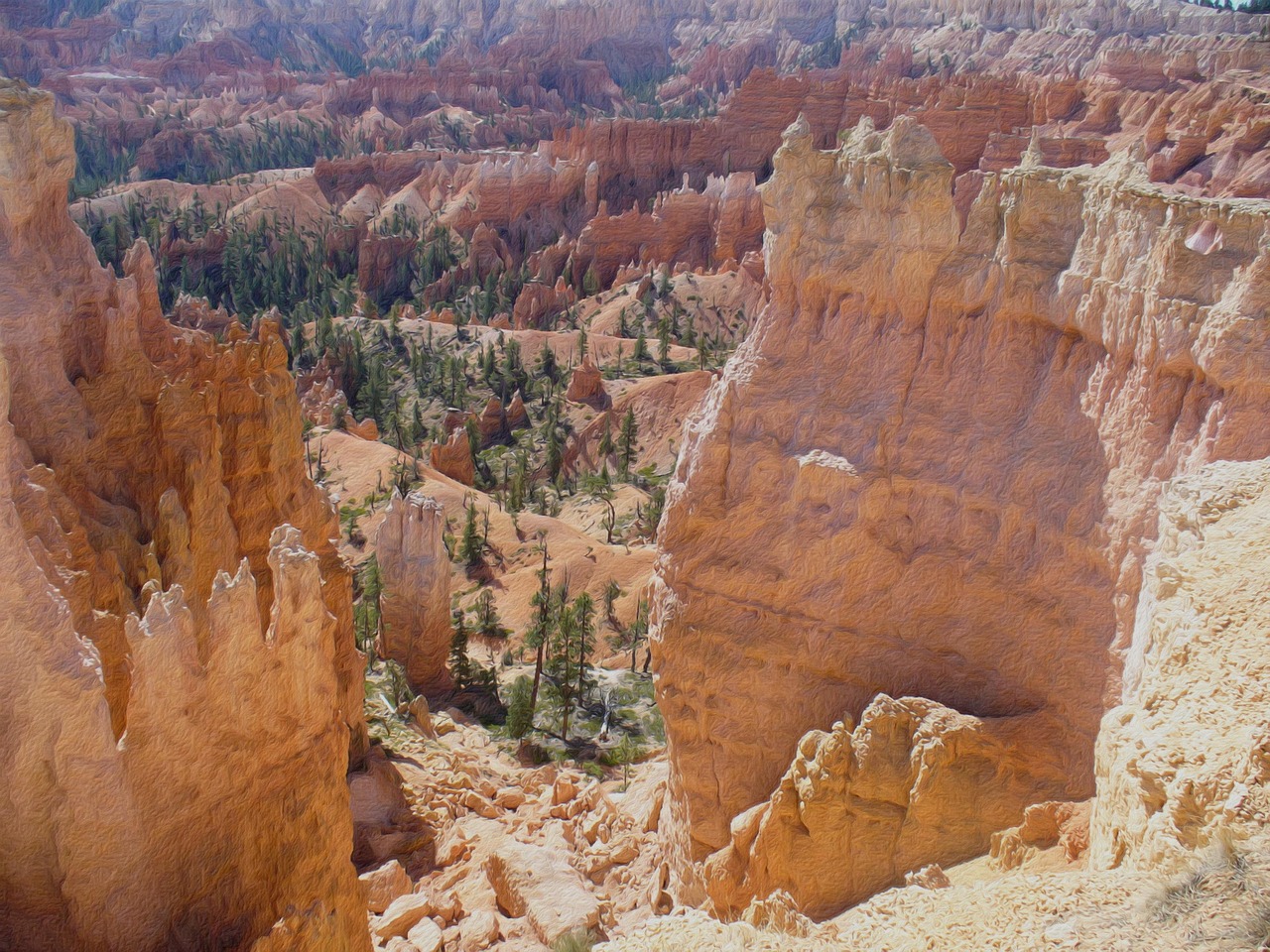
Bryce Canyon is as famous among astronomers as it is among hikers. Its high elevation, dry air and distance from big cities give it one of the darkest skies in the national park system, and on a moonless night thousands of stars are visible, with the Milky Way arching over the amphitheater in summer. The park treats darkness as a resource to protect, and its rangers and volunteer astronomers run about 100 astronomy programs a year, the most popular way to experience it. A typical evening program starts with a talk on the night sky, followed when conditions allow by stargazing through telescopes set up by volunteers, with views of planets, star clusters, nebulae and galaxies. The park recommends coming during the week of the new moon or the week before, when the sky is darkest. Programs can be cancelled for bad weather, so check the park calendar or ask at the visitor center on the day. Every summer the park also holds a four-day Astronomy Festival with talks, telescopes and family activities. The other signature experience is the full moon hike, when a ranger leads a small group on a 1- to 2-mile walk through the hoodoos by moonlight, without flashlights, so your eyes adapt and the formations glow silver. In winter, when the snowpack is deep enough, these become full moon snowshoe hikes. Together they make a night at Bryce as memorable as any sunrise at Sunrise Point.
How full moon hike tickets work. Tickets are reserved on Recreation.gov, first come, first served, with a small processing fee per reservation and up to six tickets each. For each month's hikes, a first batch of 15 tickets is released 14 days ahead and a second batch of 10 tickets five days ahead, both at 8am Mountain Time; they go fast. On the day, check in at the visitor center by 3pm with your confirmation, and you will be told where to meet. Hikes cover 1 to 2 miles over two to three hours. Lug-sole hiking boots or shoes are required, white-light flashlights and headlamps are not allowed (red lights are fine), children 7 and younger cannot take part, and hikes may be cancelled for clouds or temperatures below 10 degrees Fahrenheit. From November to March, when the snowpack exceeds about 16 inches, the park may offer free full moon snowshoe hikes instead, which are more strenuous.
Stargazing on your own. You do not need a program to enjoy the sky. Pull into a rim viewpoint after dark, turn off your lights and let your eyes adjust for 20 minutes. Bring warm layers in every season, because at around 8,000 feet the temperature drops quickly after sunset, and in winter nights can be bitterly cold. Use a red light, keep your car headlights off at viewpoints, and be careful near the rim edge in the dark. Moonless nights in late spring through early fall bring the best Milky Way views, while winter offers crisp, steady air and long nights.
Planning around the sky. Look up the moon phase before you book your trip: for stargazing, plan your Bryce night near the new moon; for a full moon hike, aim for the full moon and enter the ticket release. Staying overnight near the park makes it easy, whether in Bryce Canyon City or in Tropic, where dark skies extend right to your door. Pair a night program with sunrise at the rim the next morning for the full Bryce experience.
What to expect
The experience
Evening ranger and volunteer astronomy talks with telescope viewing when skies allow, a four-day summer Astronomy Festival, and ticketed full moon hikes of 1 to 2 miles without flashlights; snowshoe versions in winter when snow is deep enough.
Best time
The week of the new moon or the week before for stargazing; full moon nights for moonlight hikes.
How long
Two to three hours for a program or full moon hike.
Tips
Check the park calendar for program dates. For full moon hikes, book on Recreation.gov at the 14-day and 5-day releases, check in by 3pm, wear lug-sole boots and leave white lights behind. Dress very warmly.
Quick picks
- Best for
- Anyone who wants to see a truly dark sky with expert guides.
- Families
- Great for kids 8 and up; younger children can enjoy evening talks and telescope viewing.
- Couples
- A moonlit walk among the hoodoos is hard to beat for romance.
- Pair with
- Sunrise on the Rim Trail the next morning, or the Southern Scenic Drive by day.
- Time needed
- One evening.
Good questions
How do I get full moon hike tickets?+
Reserve on Recreation.gov. Fifteen tickets are released 14 days ahead and ten more five days ahead, both at 8am Mountain Time, with up to six per reservation and a small processing fee.
Are full moon hikes held in winter?+
When the snowpack exceeds about 16 inches, from November to March, the park may offer free full moon snowshoe hikes instead. They are more strenuous; hikes are cancelled below 10 degrees Fahrenheit or under cloud.
Can young children join?+
Children 7 and younger are not permitted on full moon hikes. Evening astronomy programs are suitable for all ages.
When is the best time for stargazing at Bryce?+
During the week of the new moon or the week before, when the sky is darkest. Clear, moonless nights reveal thousands of stars.
When is the Astronomy Festival?+
It is held every summer over four days. Check the park website for the current year's dates and schedule.