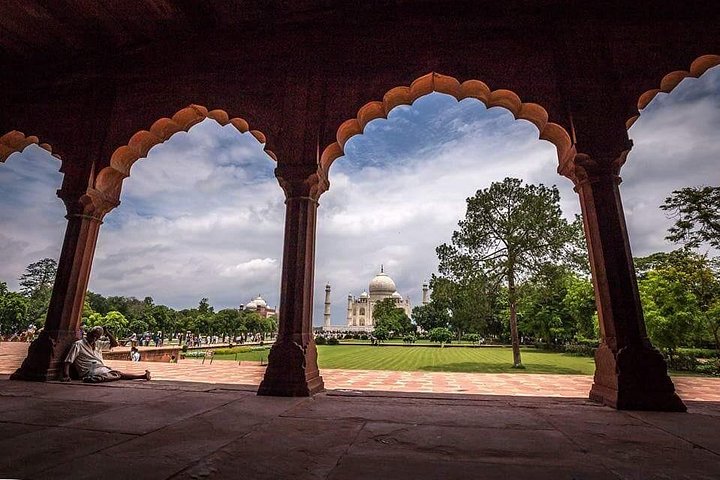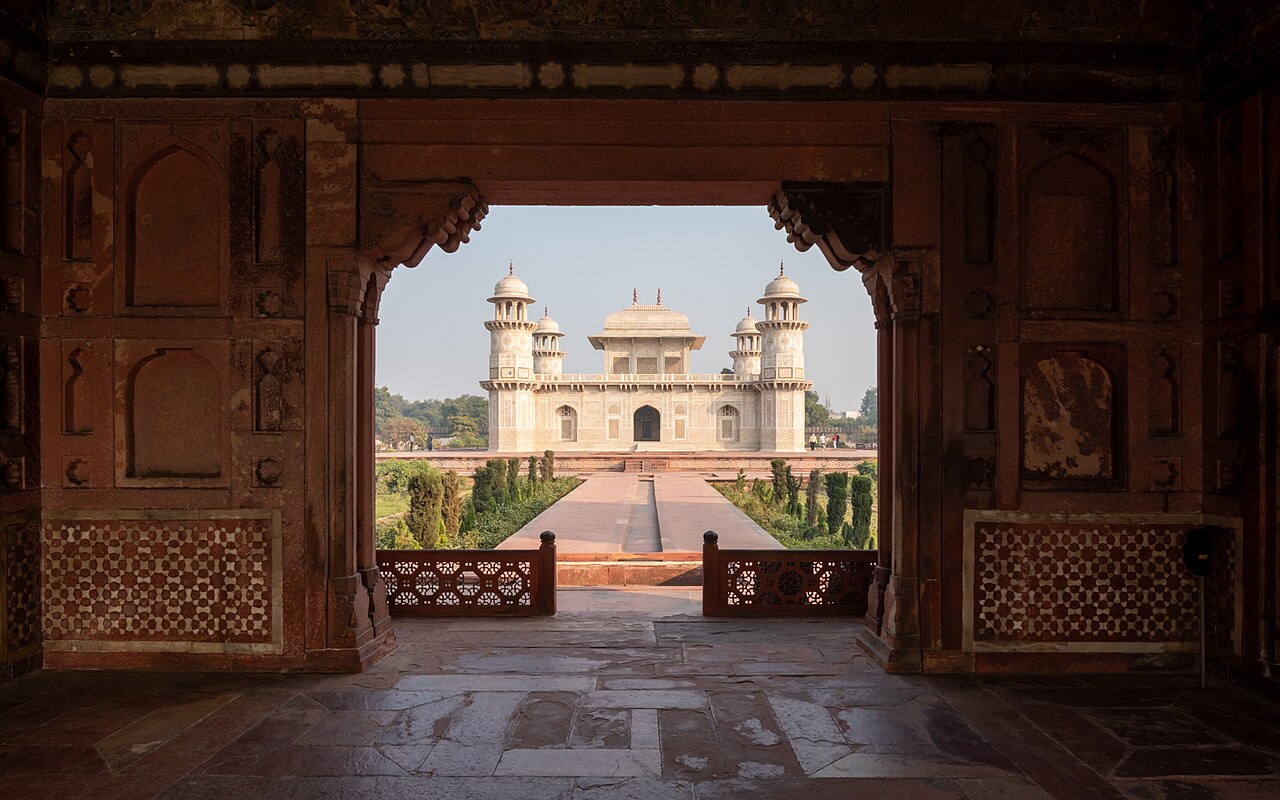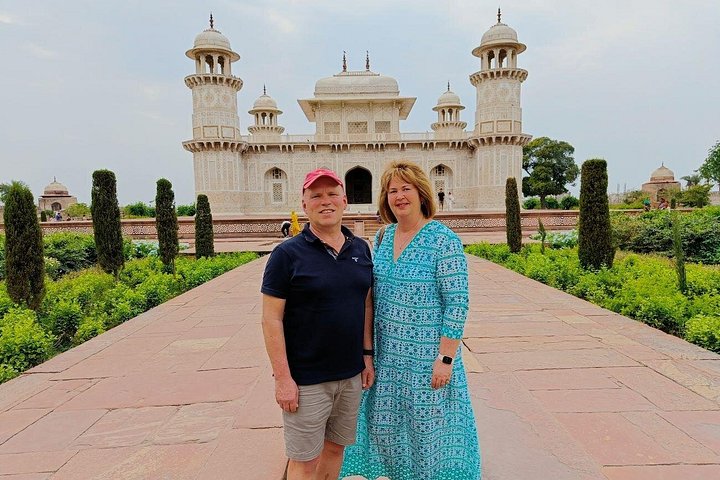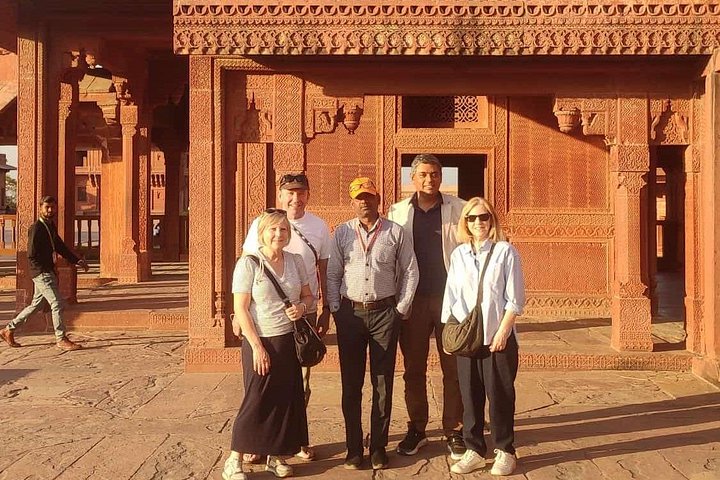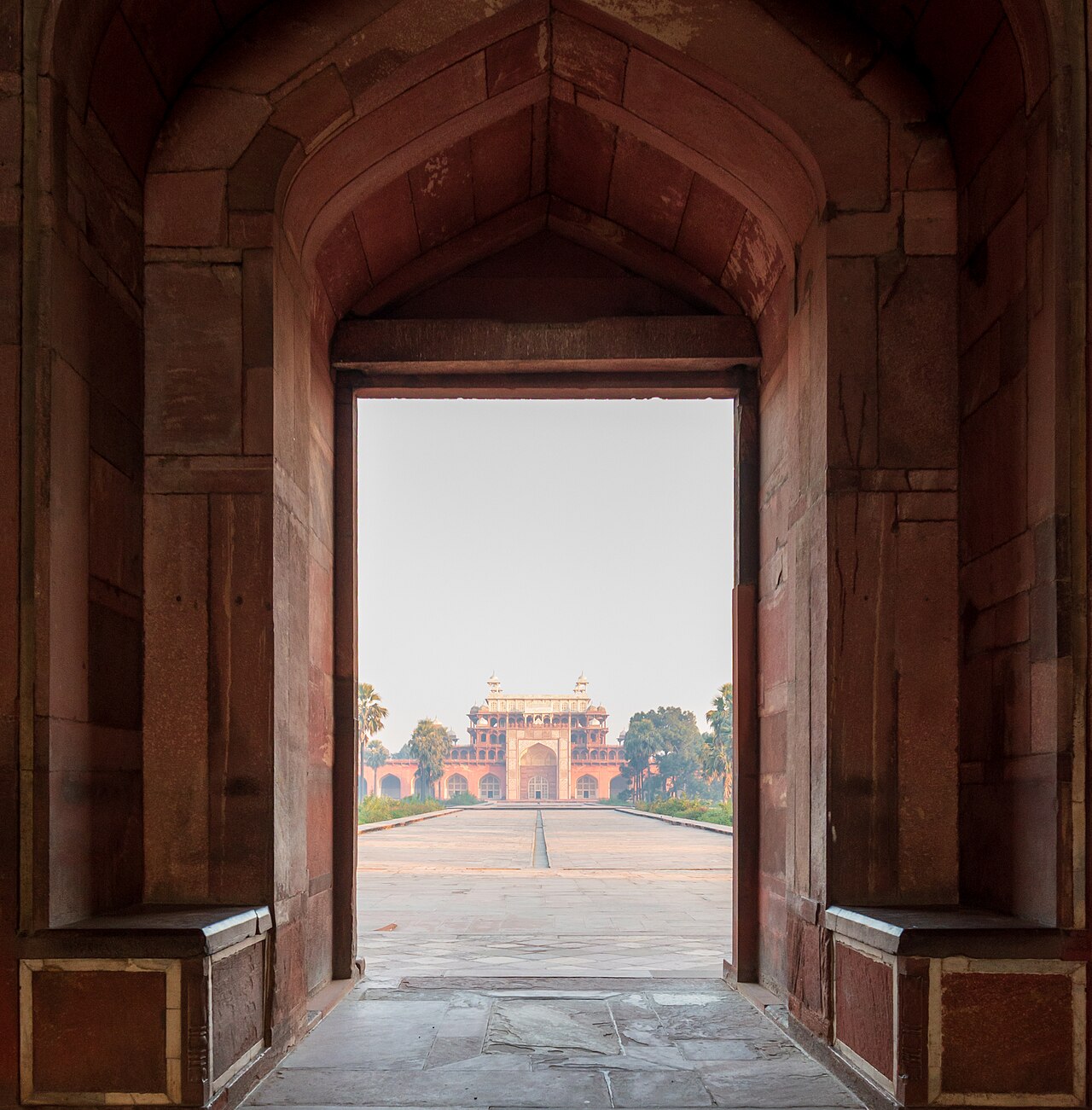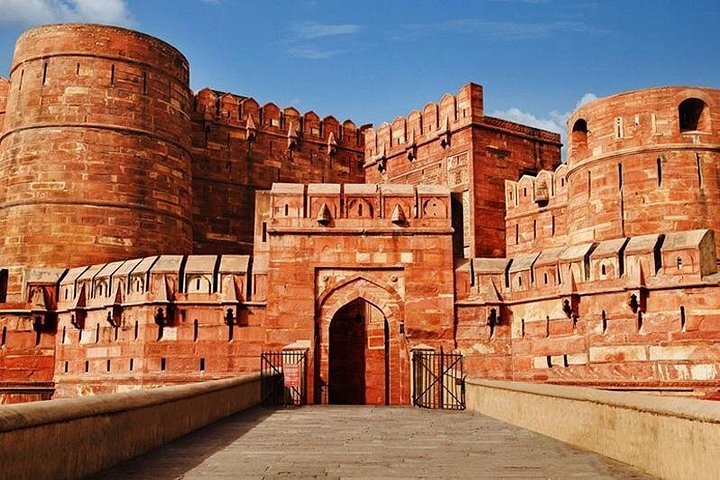
Agra Fort is the great red sandstone stronghold on the west bank of the Yamuna, begun by the emperor Akbar in the 1560s and extended by his grandson Shah Jahan, who added white marble pavilions that glow against the darker walls. Two and a half kilometres of massive ramparts surround a small city of halls, mosques, courtyards and gardens, now a UNESCO World Heritage Site. Tour the Jahangiri Mahal for its carved sandstone, the Diwan-i-Am and Diwan-i-Khas for the courtly ceremony, the Moti Masjid for its quiet marble, and the Musamman Burj, an octagonal tower where tradition holds that Shah Jahan spent his last years gazing at the Taj Mahal in the distance. It is the best companion visit to the Taj, and it explains the dynasty that built both.
Only part of the fort is open to visitors because the army still uses a portion of it, so a short walk reaches most of the highlights. The route usually starts at the Amar Singh Gate, climbs a long ramp, and brings you into the courtyards of the public audience hall, with the private audience hall and the royal apartments beyond. A guide really helps here, because the signs are brief and the buildings overlap several reigns, from Akbar's red sandstone to Shah Jahan's marble and inlay.
Allow two to three hours. The fort is open daily, including Fridays, which makes it the usual substitute when the Taj Mahal is closed. Tickets are sold through the Archaeological Survey of India online system, with a lower price on Fridays, and a skip-the-line entry with a guide handles that for you. Wear sturdy shoes, because the ramps and stone floors are uneven, and bring a hat and water, as shade is limited in the open courtyards.
For the best experience, aim for the morning when the light is gentler and the tour groups have not yet filled the halls. Look for the Anguri Bagh, a formal garden laid out in a geometric pattern, and the Sheesh Mahal, the old mirror palace, which is often closed, so do not count on it. Take your time at the riverside balconies for the long view to the Taj Mahal. Many travellers do the Taj at sunrise, the fort around late morning and Mehtab Bagh at sunset.
What to expect
The experience
A guided walk through the red sandstone gates, public and private audience halls, marble mosque and riverside balconies, with entry arranged in advance.
Best time
Morning, when it is cooler and quieter; the fort is open on Fridays when the Taj Mahal is closed.
How long
Two to three hours for the open sections with a guide.
Tips
Wear sturdy shoes for the ramps, bring water and a hat, and ask your guide to point out where the Taj Mahal can be seen from the river-facing balconies.
Quick picks
- Best for
- History lovers and first-timers who want to understand the Mughal dynasty behind the Taj Mahal.
- Families
- Plenty of space to explore and climb ramps, though shade is limited, so visit early and carry water.
- Couples
- Stand at the riverside balconies for the distant view of the Taj, then continue to a sunset at Mehtab Bagh.
- Pair with
- The Taj Mahal, Itmad-ud-Daulah and a Kinari Bazaar walk in the old city.
- Time needed
- About half a day when combined with a lunch break and the Taj.
Good questions
Is Agra Fort open on Fridays?+
Yes. Unlike the Taj Mahal, the fort is open every day, with a lower ticket price on Fridays, which makes it a good plan for a Taj closure day.
Can I see the whole fort?+
No, part of the fort is used by the army and closed to visitors. The open sections still include the main halls, courtyards, mosque and riverside balconies.
Can I see the Taj Mahal from the fort?+
Yes, from the riverside terraces and the Musamman Burj you can see the Taj Mahal in the distance, although haze can reduce visibility.
Do I need a guide?+
It is not required, but a licensed guide adds a great deal because the signs are short and the buildings come from several different reigns.
How long do I need?+
Plan on two to three hours. If you also want to explore the old city around the fort, add another hour or two.