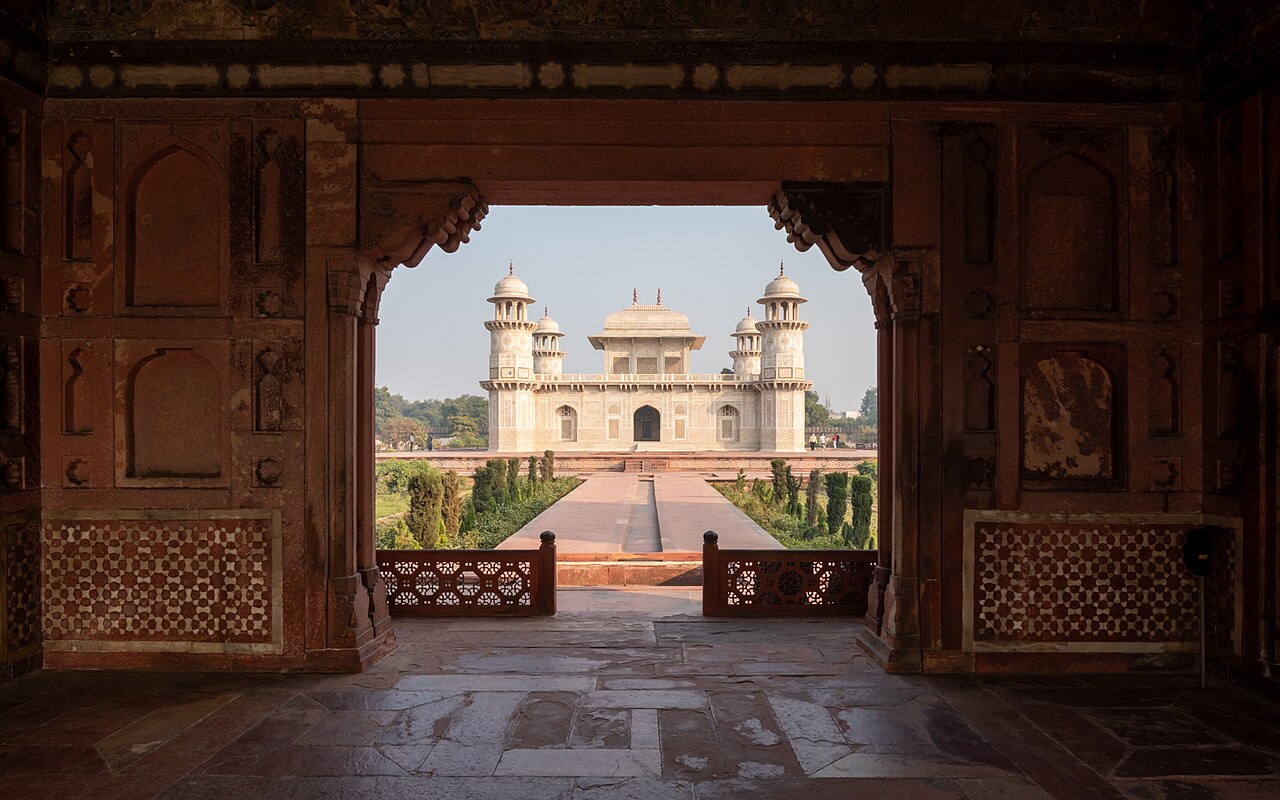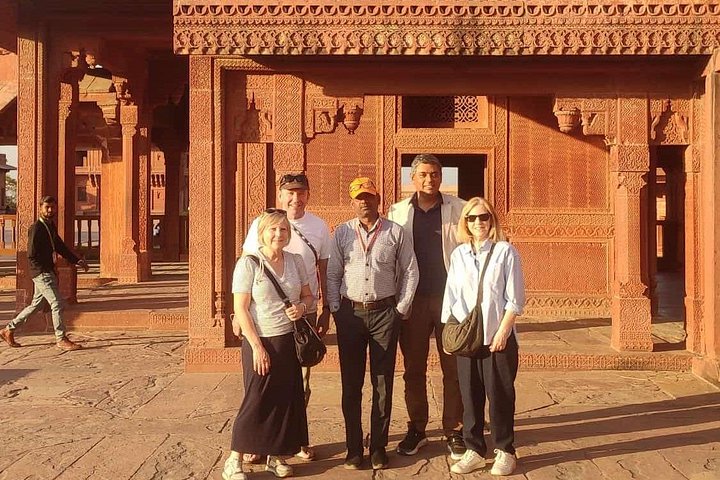
Fatehpur Sikri is the Mughal ghost city built by the emperor Akbar in the 1570s and abandoned only a few years later, probably because of water shortages. About 37 kilometres from Agra, its red sandstone palaces, courtyards and pavilions have survived remarkably well and form a UNESCO World Heritage Site. The royal complex includes the Panch Mahal, the Diwan-i-Khas with its central carved pillar, the Jodha Bai palace and the pachisi courtyard, while the Jama Masjid and the white marble tomb of the Sufi saint Salim Chishti sit beside the huge Buland Darwaza gateway. It is the best day trip from Agra, either as a half-day excursion or on the way to Jaipur, and a guide makes the layout much easier to understand.
The site has two main parts. The royal palace area is usually visited first, with courtyards and halls that show how Akbar's court worked and how he blended Persian, Hindu and Islamic styles. The mosque complex, with the Buland Darwaza and Salim Chishti's tomb, is still an active place of worship, so dress modestly with covered shoulders and knees and expect to remove your shoes. The marble screens around the saint's tomb are among the finest in India, and pilgrims tie threads to them as prayers.
Plan the trip carefully. The drive from Agra takes about an hour, and a private half-day tour with a licensed guide, a car and entry arranged is the simplest way. Tickets are sold through the Archaeological Survey of India online system and the site is open daily, including Fridays, with a lower Friday price. Foreign visitors pay more than Indian citizens. Go early to beat both the heat and the coach parties, and bring water, a hat and small bills for shoe-minding and tips.
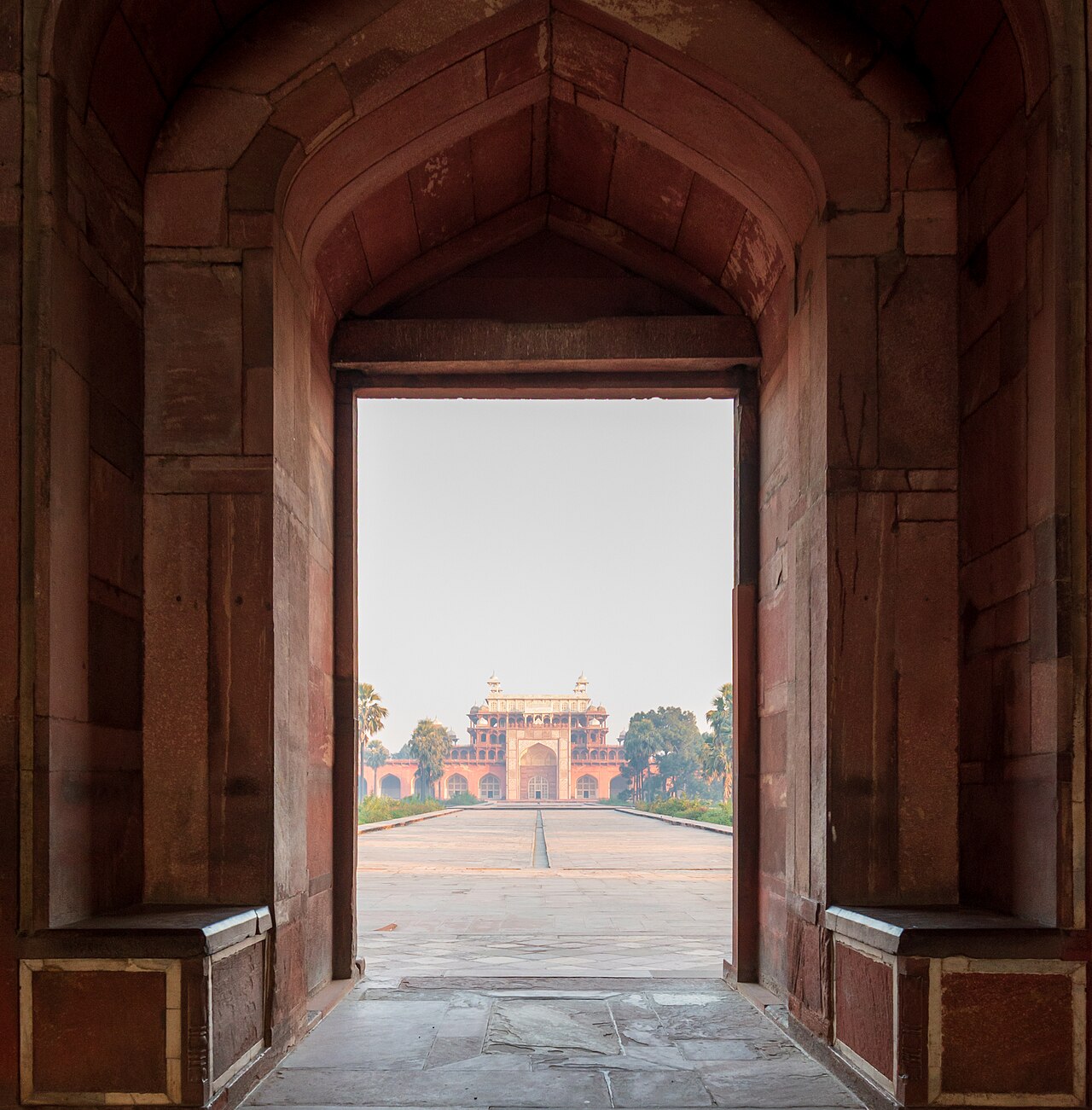
Be aware of touts. Outside the mosque you may be offered unlicensed guides, souvenirs and help with shoes, and a firm but polite no works best. A licensed guide arranged in advance avoids most of this. Fatehpur Sikri combines naturally with a stop at Akbar's Tomb at Sikandra on the way back, and many travellers do both in one half-day. If you are continuing to Jaipur, ask your driver about a stop here as part of the transfer, which is a popular option.
What to expect
The experience
A private half-day trip from Agra with a car, a licensed English-speaking guide and a Fatehpur Sikri admission ticket, covering the royal palaces and the mosque complex.
Best time
Early morning, when it is cooler and quieter; the site is open every day including Fridays.
How long
About four hours including the drive from Agra.
Tips
Dress modestly for the mosque, carry small bills for shoe-minding, ignore unlicensed guides at the gate and bring water and a hat.
Quick picks
- Best for
- History lovers and anyone who wants a second Mughal highlight beyond the Taj Mahal.
- Families
- A lot of walking in the sun, but plenty of open courtyards for children, so start early.
- Couples
- Quiet corners in the palace courtyards and the sunlight on the sandstone make for lovely photographs.
- Pair with
- Akbar's Tomb at Sikandra on the return drive, or Agra Fort in the afternoon.
- Time needed
- Half a day, or a full day if you add more stops.
Good questions
How far is Fatehpur Sikri from Agra?+
It is about 37 kilometres west of Agra, roughly an hour by road depending on traffic.
Why was Fatehpur Sikri abandoned?+
Akbar's court left after only about fourteen years, most likely because of water shortages, and the city has been largely empty ever since.
What should I wear?+
Dress modestly for the mosque, covering shoulders and knees, and wear shoes that are easy to remove. Bring a hat and water for the open courtyards.
Do I need a guide?+
A licensed guide is highly recommended because the layout is confusing and signs are limited. Booking one in advance also avoids touts at the gate.
Can I combine it with other sights?+
Yes, many travellers add Akbar's Tomb at Sikandra on the way back, or stop here on the way to Jaipur.