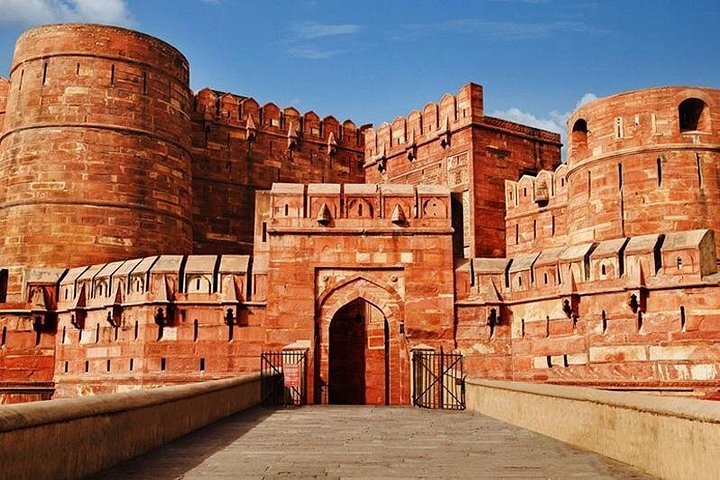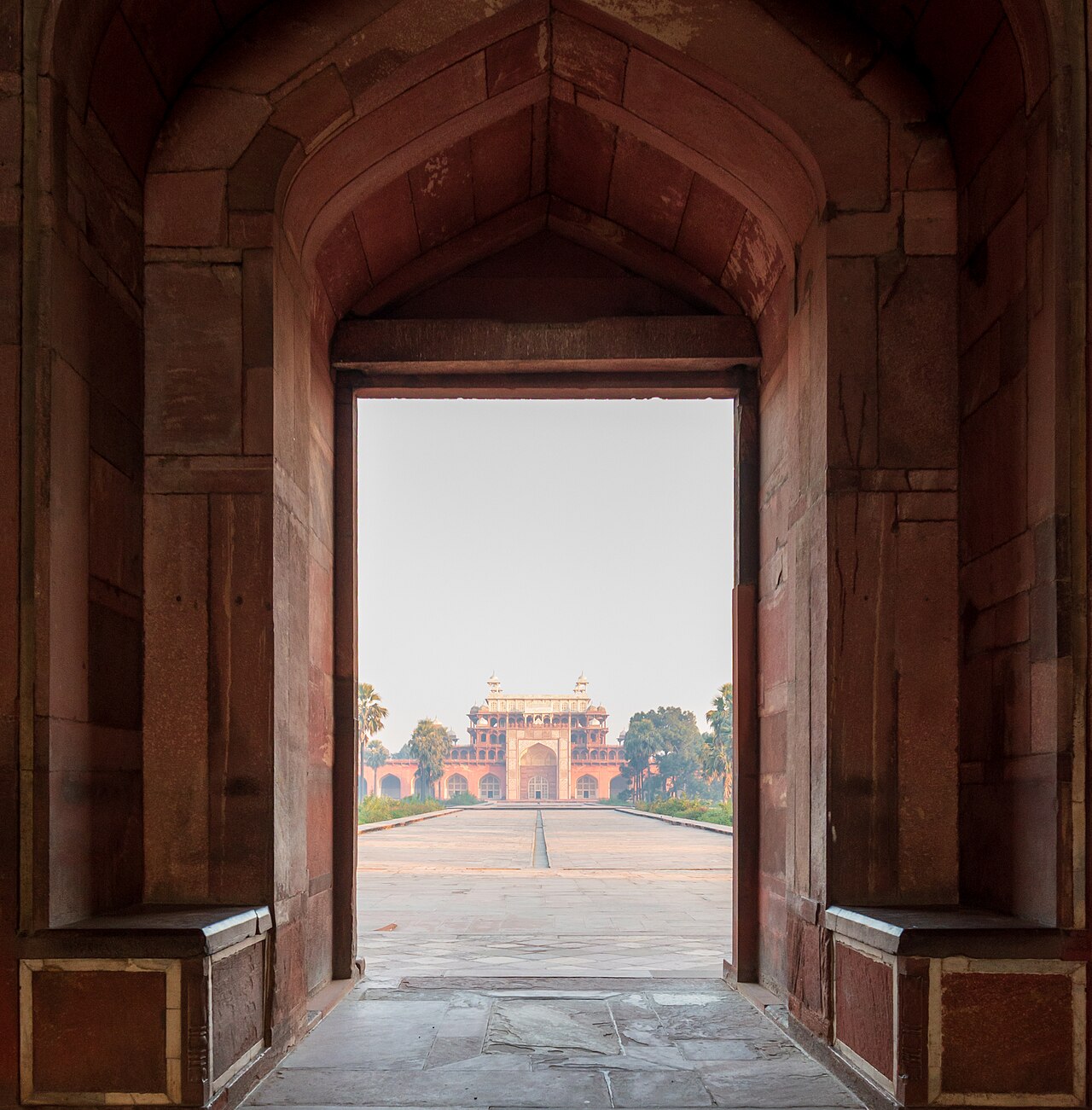
Gwalior Fort rises on a long sandstone rock above the city of Gwalior, in Madhya Pradesh, roughly 120 km south of Agra. For centuries it was one of the most strategic strongholds in northern India, and Mughal chroniclers described it as a pearl among the fortresses of Hind. The walls run for kilometres around the plateau, enclosing palaces, temples, water tanks and a gurdwara, and the most striking building is the Man Mandir Palace, built in the fifteenth century by the Tomar ruler Man Singh with a facade once covered in bright blue and yellow glazed tiles. Gwalior has a quieter, less hurried feel than Agra, and the fort gives a fascinating look at Rajput and Mughal history in one place. It is a long day trip from Agra, but it rewards travellers who have already seen the main sights and want somewhere less crowded.
The fort is usually entered by a long climbing road or ramp, passing carved Jain figures cut into the rock face and several gateways before the plateau opens up. Look for the Man Mandir Palace with its tiled exterior and the courtyards inside, the eleventh-century Sas Bahu temples, the ornate Teli ka Mandir with its tall carved tower, and the Gurudwara Data Bandi Chhor.
On a clear day the views over the city and the plains from the ramparts are excellent. A local guide is a real advantage, because the site is large, the signage is limited and the layers of history, from Hindu and Jain rulers to Mughal governors and the Scindia family, can be confusing without explanation.
Many day trips also include other Gwalior sights, which may include the Jai Vilas Palace, the Scindia family palace and museum, and the tomb of the musician Tansen, depending on the operator and the time available. Ask what your trip covers in advance, since opening days and hours differ between sites and some museums close on a weekly day off.
The drive from Agra takes around three hours each way on good highways, so the day is a long one. Leave early, carry water and snacks, and wear comfortable shoes for the climb and the uneven stone paths.
Think about whether this suits your trip. Gwalior is best for history lovers and repeat visitors to India, and it is less of a priority than Fatehpur Sikri or Agra Fort for a first visit. The hot months from April to June can make the fort exposed and tiring, while the cooler weather from October to March is much more comfortable.
Some visitors prefer to travel on to Orchha or Khajuraho and treat Gwalior as a stop on the way, which is worth discussing with your operator. If you have only a few days in Agra, spend them on the Taj and the Mughal sights first.
Plan what you want to see before you leave, because there is more in Gwalior than a single day allows. A fort-focused visit with a stop at the palace museum is realistic, while adding the tomb of the musician Tansen and the old city is possible only with a very early start. On the road, the highway south of Agra is generally fast, so the journey time is mostly predictable, but it is wise to leave a margin for traffic and for the return in the dark.
Carry a charged phone, a water bottle and a snack, and keep a hat and sunscreen in the car. If you are travelling on to central India, ask your operator whether the trip can end in Gwalior, which saves the long drive back.
What to expect
The experience
A long guided day trip from Agra by road to Gwalior, with a climb to the fort, its palaces and temples, and views over the city.
Best time
October to March for comfortable weather; start early in any season to avoid the heat.
How long
A long day of ten to twelve hours including about three hours of driving each way.
Tips
Leave early, wear sturdy shoes, carry water, and ask your operator which other Gwalior sights are included.
Quick picks
- Best for
- History lovers and repeat visitors who want a fort without the tour-group crowds.
- Families
- Best with older children, as the day is long and involves climbing.
- Couples
- Wide views over the plains from the ramparts on a clear day.
- Pair with
- Fatehpur Sikri and Agra Fort on separate days to see the Mughal side of the story.
- Time needed
- A full day with an early start.
Good questions
How far is Gwalior from Agra?+
Gwalior is roughly 120 km south of Agra, about three hours by road each way, so the trip is a long day.
What is the main sight?+
Gwalior Fort, with its Man Mandir Palace, ancient temples, Jain rock carvings and city views, is the headline attraction.
Is it worth it on a first trip to India?+
It is rewarding but less essential than Agra's own monuments. It suits travellers with extra time or a strong interest in forts and history.
When is the best time to go?+
The cooler months from October to March are the most comfortable. The fort is exposed and can be very hot from April to June.
Are other sights included?+
Some trips add the Jai Vilas Palace or other Gwalior sites. Ask your operator, as the programme and opening days vary.