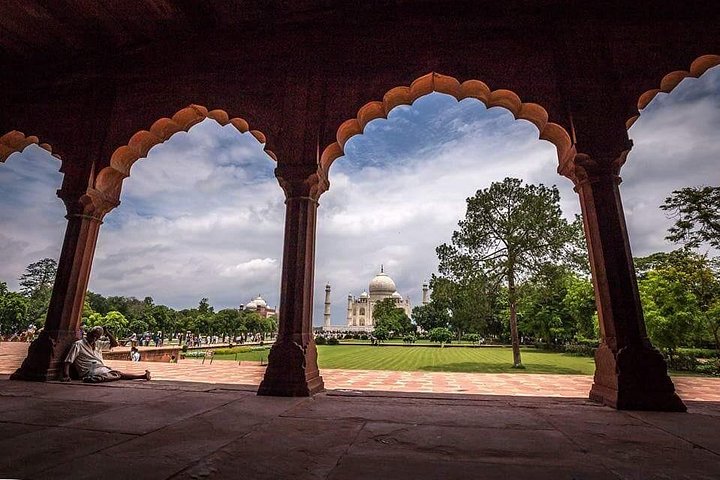
The Radhasoami Samadhi, often called the Soamibagh temple, is a white marble memorial in the Dayalbagh area on the northern side of Agra, built over the resting place of Soamiji Maharaj, the founder of the Radhasoami faith. Work began in 1904 and continues today, which makes it one of the longest-running building projects in India. The structure is carved from white marble and decorated with fine inlay in coloured stone, in a craft tradition closely related to the pietra dura of the Taj Mahal, and its design draws on Mughal, Hindu and other architectural styles. Visitors are welcome, there is no entry charge, and the grounds are peaceful and well kept. It is a good stop for anyone interested in marble craftsmanship and in the way Agra's old building traditions are still alive.
The shrine is set in a garden enclosure, and the visit is mostly a quiet walk around the marble platform and the main structure, admiring the carved screens, the inlaid floral panels and the patient work of the artisans. Craftsmen have been working on the decoration for generations, so you may see inlay or carving in progress on some days. The atmosphere is devotional rather than touristy, and many of the people you see are followers of the faith who come to pay their respects. Dress modestly, remove your shoes and speak softly.
Practical details are simple. The shrine is open to visitors in the daytime, but the hours can vary and some areas may be closed at certain times or on special occasions, so check with your hotel or guide before you go. Photography rules may differ in different parts of the site, so ask before using a camera. The grounds are quiet and shaded, so it is a pleasant place to rest in the heat, and the walk around takes about forty-five minutes to an hour.
The shrine fits best into a day that already includes Akbar's Tomb at Sikandra, since both lie on the northern side of Agra, and some local tours combine them with the Guru Ka Taal gurdwara. It also pairs well with a visit to a marble inlay workshop in the city, where you can see how the same technique is learned and passed on. Go in the morning for a cooler walk, and carry a bottle of water.
The shrine will not suit travellers looking for a historic Mughal monument, but it offers a rare chance to see a major work of stone craft in progress, and it adds a modern, living chapter to a city that is often presented only through its past. Entry is free, though you may wish to leave a small donation if the site accepts them.
Respect the setting and the community that maintains it. The site is cared for by followers of the faith, and visitors who behave quietly and dress modestly are usually welcomed. The nearby Dayalbagh settlement is also known for its educational institutions and for promoting a simple, self-reliant way of life, which can make the area feel noticeably calmer than the central city.
If you are interested in craft, ask whether any inlay or carving work can be seen in progress, and consider combining the visit with a marble workshop in the city to compare the techniques. Since hours and access can change, ask your hotel to confirm before you travel, particularly on festival days.
What to expect
The experience
A quiet, self-guided walk around a white marble shrine in a garden setting, with inlay and carving work often visible.
Best time
Morning, when it is cooler and quieter; check hours before you go.
How long
Forty-five minutes to an hour.
Tips
Dress modestly, remove your shoes, ask before photographing and combine it with Akbar's Tomb on the same outing.
Quick picks
- Best for
- Craft and architecture lovers who want something different from the Mughal monuments.
- Families
- Easy and peaceful, with no entry fee, but children should be quiet and respectful.
- Couples
- A calm, shaded stop away from the crowds.
- Pair with
- Akbar's Tomb at Sikandra and a marble inlay workshop in the city.
- Time needed
- About an hour plus travel.
Good questions
What is the Radhasoami Samadhi?+
It is a white marble memorial in the Dayalbagh area of Agra, built over the resting place of Soamiji Maharaj, founder of the Radhasoami faith.
Is it still being built?+
Yes, work began in 1904 and the marble carving and inlay decoration continue today.
Is there an entry fee?+
Entry is free, though you may wish to leave a small donation if the site accepts them.
Can I take photographs?+
Rules can vary in different parts of the site, so ask before using a camera.
What should I wear?+
Dress modestly with shoulders and knees covered, and be ready to remove your shoes.