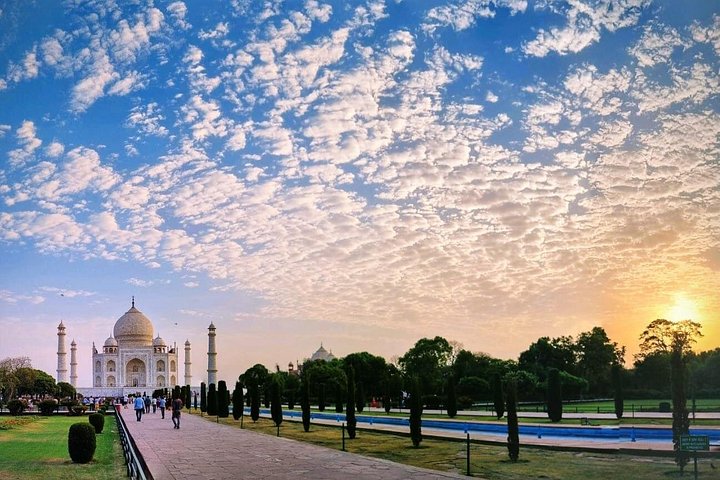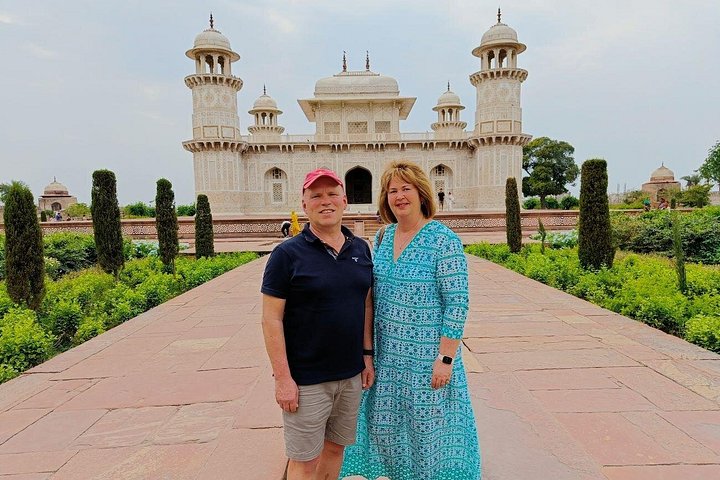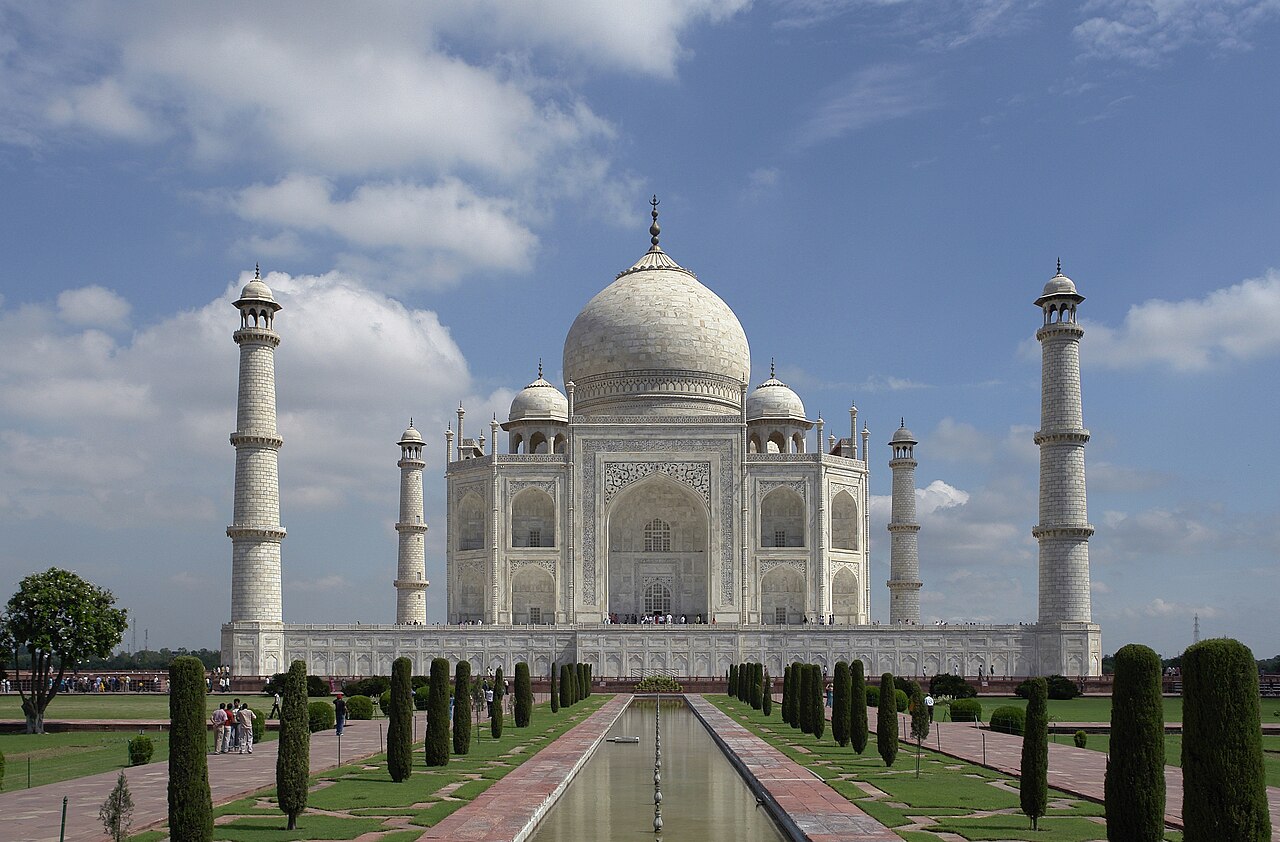
The Taj Mahal is one of the most photographed buildings on earth, which makes a good picture surprisingly hard to take. A photography tour pairs you with a guide who knows the complex well: where the light falls at different hours, which viewpoints work best, how to frame the reflection, and how to work around the crowds. Depending on the operator, the guide may also take pictures of you, help with composition or offer simple tips on settings and angles. Sessions usually start early, when the light is soft and the queues are short, and they leave time to explore beyond the central platform. Whether you are using a professional camera or a phone, you finish with better images and a clearer understanding of the monument's symmetry, detail and mood.
What the guide helps with
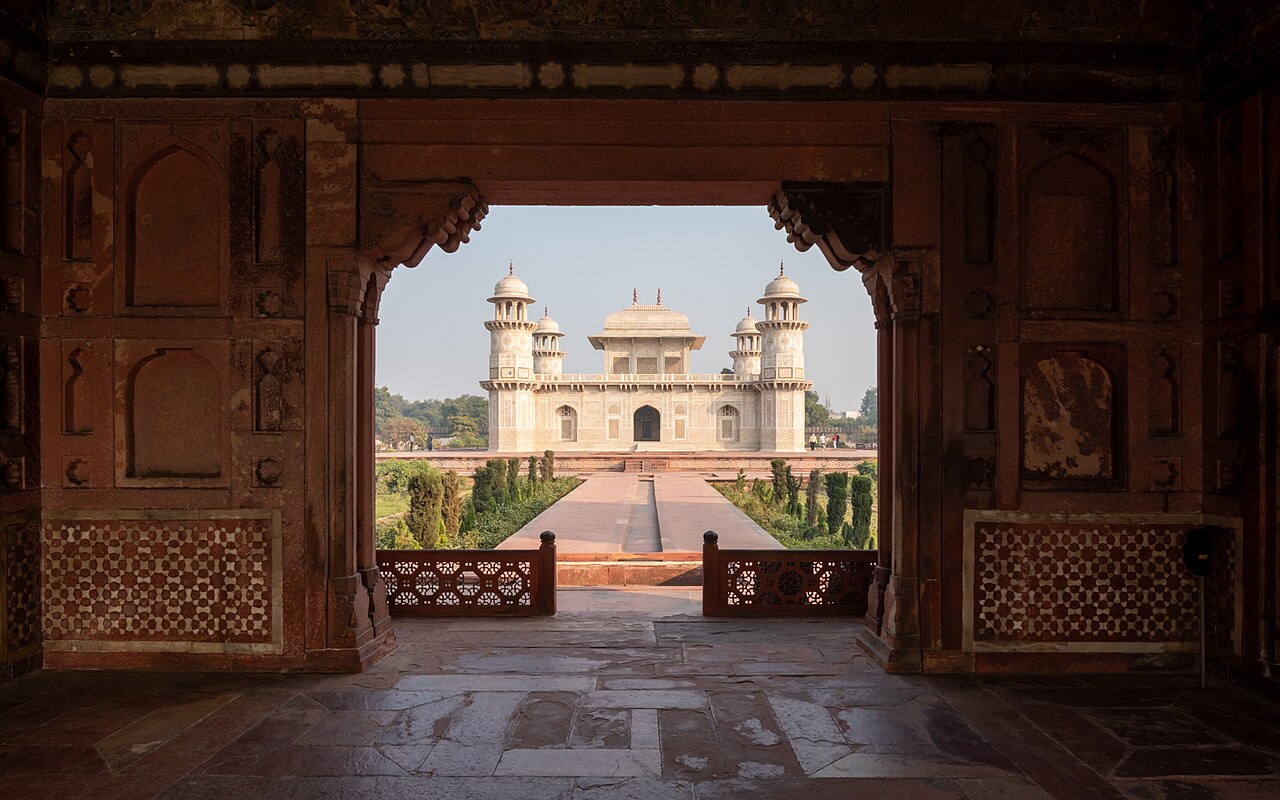
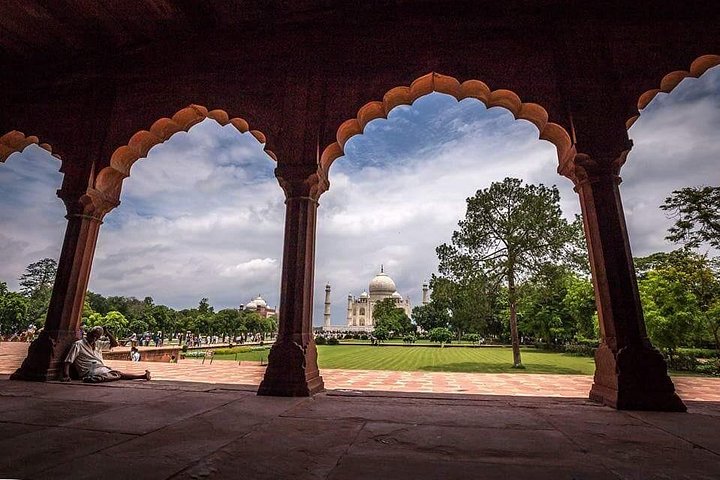
The central axis is the classic shot, but a good guide also points out quieter frames, such as the archways, the screens of the mosque, the inlay details on the walls, the long gardens and the view across the Yamuna. They know when the crowds peak at the main bench and can suggest alternatives. If the operator provides a photographer for portraits, ask for examples of their work and how images are delivered.
Rules to know
Tripods, large bags and some equipment are restricted at the Taj Mahal, and photography inside the main mausoleum chamber is not allowed. Drones are prohibited. A guide will explain what you can bring, but check the current rules before you travel, and keep your kit light. Entry tickets are normally bought separately unless the tour says they are included, and the Taj is closed on Fridays.
Light and season
Sunrise gives soft, pale tones and a calmer atmosphere, while late afternoon brings warmer colour. Winter mornings are often foggy, which can create moody images but may hide the building for a while, and summer haze softens contrast. The monsoon brings dramatic skies and fewer visitors but unreliable weather. Be flexible and patient, and allow time for the light to change.
Getting the best results
Arrive early, wear comfortable shoes, carry a lens cloth and a spare battery, and slow down. Take wide shots, details and people, and look for reflections, symmetry and unexpected moments such as a family posing on the famous bench. Combine the session with a sunset at Mehtab Bagh, which offers a completely different angle across the river, and you will have a rounded set of pictures of the Taj from both sides.
A few practical extras
The walk from the gate to the central platform takes longer than most people expect, and the best light is brief, so aim to be at the gate before it opens if you want an uncluttered frame. Keep your phone or camera strap secure, as the crowds can jostle you at the famous bench, and carry a microfibre cloth for the dust. If you plan to edit your photographs, shoot in the highest quality available and capture a few frames of the details, such as the calligraphy panels and the inlay, which tell the story of the monument as well as the wide shot.
What to expect
The experience
A guided photography session at the Taj Mahal with advice on viewpoints, light and composition, often with a local photographer or an experienced guide.
Best time
Sunrise or early morning, when the light is soft and the crowds are thinner.
How long
Two to three hours.
Tips
Travel light, check the equipment rules, ask whether the entry ticket is included and be patient with fog and haze.
Quick picks
- Best for
- Photographers and anyone who wants better pictures of the Taj.
- Families
- Works well for family portraits, though young children may tire of posing.
- Couples
- A good way to come home with pictures of the two of you at the Taj.
- Pair with
- Sunset at Mehtab Bagh for a view from across the river.
- Time needed
- A morning, about three hours.
Good questions
Can I bring a tripod?+
Tripods and some other equipment are restricted at the Taj Mahal, so check the rules before you travel and travel light.
Is the entry ticket included?+
Check the details when you book, as entry tickets are often bought separately.
Can I photograph inside the mausoleum?+
No. Photography is not allowed inside the main mausoleum chamber.
Are drones allowed?+
No. Drones are prohibited at the Taj Mahal.
What is the best time for photographs?+
Sunrise gives soft light and fewer people, while late afternoon is warmer. Fog and haze can affect both.