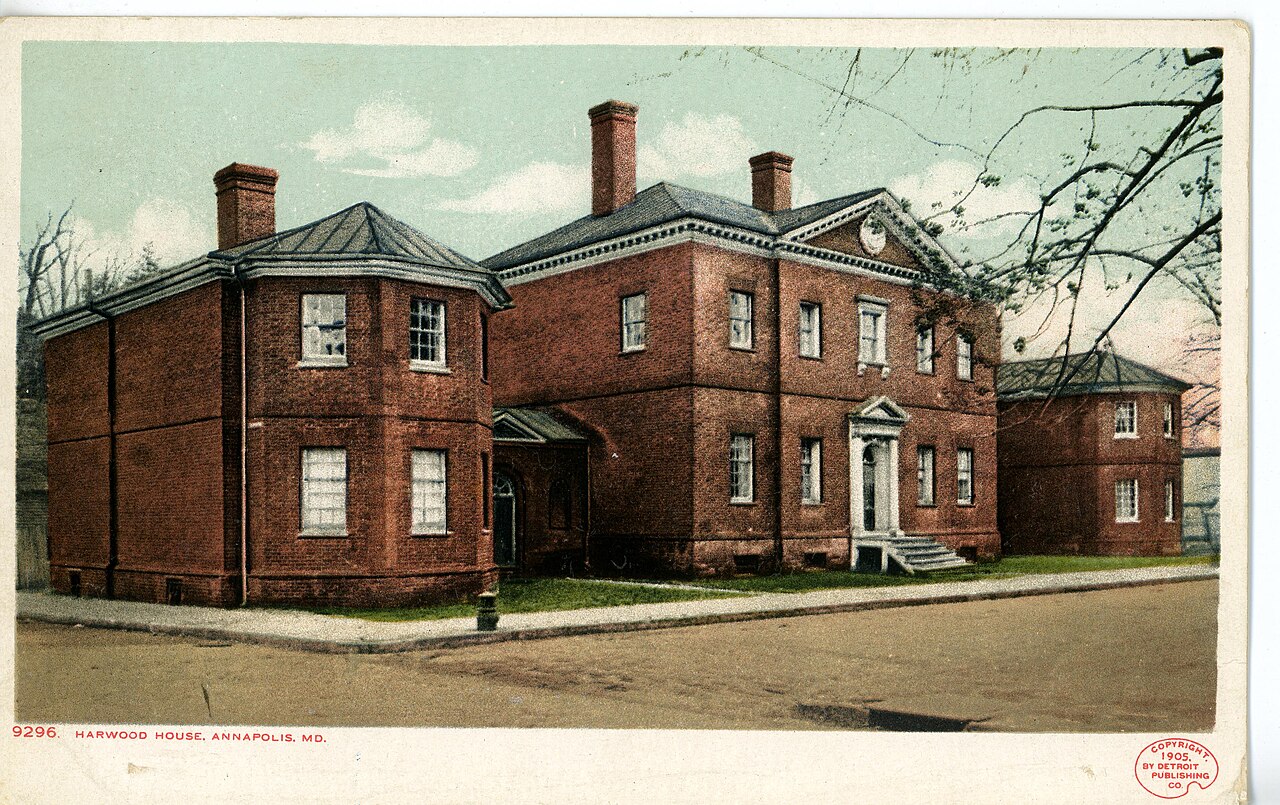
The Hammond-Harwood House on Maryland Avenue is often described as the most beautiful colonial house in Annapolis, and many architectural historians count it among the finest Georgian buildings in the country. It was designed by William Buckland, a London-trained joiner and architect who came to Maryland as an indentured servant and became a leading designer in the colony. Construction began in 1774 for Matthias Hammond, a young planter, and the house was intended as a wedding present. The symmetrical brick facade, five-part plan and the richly carved front doorway show how a skilled craftsman could turn a dwelling into a work of art. Inside, the rooms retain much of their original plasterwork, woodwork and proportions. A collection of period furniture, silver, paintings and decorative objects gives a sense of how an upper-class household in colonial Maryland lived. The garden at the rear is small and carefully laid out, and the whole property is run as a museum open to guided tours. It also holds one of the best collections of Annapolis-made furniture and portraits, many by Charles Willson Peale.
Tours are guided and take around forty-five minutes to an hour. Guides explain the architecture, discuss Buckland's training and cover the lives of the families who lived here, including the enslaved people whose labor made the household function. Seasonal programs, garden events and special exhibitions bring variety through the year, and the house is a popular venue for lectures and concerts. Check the current schedule since hours vary by season.
The house is a short walk from the State House, Church Circle, the William Paca House and the Naval Academy gate, so it fits easily into a morning of historic sightseeing. Visit both houses to compare how two wealthy patrons expressed their taste. If you are interested in architecture, the details are the reward: the pediments, fanlights and the proportions of the windows reflect pattern books and Palladian principles adapted to local brick and craftsmanship.
Practical notes
The interior has steps and narrow staircases, so mobility can be limited. Photography rules vary by room, so ask your guide. Quiet weekday mornings give the best chance of a small group. Families with young children may find the tour more suited to older kids, while the nearby harbor and ice cream shops offer a good reward afterward. Combined tickets with other Historic Annapolis sites are sometimes available, so ask when you buy.
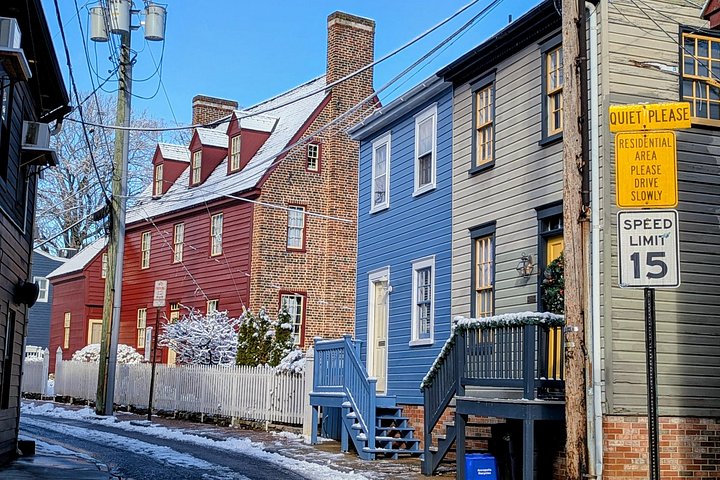
If you only visit one historic house, choose the one that matches your interests: the Hammond-Harwood for architecture and decorative arts, the Paca House for the garden and the signer's story. Many visitors find the contrast between the two satisfying, and both are small enough to see without feeling rushed. Allow time for the surrounding streets too, with their brick sidewalks, shuttered windows and quiet corners, which are some of the most photographed in the city.
Look for the stories behind the objects too. The collection includes Annapolis-made cabinetry, tea services, portraits and everyday tools, each chosen to illustrate how wealth, trade and craftsmanship connected the town to the wider Atlantic world. Matthias Hammond never lived in the house for long, since the political upheavals of the Revolution disrupted his plans, and later owners included the Harwood family, who gave the house its double name.
Preservationists later rescued it, and it has been open as a museum for decades, offering a rare chance to see an unaltered colonial interior rather than a re-creation.
What to expect
The experience
A guided tour of a Georgian mansion with original woodwork, period furniture and a notable carved doorway.
Best time
Weekday mornings for small groups; check seasonal hours.
How long
About an hour.
Tips
Check opening times, expect stairs and ask about photography rules.
Quick picks
- Best for
- Architecture and decorative-arts fans.
- Families
- Best for older children; the interior is delicate.
- Couples
- A quiet, elegant stop for two.
- Pair with
- The Paca House, the State House and Church Circle.
- Time needed
- One hour.
Good questions
Who designed the house?+
William Buckland, a leading colonial architect and joiner, designed it for Matthias Hammond in the 1770s.
How long is the tour?+
Usually 45 minutes to an hour.
What is special about it?+
The carved doorway, original proportions and a collection of colonial furniture and portraits.
Is it accessible?+
Access is limited by steps and narrow stairs, so contact the museum before visiting.
Can I see it with the Paca House?+
Yes. The two houses are a short walk apart and are often visited together.