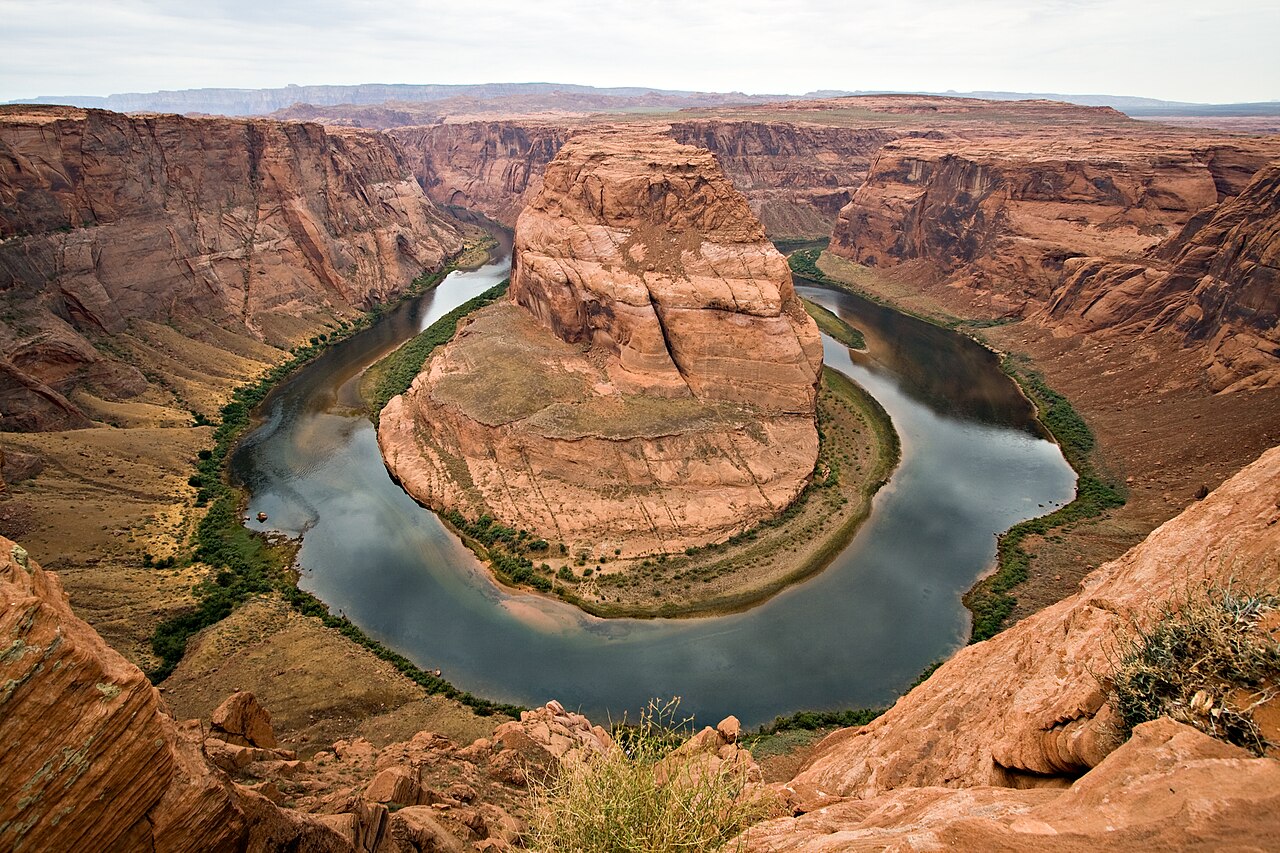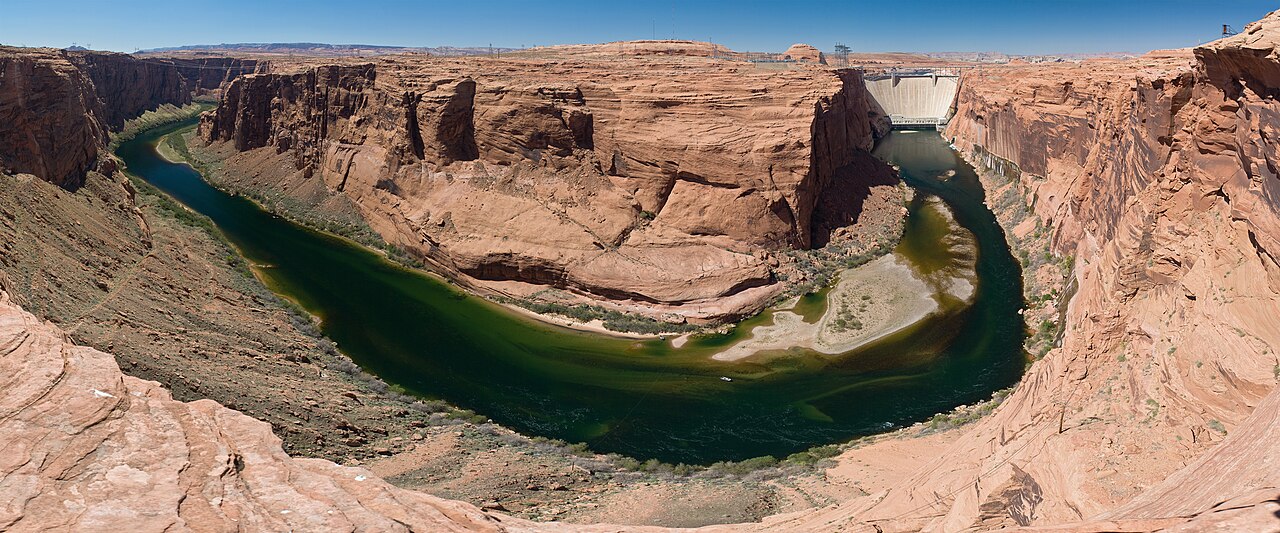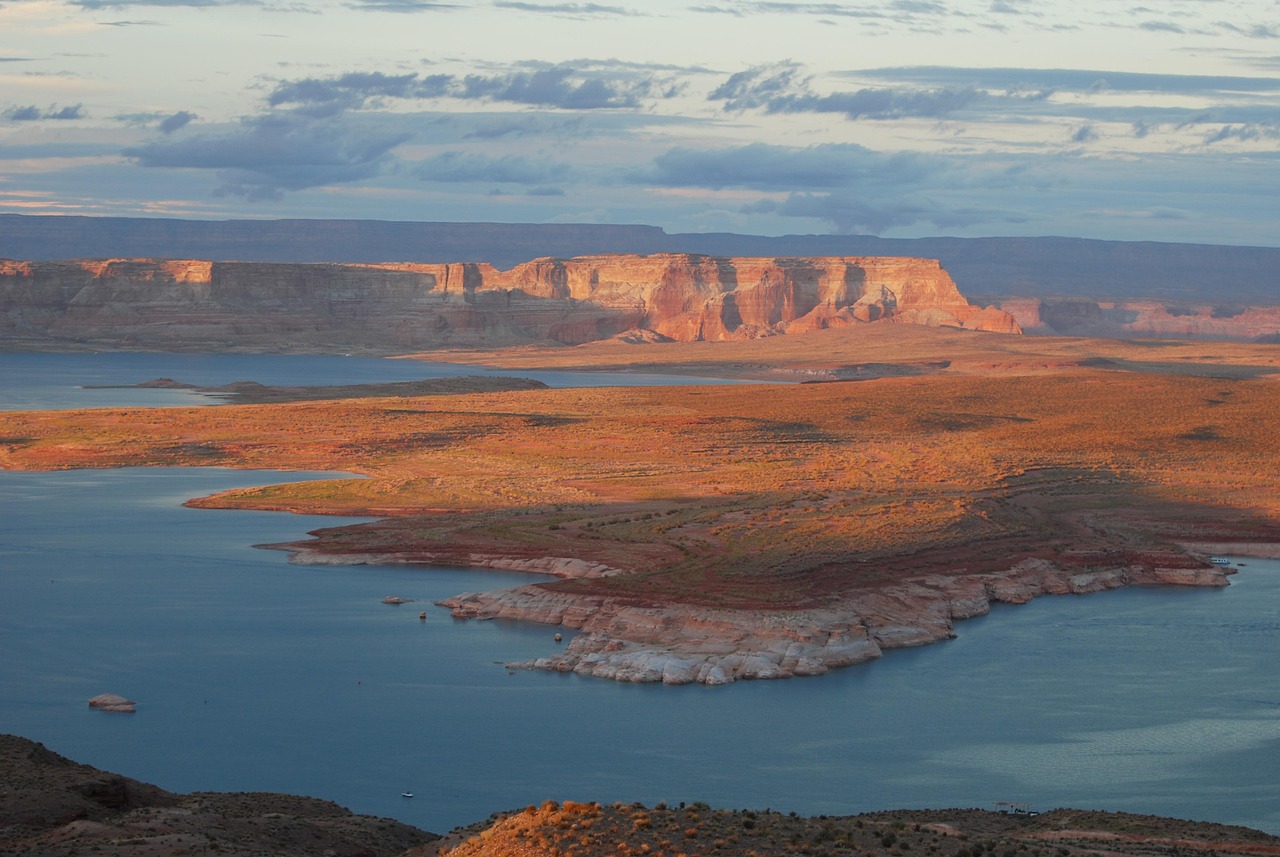
Hanging Garden Trail is the walk to take when you have an hour, small kids, or both. The trailhead sits just east of the Carl Hayden Visitor Center and the Glen Canyon Dam bridge on US 89, a short drive from downtown Page, and the route is about a mile round trip and rated easy to moderate: a sandy path and open slickrock with cairns leading around a sandstone knob to an overhang on its far side. There, water that has slowly percolated down through the porous Navajo sandstone emerges along a rock layer and seeps out of the cliff, sustaining a vertical garden of maidenhair fern, mosses and wildflowers in the middle of the desert — the classic Colorado Plateau ecosystem known as a hanging garden. It is free, rarely crowded, and the walk out delivers views over the dam, the Glen Canyon bridge and the red cliffs around Lake Powell. The garden is fragile: stay on the rock and do not touch the plants or the dripping wall. Combine it with the dam visitor center next door for an efficient Page morning, or with Wahweap Overlook for a sunset double.
Hanging gardens are one of Glen Canyon's quiet signatures. Navajo sandstone acts like a sponge: winter rain and snowmelt soak in at the top and migrate downward until they hit the less permeable Kayenta Formation beneath, then travel sideways and seep out at the cliff face. Where that happens in a shaded alcove, plants take hold in what amounts to a perpetually moist vertical meadow — maidenhair fern, columbine, monkeyflower, sedges and even orchids that would never survive on the sun-blasted slickrock a few feet away.
The National Park Service counts about 35 Colorado Plateau endemic plant species tied to hanging gardens and related springs, which makes these small alcoves biodiversity hot spots for insects, birds and amphibians as well.
Before Lake Powell filled, Glen Canyon held many of these gardens; a large number now lie underwater, which makes the accessible ones near Page more meaningful. The survivors face quieter threats too: trampling, invasive plants such as tamarisk, and a drying climate that could shrink the winter moisture feeding the seeps. Boat visitors to Rainbow Bridge can see another hanging garden along that trail, a good comparison if a lake tour is on your list.
The walk itself is gentle but exposed. The first stretch crosses sand and slickrock with good views toward the dam's crest and the steel arch of the Glen Canyon Dam Bridge, completed in 1959 to haul materials for the dam and, at about 700 feet above the river, the highest arch bridge in the world at the time; cairns mark the way around the rock outcrop to the garden alcove.
The shade under the overhang feels several degrees cooler, and the soft drip of water is the only sound. In spring the flowers are at their best; in summer the shade is welcome but the approach is hot, so go early. Watch for lizards and, in the evening, swallows hunting around the cliff.
Practicals
From Page, drive toward the dam on US 89 and turn off about a quarter mile before the Carl Hayden Visitor Center; trailhead parking sits a short way off the highway. Allow about an hour. Wear shoes with grip for the slickrock and bring water. Respect the garden — no touching, no climbing on the wet wall. Pair it with the Glen Canyon Dam visitor center or the sunset at Wahweap Overlook just up the road.
What to expect
The experience
A free, roughly one-mile round-trip walk over sand and slickrock near Glen Canyon Dam to a shaded alcove where seep water supports a vertical garden of ferns and wildflowers.
Best time
Spring for flowers; early morning or evening in summer to avoid the heat on the exposed approach.
How long
About an hour including the short drive from Page.
Tips
Follow the cairns across the slickrock. Do not touch the plants or the wet rock — the garden is fragile. Shoes with grip and a bottle of water are enough.
Quick picks
- Best for
- A short, easy nature walk that shows a hidden side of Glen Canyon.
- Families
- Short, flat-ish and with a cool, shady payoff — ideal for young children.
- Couples
- A quiet evening walk followed by sunset at Wahweap Overlook.
- Pair with
- The Glen Canyon Dam visitor center next door, or Wahweap Overlook up the road.
- Time needed
- About an hour.
Good questions
How long is the Hanging Garden Trail?+
About a mile round trip, rated easy to moderate, mostly over sand and open slickrock with cairns marking the route.
What is a hanging garden?+
A plant community that grows on a cliff where water seeps out of the porous Navajo sandstone, after it meets the tighter Kayenta Formation below. Ferns, mosses and wildflowers thrive on the damp wall in an otherwise dry desert, including species found only on the Colorado Plateau.
Is there a fee?+
No. The trailhead is just off US 89 near the Carl Hayden Visitor Center, and there is no charge to park or hike.
Is it good for young kids?+
Yes — it is one of the easiest walks near Page. Keep them off the wet garden wall and watch footing on the slickrock.
When is the garden at its best?+
Spring, when wildflowers bloom and the seep is most active. It is pleasant year-round, but summer middays are hot on the approach.