Antwerp eats and drinks well without making a fuss about it. The city has a long port history, a large and varied population and a strong café culture, so you can follow a traditional Belgian menu one day and eat something quite different the next. This guide sticks to the classics and the experiences you can book, and leaves restaurant picking to your own taste and the reviews of the day.
The Bolleke
Antwerp’s own beer is De Koninck, and its local nickname is the Bolleke, a name that also describes the rounded glass it is served in. Ordering a Bolleke in a café is the most local drink you can have. The De Koninck city brewery on the Mechelsesteenweg runs a self-guided, audiovisual tour with two tastings, and its bar is free to enter afterwards. It is open Tuesday to Sunday and closed on Mondays. Belgian beers vary widely in strength, so read the label before the second round.
A beer day in Mechelen
If you want a guided brewery visit, the Het Anker Brewery and Distillery in Mechelen is the better fit. It is home to Gouden Carolus, sits inside the Great Beguinage and finishes with two tastings. Treat it as a half-day outing by train, and book ahead for the English-language tours. If you are driving, leave the beer for the train home, and pair the visit with a walk through the beguinage and the old town of Mechelen before or after the tour.
Antwerpse handjes
The city’s most famous sweet souvenir is the Antwerpse hand, a small biscuit or chocolate shaped like a hand, linked to the legend of the soldier Brabo who threw a giant’s hand into the Scheldt. You will find them in bakeries and confectioners across the old town, and they make an easy gift. The Brabo fountain on the Grote Markt shows the same story in bronze, so it is worth a look before you buy.
Chocolate
Belgium is chocolate country, and Antwerp is a good place to learn how it is made. Chocolate Nation, next to the station, is a large interactive museum that follows cacao from bean to bar, ends with tastings and offers workshops that sell out, so reserve a time slot. For a simpler treat, buy a small box from one of the local chocolatiers around the centre and eat it in the Stadspark or by the river.
Fries, waffles and street snacks
Belgian frites are twice-fried and are traditionally served in a paper cone with a choice of sauces. A friture stand is a good cheap lunch between museums. Waffles come in more than one style, and the light, airy Brussels type and the denser, caramelised Liège type are both widely sold. Treat them as a snack, not a meal.
Eat with a guide
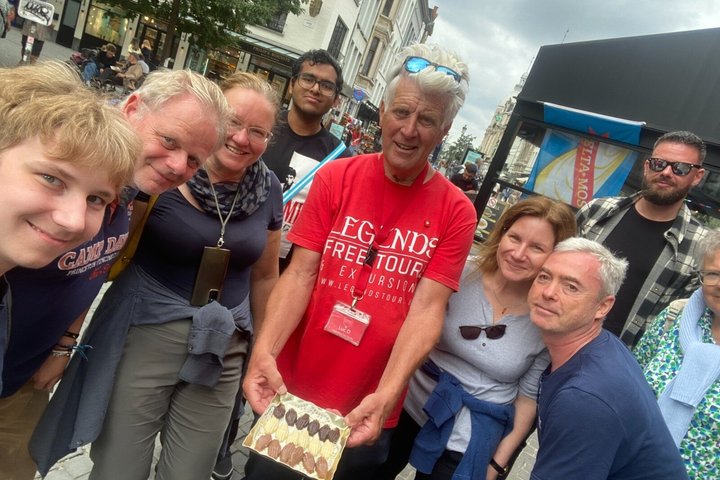
A Taste of Antwerp Food Tour is a good way to sample several local specialities in one outing and to get the stories behind them from a local guide. It suits first-time visitors, solo travellers and anyone who likes to be told what to order next. Come hungry and book a day when you are not planning a big dinner.
Where to eat by area
The old town around the Grote Markt and the Groenplaats has many cafés and restaurants that cater to visitors, and they are convenient but not always the best value. The Eilandje around the MAS has modern restaurants and bars along the docks, and the Zuid district around the KMSKA has a more local feel. The streets around the Meir and the Botanical Garden suit a quieter dinner, and Zurenborg has relaxed cafés on its squares, ideal after a walk past the Art Nouveau houses.
Practical tips
Belgium uses the euro and cards are accepted almost everywhere, though a few places still prefer cash for small purchases. Service is included in restaurant bills, so rounding up is a courtesy rather than a requirement. Kitchens often close between lunch and dinner, so check the hours if you are hungry mid-afternoon, and book ahead for weekend dinners. Tap water is safe to drink, and you can ask for it in a carafe. For a romantic dinner, stay in a hotel such as Hotel Julien near the cathedral, then walk the lit-up old town afterwards.