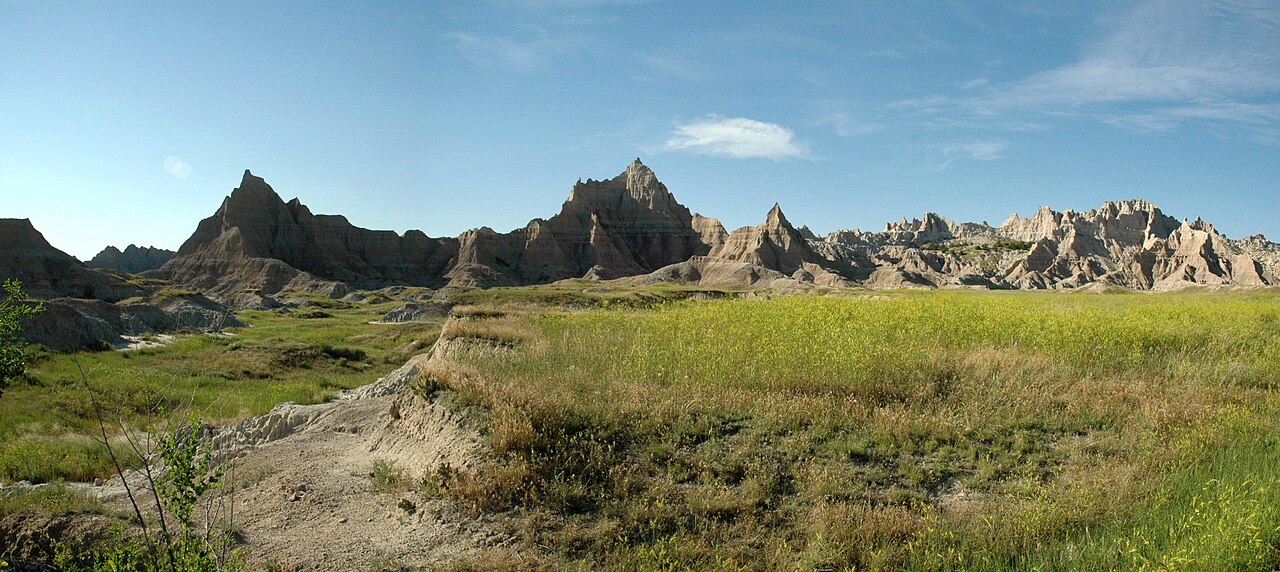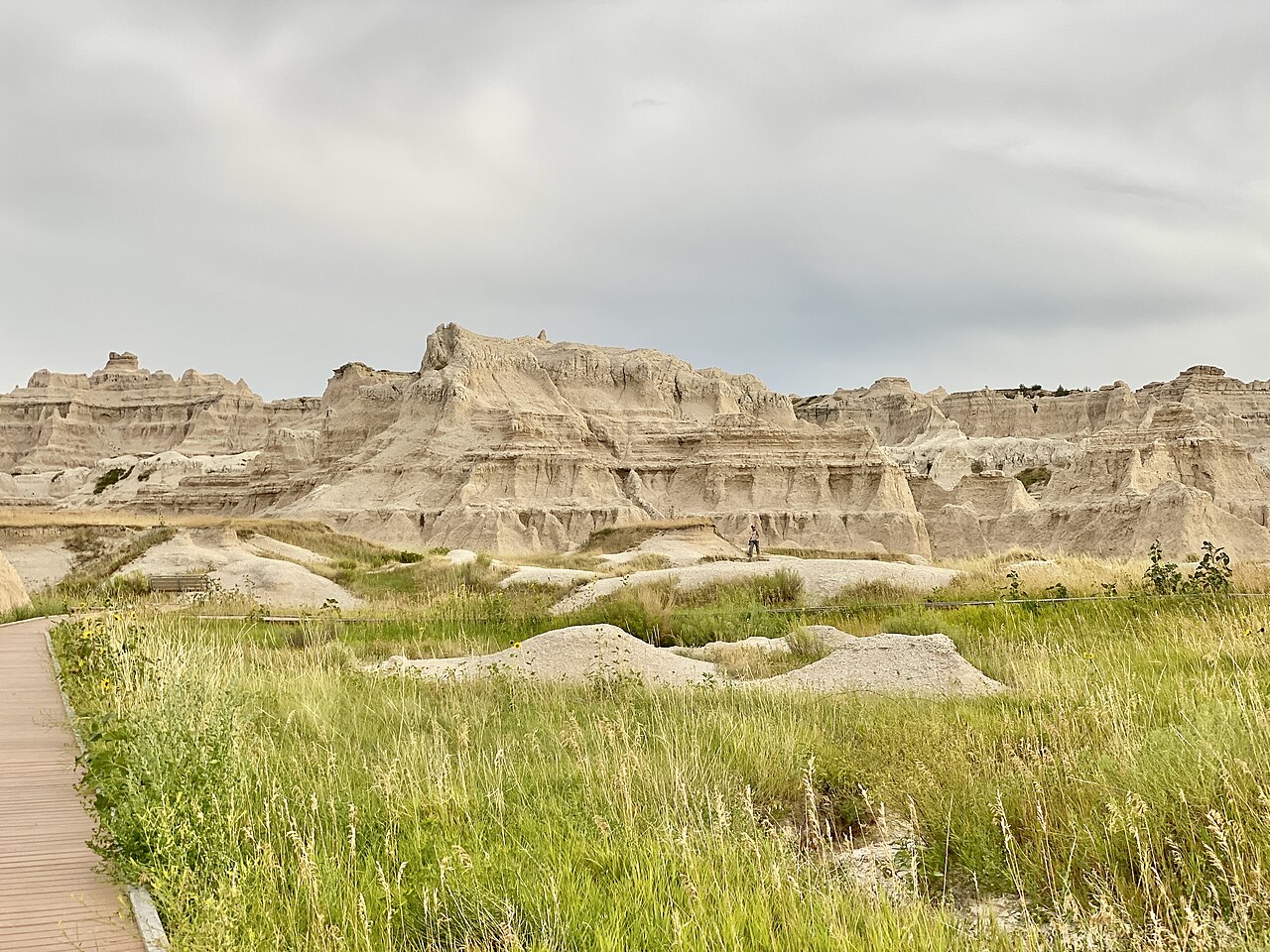
Badlands National Park rewards visitors who leave the car. The trails are mostly short, the views are spectacular and the wildlife is close, but the environment is demanding, with heat, clay and drop-offs. This guide lays out the main trails, using the figures published by the National Park Service, and explains where to look for animals and how to stay safe.
Easy walks
The Door, Window and Fossil Exhibit trails are rated easy and take about twenty minutes each. Door and Window are each about a quarter of a mile on a boardwalk, and the Fossil Exhibit loop is a little over a third of a mile. They are the right choice for families, older visitors and anyone short on time. They sit near the Big Badlands Overlook area and can be crowded at midday in summer, so early morning is best.
Moderate trails
The Cliff Shelf Nature Trail is a moderate loop of under a mile that takes about thirty minutes. The Medicine Root Loop is about four miles and takes around two hours, crossing open prairie. The Castle Trail is the long one, at about ten miles round trip and roughly five hours, and the park notes that it can be split into shorter hikes. These routes offer solitude and wide views, but they have little shade, so water and an early start are essential.
Strenuous adventures
The Notch Trail, at about a mile and a quarter, is rated moderate to strenuous and includes a ladder and a ledge, ending at a viewpoint over the White River Valley. The Saddle Pass Trail is short, at about two-thirds of a mile, but strenuous, with a steep climb up the wall. Both are treacherous during and after rain, and the park cautions that Saddle Pass can be dangerous in extreme heat. Neither is suitable for visitors with a fear of heights or limited mobility.
Safety basics
Carry two quarts of water per person for each two-hour hike, wear a hat, sunglasses and sunscreen, and choose sturdy boots that protect against cactus spines and snake bites. Weather changes quickly, so bring rain gear and turn back if storms approach. Fossils, plants, animals, artifacts and rocks must stay where you find them, and collecting is illegal. Pets are not allowed on hiking trails. Cell service is unreliable, so tell someone your plan and carry a map.
Where to see wildlife
The park says bison are best seen from the Sage Creek Rim Road, which overlooks the wilderness area where they live. Bighorn sheep are often seen on the rocky precipices of Pinnacles Overlook, and also near the Castle Trail and the Big Badlands Overlook. Prairie dog towns are found throughout the park and can be viewed from the road at Burns Basin Overlook, Roberts Prairie Dog Town and Sage Creek Campground. Deer, coyotes, snakes and many bird species are also present, though locations vary.
Wildlife etiquette
The park asks visitors to stay at least 100 feet from wildlife and says that if an animal reacts to your presence at all, you are too close. Bison are large and unpredictable, and the safest way to watch them is from your vehicle. Never feed animals, never approach for a photograph and use binoculars or a zoom lens. Dawn and dusk are the best times to look, and a quiet approach pays off. Keep pets leashed at six feet or less, and out of prairie dog colonies.
Plan the hikes
A good first day combines an easy boardwalk walk with a Loop Road drive and perhaps the Notch Trail if the weather is dry. A second day can add the Castle Trail or a section of it, plus a dawn or dusk wildlife drive on the Sage Creek Rim Road. If you want guidance, a ranger program or a guided tour will point out the animals, the geology and the safest routes. Staying at Cedar Pass Lodge or in Interior shortens the drive to the trailheads and lets you start early.
Hiking with children and older visitors
The boardwalk trails are the best introduction, because they are short, flat and rewarding. For children, turn the walk into a game of spotting layers, animals and tracks, and keep everyone close near drop-offs. For visitors with limited mobility, many of the Loop Road overlooks are wheelchair accessible, and the park's visitor center has accessibility information. Take rest breaks, drink water before you are thirsty and choose the cooler hours of the day.